Industrial Living Room Design: Raw Materials, Warm, Livable Results
Master industrial living room design. Balance exposed brick, metal, concrete, and reclaimed wood with inviting warmth. Expert tips for a livable, stylish space on any budget.
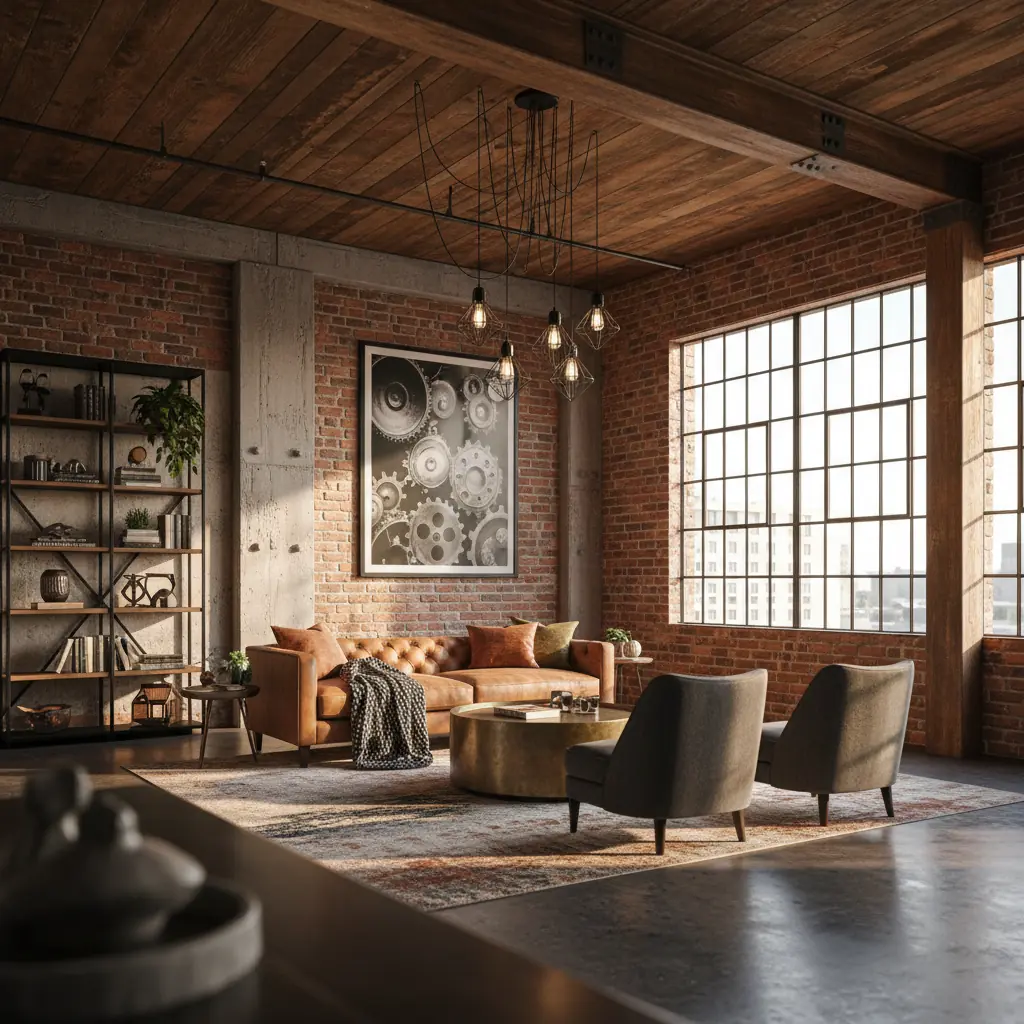
The evolution of industrial style: From necessity to aspiration
Industrial interior design began as an accident, born from economic necessity rather than aesthetic choice. In the 1960s and 70s, artists in cultural hubs like New York and London sought affordable, spacious studios. They found them in abandoned factories, warehouses, and old industrial buildings. These cavernous spaces came with their original bones – exposed brick walls, raw concrete floors, visible ductwork, and structural steel beams. The artists didn't strip away plaster to reveal brick; they simply couldn't afford to cover what was already there. What began as a practical solution soon became the backdrop to groundbreaking creative work, imbuing these raw spaces with a certain bohemian allure.
By the early 2000s, this gritty, authentic aesthetic had transcended its humble origins to become one of the most intentionally sought-after design styles globally. Developers began constructing brand-new residential and commercial spaces with faux-exposed brick, decorative steel beams, and polished concrete floors. The raw aesthetic that emerged from economic constraint became aspirational, a symbol of urban cool and understated sophistication. Today, industrial design exists on a broad spectrum – from genuinely converted lofts boasting original architectural elements to suburban living rooms that borrow key elements to create a similar mood without the direct link to a warehouse past.
The important distinction in 2026 is that successful industrial living rooms are no longer cold, stark, or forbidding spaces. The early loft era, while dramatic in photographs, often felt harsh and uninviting to live in. Modern industrial design has matured, learning to pair its signature raw materials with deliberate layers of warmth and comfort. The result is spaces that feel substantial, grounded, and authentically stylish, rather than merely unfinished or sterile. It's about creating a living room that honors its industrial roots while being utterly livable and welcoming.
What are the core elements of industrial living room design?
At its heart, industrial design celebrates materials that are often hidden away in other styles: brick, metal, concrete, and reclaimed wood. These elements, when thoughtfully integrated, form the bedrock of the aesthetic.
**Exposed Brick: The Signature Texture** Exposed brick is arguably the most recognizable hallmark of industrial style. If your home already boasts original brick walls, you've won the design lottery. Clean them thoroughly, seal them with a matte or natural-look sealant to prevent dust and enhance durability, and let them do the heavy lifting of defining your space. For those without existing brick, high-quality brick veneer panels (ranging from $5-12 per square foot for materials, not including installation) applied to a single accent wall can deliver 90% of the visual impact. When selecting veneer, opt for bricks with varied tones – a mix of reds, browns, charcoals, and creams reads as authentic and aged, avoiding the uniform, flat appearance of typical suburban exterior brick. Consider an accent wall for maximum effect, perhaps behind your sofa or an open shelving unit.
**Metal: Structural Integrity and Decorative Accents** Metal shows up in industrial design in two primary forms: structural and decorative. Structural metal encompasses exposed steel shelving units ($200-500 for a quality bookcase), pipe-leg dining tables, and large metal-frame mirrors. These pieces often feature visible welds, bolts, or rivets, emphasizing their construction. Decorative metal, on the other hand, appears in smaller, functional elements like matte black cabinet pulls, sturdy iron curtain rods, and steel light fixtures. The finish of the metal is paramount: raw steel, blackened iron, brushed gunmetal, or oil-rubbed bronze evoke the desired utilitarian aesthetic. Polished chrome, brass, or gold, while beautiful in other contexts, tend to feel too refined and out of place in an industrial palette.
**Concrete: The Grounding Foundation** Concrete floors are ideal for an authentic industrial base but are rare outside of actual converted lofts. Thankfully, several alternatives achieve a similar look. Concrete-look porcelain tile ($4-8 per square foot) or a polished concrete overlay ($6-12 per square foot over existing flooring) can effectively replicate the seamless, durable feel. Beyond flooring, consider concrete for smaller elements like planters, lamp bases, or even a sleek coffee table top. These elements provide a solid, grounded feeling. For a deeper dive into this versatile material, explore our guide on [concrete in interior design](/blog/concrete-in-interior-design).
**Reclaimed Wood: Organic Warmth and Character** Reclaimed wood is crucial for introducing the organic warmth that prevents an industrial space from feeling cold or like a parking garage. Used for coffee tables, floating shelves, or a substantial dining table top, its imperfections and history tell a story. Sources include old barn wood planks (often $8-15 per square foot), salvaged factory floors, or even old pallet wood if treated correctly for indoor use. A single, live-edge reclaimed wood shelf from a local salvage yard can cost $30-80 and add immense character. The visible grain, knots, and weathered texture provide a beautiful counterpoint to the rigid lines of metal and the starkness of concrete.
How to infuse warmth into an industrial living room?
The "warmth problem" is the single biggest failure point in industrial living rooms. Without deliberate counterbalance, the inherently cool visual temperature of metal, concrete, and brick can make a room feel stylish but uninviting. The solution lies in strategically integrating elements from three categories: textiles, lighting, and living elements.
**Textiles: The Fastest Warmth Injection** Textiles are the quickest and most impactful way to inject warmth. A large area rug (a quality wool or jute rug in an 8x10 size can range from $200-600) over concrete or dark hardwood floors instantly transforms the entire feeling of the space, adding softness underfoot and defining zones. Layer a chunky knit throw ($40-80) over the arm of a leather sofa for an inviting texture. Add linen or heavy cotton curtains in charcoal, warm gray, or even a deep rust; even in a loft with dramatic windows, curtains soften the harsh industrial edges and improve acoustics. Accent pillows in rich, earthy tones like rust, mustard, deep burgundy, or olive green break up the neutral palette without competing with its foundational strength. Consider textures like bouclé, chenille, or even faux fur for an extra layer of coziness.
**Plants: Bringing Life to the Urban Jungle** Plants are arguably the most underrated element in industrial spaces. The striking contrast between vibrant living green and raw metal or textured brick is visually electric and introduces a crucial organic softness. A large statement plant, such as a fiddle leaf fig, monstera, or bird of paradise, housed in a matte black or concrete planter ($30-50 for the planter, $40-80 for a mature plant) can anchor a corner and draw the eye upwards. Trailing pothos or philodendron on an industrial shelf adds organic movement, breaking up rigid geometric lines. Aim for at least three plants of varying sizes distributed across the room to create a natural, layered feel. For more inspiration, check out our guide on the [best plants for interior design](/blog/best-plants-for-interior-design).
**Strategic Lighting: Setting the Mood** While we'll dive deeper into lighting as a statement, it's essential to note its role in warmth. Warm-toned lighting (around 2200K-2700K color temperature) is paramount. Edison-style bulbs, often with visible filaments, cast a soft, golden glow that instantly makes raw materials feel less stark and more inviting. Layering light sources at different heights, from floor lamps to table lamps and pendants, ensures no harsh shadows and creates cozy pools of illumination.
What furniture best suits an industrial aesthetic?
The furniture in an industrial living room should echo the principles of the style: form following function, visible construction, and enduring materials.
**The Sofa: An Anchor of Comfort** The living room sofa is the defining piece. For industrial design, a leather sofa is the classic anchor – specifically distressed or pull-up leather that develops a rich patina over time. Saddle brown, cognac, or dark chocolate are optimal tones, offering both visual warmth and rugged durability. Full-grain leather sofas from reputable brands like Article or Poly & Bark typically start around $1,500-3,000. For a more budget-friendly approach, a high-quality faux leather alternative can run $600-1,200. Crucially, avoid overstuffed, pillow-back sofas; industrial furniture favors clean lines and defined shapes, reflecting a utilitarian sensibility. Alternatives can include heavy canvas or linen-blend sofas in charcoal or deep olive, offering a softer texture while maintaining a structured profile.
**Tables: Exposing Their Structure** Coffee tables and side tables should proudly expose their structure. Designs featuring hairpin legs, pipe frames, or welded steel bases paired with reclaimed wood or concrete tops immediately communicate the industrial DNA. A pipe-and-wood coffee table can be sourced for $150-400 or built as a weekend DIY project for $60-100 in materials. For those who enjoy hands-on projects, constructing a custom piece adds unique character.
**Shelving and Storage: Open and Honest** Bookcases and media consoles work best as open shelving units crafted from black steel with wood or metal shelves. These maintain the visual openness that defines loft-style living and allow the display of curated objects or books. Consider incorporating industrial-style locker cabinets or vintage metal filing cabinets for closed storage, adding both function and an authentic touch. The general furniture rule for industrial spaces: you should ideally be able to see the floor beneath every piece. Visible legs and open frames keep the room feeling spacious and airy, preventing it from becoming visually heavy.
**Accent Seating: Form Meets Function** Accent chairs in aged leather, heavy canvas, or even a modern wire-frame design (like a reproduction of the Bertoia Diamond chair, $200-350) add seating without visual bulk. Sling chairs with leather or canvas upholstery and metal frames are another excellent option, offering comfort with an understated profile. For help arranging these pieces in your specific layout, consider using an [AI furniture arrangement tool](/blog/ai-furniture-arrangement-tool) to visualize different options.
How to use lighting to define industrial style?
Lighting carries more weight in industrial design than almost any other style. The fixtures themselves are decorative focal points, often mimicking factory or warehouse lights, and the quality of light they produce is paramount for setting the mood. Industrial lighting operates on three tiers: overhead statements, task lighting, and ambient glow.
**Overhead Statements: Go Bold** For overhead lighting, don't shy away from making a bold statement. A cluster of pendant lights with exposed Edison bulbs ($80-200 for a 3-pendant cluster) over a dining table or kitchen island is the quintessential industrial lighting moment. Oversized single pendants in spun metal, cage designs, or even vintage-inspired factory shades ($50-150 each) work wonderfully over seating areas or to define open zones. Track lighting on an exposed ceiling ($100-250 for a full track system) provides excellent flexibility for directing light while maintaining a utilitarian aesthetic. Critically, avoid generic recessed can lights; they are invisible and lack the character and intentionality that industrial lighting demands.
**Task Lighting: Functional and Stylish** Task lighting should be equally intentional. Articulated desk lamps with metal shades, clamp-on sconces, or adjustable floor lamps (often featuring large, domed shades) provide focused illumination where needed. These fixtures often feature exposed springs, gears, or articulating arms, celebrating their mechanical nature.
**Ambient Glow: Layered Warmth** For ambient warmth, Edison-style bulbs (ideally 2200K color temperature) in exposed sockets or simple, cage-style fixtures cast the warm, golden glow that transforms industrial spaces from stark to livable. Table lamps with concrete, pipe bases, or heavy metal frames ($40-90) placed on shelves, side tables, and media consoles create inviting pools of light. Never rely solely on overhead lighting; industrial rooms, with their often high ceilings and hard surfaces, require multiple light sources at different heights to avoid harsh, flat illumination that makes raw materials feel cold and uninviting. Using a tool like Habitas, you can visualize different lighting arrangements and fixture styles in your actual room photo before committing to a purchase, ensuring the perfect balance of light and shadow.
What's the ideal color palette for industrial design and how to achieve it on any budget?
The industrial color palette is anchored in a foundation of charcoal, warm gray, and black, with rich rust, deep cognac, and warm wood tones providing essential counterpoints and warmth.
**Foundational Colors:** Walls work best in a warm white (avoiding stark, clinical bright white) or a dramatic deep charcoal accent wall. Popular warm whites include Sherwin-Williams' Accessible Beige or Benjamin Moore's White Dove, which have subtle undertones to prevent them from feeling cold. For a bolder statement, consider a [black accent wall](/blog/black-accent-walls) to ground the space. Crucially, avoid cool grays with blue undertones, as these can push the industrial aesthetic toward sterile or unwelcoming.
**Accent Colors:** The accent colors that harmonize best with industrial design are those found naturally in aged materials: rust orange, deep mustard, burgundy, and olive green. These tones echo oxidized metal, old leather, and weathered brick, providing a cohesive and authentic feel. Incorporate these through textiles, artwork, and smaller decorative objects.
### Industrial design on any budget: From refresh to renovation
Industrial style is remarkably adaptable to various budgets, partly because the aesthetic celebrates imperfection, visible construction, and repurposed items, which can often be found affordably.
**A Budget-Friendly Refresh ($500-1,500):** Focus on high-impact, low-cost changes that deliver significant visual shifts.
- **Accent Wall:** A brick veneer accent wall is a powerful transformation, costing just $5-12 per square foot for materials. - **Lighting:** Swap out generic light fixtures for industrial-style pendant lights (starting around $50 per fixture) or a simple track lighting system. - **Rugs:** A large jute or sisal area rug ($200-600) dramatically warms a concrete or wood floor. - **Accessories:** Strategic accessories like metal-frame mirrors, iron candleholders, and reclaimed wood floating shelves (often found at salvage yards or DIY stores for $30-80 per shelf) can firmly shift a generic living room into industrial territory. Look for these elements at flea markets or secondhand stores to save even more.
**An Investment Approach ($3,000-8,000+):** This budget allows for more foundational changes and higher-quality pieces.
- **Sofa:** Invest in a quality full-grain leather sofa ($1,500-3,000) that will age beautifully. - **Flooring:** Consider concrete-look porcelain tile or a polished concrete overlay ($6-12 per square foot for material/application) for a durable and authentic base. - **Shelving:** Install a full industrial shelving system, perhaps custom-designed, for integrated storage and display. - **Custom Furniture:** Commission custom pipe-and-wood furniture pieces or invest in unique, artisan-made items. - **Professional Lighting:** A professional lighting plan ensures optimal functionality and ambiance, potentially including specialized track lighting or vintage-inspired factory pendants.
When planning any design project, tools like Habitas can be invaluable. AI visualization can take your actual room photo and generate multiple industrial design concepts, helping you test different materials, layouts, and furniture arrangements in 60 seconds. This process is significantly faster than the 2-4 weeks a traditional designer might take for initial concepts and can help you avoid costly mistakes, potentially saving 15-20% on overall project costs due to better planning. Habitas lets you explore how a new sofa might look, visualize different paint colors, or experiment with various lighting fixtures, ensuring your investment is well-placed. The key insight for industrial style is its scalability – because the aesthetic celebrates imperfection and visible construction, even budget elements like DIY pipe shelving and secondhand leather chairs can look intentional and high-design, rather than merely cheap.
Frequently Asked Questions
### Is industrial design still popular in 2026?
Yes, industrial design remains a highly popular and enduring style in 2026, though it has evolved. While its core elements of raw materials like brick, metal, and concrete persist, the modern interpretation emphasizes warmth, comfort, and livability over starkness. It often blends with other styles, such as mid-century modern or minimalist, to create a softer, more integrated look. According to recent interior design trend reports, industrial elements, particularly exposed textures and metal accents, continue to be incorporated into roughly 45% of new urban residential designs, showcasing its lasting appeal.
### How do you make an industrial living room feel cozy?
Making an industrial living room feel cozy is crucial for a successful design. The key is to introduce soft textures, warm lighting, and organic elements to counterbalance the raw materials. Layer plush area rugs, chunky knit throws, and soft linen or cotton curtains. Use multiple light sources with warm-toned bulbs (2200K-2700K) to create inviting pools of light rather than relying on harsh overhead fixtures. Incorporate plenty of living plants to add natural softness and color. Lastly, choose furniture with comfortable upholstery like distressed leather or heavy canvas, and add accent pillows in rich, earthy tones like rust or mustard.
### What are the best colors for an industrial living room?
The best color palette for an industrial living room starts with a foundation of warm neutrals: charcoal gray, warm white (like off-white or cream), and deep black. These provide a robust backdrop for the signature materials. For accent colors, draw inspiration from natural elements and aged patinas: rust orange, deep mustard yellow, olive green, and rich burgundy. These colors can be introduced through accent pillows, artwork, a single statement chair, or even a subtle throw, adding depth and warmth without overwhelming the core industrial aesthetic.
### Can I achieve an industrial look in a small living room?
Absolutely! Achieving an industrial look in a small living room is entirely possible by focusing on key elements and maintaining visual openness. Opt for lighter versions of industrial materials, such as a pale gray concrete-look tile or white-painted brick veneer, to avoid making the space feel heavy. Choose open-frame furniture with visible legs (like hairpin leg tables or open metal shelving) to allow light and sightlines to pass through, making the room feel larger. Utilize vertical space with tall, narrow industrial shelving units. Strategic use of mirrors in metal frames can also help expand the perception of space. Remember, quality over quantity is key in small spaces.