Ideas para Baños Japandi: Donde el Zen se Encuentra con la Calidez Escandinava
Explora el diseño de baños Japandi: la mezcla perfecta del minimalismo japonés y la calidez escandinava aplicada a espacios húmedos, con consejos expertos para materiales, colores y almacenamiento.
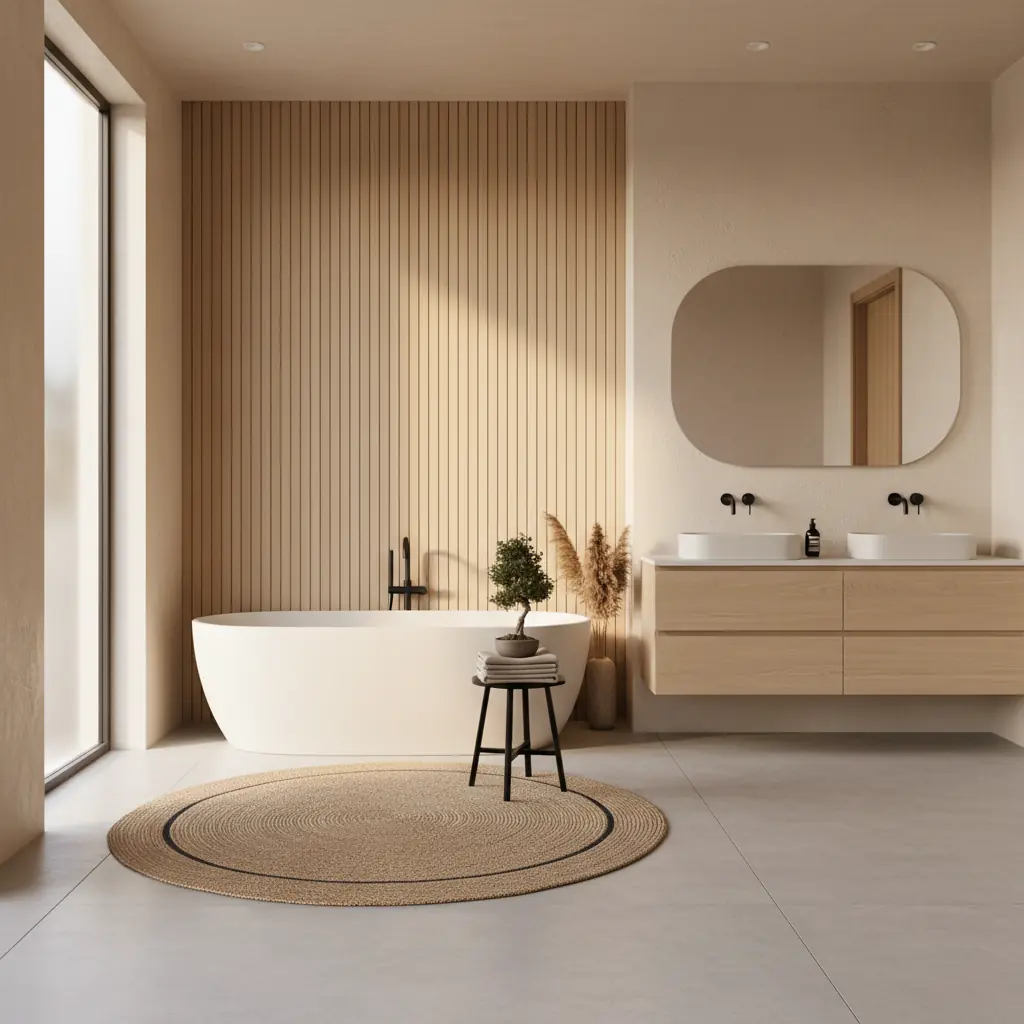
¿Cuáles son los principios fundamentales del diseño Japandi en un baño?
Japandi en un baño no se trata de decoración, sino de reducción. La filosofía despoja un baño a sus elementos funcionales esenciales y luego eleva cada elemento a través de la calidad del material y una ubicación cuidadosa. Cada objeto se gana su lugar, contribuyendo a una sensación de calma e intencionalidad. Una simple jabonera de cerámica hecha a mano en un estante de teca comunica más intención de diseño que un lavamanos abarrotado de accesorios a juego.
El concepto japonés de _ma_ —el espacio negativo como un elemento de diseño deliberado— es especialmente poderoso en los baños, donde la mayoría de las personas llenan instintivamente cada superficie. Un baño Japandi se siente tranquilo porque resiste ese impulso, creando un espacio visual para respirar. Este vacío deliberado permite que los elementos elegidos realmente destaquen. El lado Scandinavian contribuye con una calidez esencial, asegurando que el espacio nunca caiga en la austera frialdad. El resultado es un baño que funciona como un reinicio diario, no solo como una habitación utilitaria por la que se pasa rápidamente. Una encuesta de 2023 realizada por la Asociación Nacional de Cocinas y Baños (NKBA) encontró que el 68% de los propietarios priorizan los materiales naturales y sostenibles en sus renovaciones, lo que se alinea perfectamente con la ética Japandi de simplicidad natural y durabilidad. Puedes explorar principios similares en el [diseño biofílico](/blog/biophilic-design-guide).
Los espacios húmedos presentan desafíos únicos para este estilo porque muchos de los materiales naturales centrales para Japandi —madera sin tratar, piedra en bruto, cerámica artesanal— requieren una selección cuidadosa para resistir la humedad. La clave es elegir las especies, acabados y selladores adecuados en lugar de abandonar los materiales naturales por alternativas sintéticas.
¿Qué materiales funcionan mejor para un baño Japandi?
La paleta de materiales para un baño Japandi enfatiza la naturaleza, la textura y la durabilidad.
La **teca** es la madera fundamental para los baños Japandi porque resiste naturalmente el agua, el moho y la deformación debido a su alto contenido de aceite. Úsala para estantes flotantes, alfombrillas de ducha de listones, bancos de ducha y acentos en el mueble bajo lavabo. La teca de Grado A cuesta entre $15 y $25 por pie tabla, pero incluso un solo estante de teca ($40-80) introduce la calidez que el estilo exige. Evita maderas más blandas como el roble o el pino en áreas húmedas: se hincharán y mancharán sin un sellado agresivo y un mantenimiento constante. Para piezas más grandes como muebles bajo lavabo, un fresno o abedul de color claro y de origen sostenible también puede proporcionar una calidez discreta similar si se trata adecuadamente.
La **piedra natural** —específicamente la piedra caliza pulida, el travertino o el azulejo de guijarros de río— aporta la textura orgánica e imperfecta que separa a Japandi del minimalismo genérico. Los acabados pulidos (mate, no brillantes) son críticos; el mármol brillante transmite lujo de hotel, no Japandi. Espera pagar entre $8 y $15 por pie cuadrado para azulejos de piedra caliza pulida. Estas piedras introducen una sensación terrosa y de arraigo. Combínalas con azulejos cerámicos de gran formato mate en blancos cálidos o grises suaves para paredes y suelos donde el presupuesto o las preocupaciones de mantenimiento descartan la piedra. La cerámica mate ofrece un atractivo visual similar con mayor practicidad.
El **concreto** es el material puente, ofreciendo una versatilidad increíble. Un mueble bajo lavabo con apariencia de concreto (entre $200 y $400 para un vertido a medida, o $80-150 para un laminado con acabado de concreto) ancla el espacio con un peso industrial mientras permanece completamente resistente al agua. Los acabados de pared de microcemento ($12-20 por pie cuadrado instalado) crean una superficie sin juntas que refuerza la sensación despejada de Japandi. Obtén más información sobre sus aplicaciones en [concreto en el diseño de interiores](/blog/concrete-in-interior-design). Si bien la inversión inicial en teca y piedra de calidad puede ser mayor, con una renovación de baño típica que genera un retorno de la inversión promedio del 70-80% en la reventa, los materiales duraderos y atemporales como estos contribuyen significativamente al valor a largo plazo y la longevidad estética.
Elegir los colores y accesorios adecuados para tu baño Japandi
La paleta del baño Japandi se mantiene dentro de los neutros cálidos, creando una sensación relajante y expansiva. Piensa en blanco cálido (como Benjamin Moore White Dove o Farrow & Ball Pointing), greige, masilla suave y gris concreto cálido. Estos tonos suaves y tenues realzan la luz natural y crean un telón de fondo tranquilo. El carbón entra como un acento de anclaje: un nicho de piedra oscura dentro de la ducha, un espejo con marco negro o una lechada de carbón contra azulejos blancos rotos pueden proporcionar un contraste sutil. El verde salvia suave funciona como un acento secundario, especialmente en toallas, una sola planta en maceta o una discreta pieza de arte, conectando el espacio con la naturaleza sin introducir colores que compitan. Para ayudarte a visualizar estos cambios sutiles, el [generador de paletas de colores con IA](/blog/ai-color-palette-generator) de Habitas puede ser una herramienta invaluable, permitiéndote experimentar con varios neutros cálidos y acentos de carbón en tu espacio existente.
Los **accesorios y herrajes** se comprometen completamente con acabados mate. Los grifos y accesorios de ducha en negro mate ($150-400 para marcas de calidad como Brizo o Grohe) son la opción dominante, ofreciendo un contraste sofisticado con la paleta de luz. Alternativamente, el níquel cepillado y el latón cepillado ofrecen alternativas más suaves y cálidas que aún mantienen una cualidad no reflectante. El cromo está específicamente excluido: su brillo reflectante contradice la cualidad tenue y táctil que requiere Japandi. La consistencia es clave: las barras para toallas, los ganchos para batas y los soportes para papel higiénico deben coincidir exactamente con el acabado de la grifería. Los metales mixtos pueden funcionar en otros estilos, pero Japandi recompensa una estética cohesiva y discreta.
Para el cabezal de la ducha, un gran **rociador tipo lluvia** montado al ras del techo ($200-500) encarna la filosofía del ritual de baño japonés: el agua como una experiencia, no solo una función. Esto crea una atmósfera similar a la de un spa. Los **grifos empotrados en la pared** del lavamanos ($250-600) liberan espacio en el mostrador y refuerzan la estética de líneas limpias, haciendo que el mueble bajo lavabo parezca más ligero y abierto.
Iluminando tu baño Japandi
La iluminación en un baño Japandi se trata de crear ambiente y mejorar la funcionalidad sin ser ostentosa. Céntrate en fuentes de luz suaves y difusas que imiten la luz natural.
- **Iluminación empotrada:** Proporciona iluminación general sin desorden visual. Opta por LED regulables con una temperatura de color cálida (2700K-3000K) para realzar la sensación acogedora. - **Apliques o iluminación colgante:** Flanqueando el espejo, los apliques de pared con vidrio esmerilado o pantallas de lino natural ofrecen una iluminación de tarea suave y sin sombras para el aseo. Una única lámpara colgante minimalista hecha de papel de arroz, cerámica o un simple metal mate puede añadir un elemento escultórico sin dominar el espacio. - **Luz natural:** Maximiza cualquier ventana existente con películas de privacidad o cortinas de lino translúcidas que permitan el paso de la luz mientras mantienen la privacidad. La conexión con el mundo exterior, incluso si es solo un vistazo al cielo, es vital. - **Acentos estratégicos:** Considera la iluminación sutil de tiras LED debajo de los muebles flotantes o estantes para un brillo indirecto sofisticado que resalte las características arquitectónicas y añada profundidad.
Cómo abordar el almacenamiento en un baño Japandi
La regla definitiva del almacenamiento en un baño Japandi es radical: si no es lo suficientemente bonito para exhibirlo, desaparece. Esto significa una edición implacable de lo que guardas y cómo lo organizas.
- **Almacenamiento empotrado:** Prioriza los botiquines empotrados (no montados en superficie, que pueden parecer voluminosos) y los nichos de ducha integrados en la pared en lugar de los estantes colgantes. Estas soluciones integradas mantienen la continuidad de las paredes. - **Muebles bajo lavabo cerrados:** Los muebles con cajones de cierre suave y lo suficientemente profundos para botellas de pie son ideales. El objetivo es ocultar todas las necesidades diarias detrás de puertas cerradas, dejando las superficies despejadas. - **Artículos mínimos en el mostrador:** El mostrador contiene como máximo dos elementos: un elegante dispensador de jabón y una pequeña planta o un solo objeto decorativo cuidadosamente elegido, como una piedra de río lisa o un pequeño jarrón de cerámica. - **Organización interna:** Invierte en organizadores de cajones (separadores de bambú, $15-30) para mantener el interior del almacenamiento cerrado tan intencional como las superficies visibles. La filosofía de organización japonesa trata los espacios ocultos con el mismo cuidado que los exhibidos. Trasvasa los productos de uso diario (champú, acondicionador, loción) a dispensadores de cerámica o vidrio ámbar a juego ($10-20 cada uno) para que los pocos elementos visibles contribuyan a la estética en lugar de perturbarla. - **Toallas como exhibición:** Las toallas se convierten en un elemento de exhibición. Enróllalas y apílalas ordenadamente en un compartimento abierto, o dobla dos toallas blancas impecables en un estante de pared flotante de teca. La tradición japonesa del onsen trata las toallas como parte del ritual de baño, no como algo secundario que se guarda en un toallero. Si usas Habitas para visualizar tu baño Japandi, notarás que la IA elimina consistentemente el desorden del mostrador; esa restricción es el factor más importante para lograr el aspecto.
Mantenimiento de materiales naturales en un baño Japandi: Consideraciones prácticas
Los materiales naturales aportan una belleza incomparable, pero requieren un contrato de mantenimiento contigo mismo.
La **teca** necesita ser reaceitada cada 6-12 meses con aceite de teca ($12-18 por botella) para mantener su tono dorado; si se deja sin tratar, se vuelve gris plateado como madera a la deriva, lo que algunas personas prefieren. Este proceso protege la madera y mejora su resistencia natural al agua.
La **piedra pulida** (caliza, travertino) debe sellarse en la instalación y volverse a sellar anualmente. Los selladores penetrantes ($20-35) se absorben en la piedra sin cambiar su apariencia, protegiéndola de la humedad y las manchas. La limpieza regular con limpiador de piedra con pH neutro también es esencial para evitar el grabado o la decoloración.
La **lechada** es a menudo la carga de mantenimiento oculta. Opta por lechada epóxica ($30-40 por unidad frente a $8-12 para lechada de cemento) en duchas y áreas de piso. Es impermeable, resistente a las manchas y nunca necesita sellado, lo que la hace increíblemente duradera e higiénica. El costo inicial se amortiza en un año al no tener que fregar las líneas de lechada. Para un aspecto aún más limpio, utiliza azulejos de gran formato (24x48 pulgadas o más grandes) para minimizar por completo las líneas de lechada.
La **ventilación** es no negociable. Los baños Japandi con madera natural y piedra necesitan un extractor de aire de calidad funcionando durante y 20 minutos después de cada ducha. Un ventilador con sensor de humedad ($80-150, Panasonic WhisperGreen es un estándar de oro) automatiza esto por completo, asegurando una circulación de aire óptima. Sin una ventilación adecuada, incluso la teca y la piedra mejor selladas desarrollarán moho en las juntas y grietas en cuestión de meses, comprometiendo tanto la estética como la calidad del aire. Integrar la IA en el proceso de diseño, como con Habitas, puede reducir drásticamente el tiempo de visualización del concepto inicial. Mientras que los paneles de inspiración (_mood boards_) y los renders 3D tradicionales pueden tardar de 2 a 4 semanas, las herramientas impulsadas por IA pueden generar diseños fotorrealistas en solo minutos, ahorrando hasta el 90% del tiempo de exploración de diseño inicial y ayudándote a identificar posibles conflictos de materiales temprano. Si estás planeando una renovación completa, comprender los gastos integrales es crucial, lo cual puedes explorar en nuestra guía sobre [costo de renovación de baño](/blog/bathroom-renovation-cost-2026).
Diseñando tu baño Japandi: Un plan completo
Unir estos elementos crea un baño Japandi cohesivo y tranquilo.
Comienza con el suelo y las paredes: azulejos de porcelana mate de gran formato en gris cálido o blanco roto, con piedra caliza pulida o guijarros de río como elemento distintivo en el suelo de la ducha o como una sutil pared de acento. Construye un nicho de ducha empotrado para los artículos de tocador y así mantener las líneas limpias. Instala un mueble bajo lavabo flotante de teca natural o madera de tono cálido y claro con una encimera con aspecto de concreto y un lavamanos empotrado.
Instala accesorios de acabado negro mate: una grifería empotrada en la pared, un rociador de ducha tipo lluvia en el techo y una barra de toallas minimalista. Añade un único estante flotante de teca encima del inodoro para exhibir toallas enrolladas y una pequeña planta de helecho en maceta o un delicado bonsái. Elige un espejo redondo con un marco delgado negro o sin marco, permitiendo que se integre perfectamente en el espacio. Asegúrate de que la encimera solo contenga un dispensador de jabón de cerámica y quizás un difusor de varillas para un aroma sutil.
El rango de presupuesto para una renovación completa de un baño Japandi oscila entre $8,000 y $15,000 para un baño de tamaño estándar, siendo el azulejo, el trabajo de carpintería a medida y la mano de obra los ítems más grandes. Una renovación estética (_cosmetic refresh_) —nuevos accesorios, complementos, pintura y un estante de teca— puede lograr el 70% del aspecto por $500-1,200, haciendo el estilo accesible incluso con un presupuesto más ajustado. Habitas puede generar vistas previas fotorrealistas de ambos enfoques para que puedas decidir qué nivel de inversión se adapta a tu espacio y presupuesto antes de comprometerte, transformando tus ideas en visuales tangibles en segundos.
Preguntas Frecuentes
### ¿Cuál es la diferencia entre el diseño Japandi y el minimalista?
Si bien tanto el diseño Japandi como el minimalista enfatizan las líneas limpias y la falta de desorden, Japandi se distingue por integrar un sentido más fuerte de calidez y textura natural. El minimalismo a veces puede sentirse austero o frío, dependiendo en gran medida de paletas monocromáticas y materiales sintéticos. Japandi, por el contrario, fusiona el _wabi-sabi_ japonés (encontrar belleza en la imperfección) y el _hygge_ Scandinavian (comodidad, bienestar), utilizando maderas naturales, cerámicas artesanales y textiles suaves para crear espacios acogedores y serenos que son ricos en atractivo táctil, incluso con elementos mínimos.
### ¿Puede el estilo Japandi funcionar en un baño pequeño?
Absolutamente. Los principios fundamentales de Japandi de minimalismo, espacio libre (_ma_) y diseño funcional son excepcionalmente adecuados para baños pequeños. Al eliminar lo no esencial, centrarse en el almacenamiento empotrado o integrado y utilizar paletas de colores claras y neutras, un espacio pequeño puede sentirse mucho más grande y sereno. Los azulejos de gran formato también ayudan a reducir el desorden visual de las líneas de lechada, creando una sensación más expansiva. La clave es una estricta adherencia a la filosofía de almacenamiento "todo oculto" y hacer que cada elemento visible cuente.
### ¿Cuáles son las mejores plantas para un baño Japandi?
Las plantas con formas simples y elegantes y preferencia por la humedad son perfectas para un baño Japandi. Piensa en pequeños helechos (como el helecho de Boston o el culantrillo), plantas de serpiente (Sansevieria) o un delicado bonsái para un verdadero toque japonés. Las variedades de orquídeas con sus líneas limpias también pueden funcionar maravillosamente. Colócalas en macetas de cerámica simples sin esmaltar o en maceteros negros minimalistas. El objetivo es añadir un toque de naturaleza viva sin crear un efecto de "selva".
### ¿Cómo puedo lograr un aspecto Japandi con un presupuesto limitado?
Lograr un aspecto Japandi con un presupuesto limitado es totalmente posible centrándose en elementos clave. Prioriza una paleta de pintura neutra (blancos cálidos, greiges), añade un único estante flotante de teca o una pequeña alfombrilla de baño de teca para dar calidez. Reemplaza los accesorios viejos con alternativas en negro mate o níquel cepillado. Invierte en dispensadores de jabón de cerámica o vidrio ámbar de buena calidad y a juego. Despeja sin piedad, eliminando todos los elementos no esenciales de las encimeras. Para un mayor impacto, considera pintar un mueble de lavamanos antiguo con un kit de pintura con efecto de concreto. Estos pequeños cambios pueden transformar significativamente la sensación de tu baño sin una renovación completa.
### ¿Es Japandi una tendencia pasajera o un estilo atemporal?
Japandi, aunque actualmente está de moda, posee fuertes cualidades atemporales. Su énfasis en los materiales naturales, la artesanía, la funcionalidad y un entorno despejado se alinea con principios de diseño duraderos y un creciente deseo de una vida sostenible y consciente. A diferencia de las modas estilísticas fugaces, las raíces de Japandi en la filosofía estética japonesa de siglos de antigüedad y el diseño Scandinavian clásico aseguran su longevidad. Es más una filosofía de diseño que promueve la calma y el bienestar, que son siempre cualidades deseables en un home.