Gabinetes de Cocina: ¿Renovación de Frentes (Refacing) vs. Reemplazo? Costos, Ventajas, Desventajas y Valor
Compare los costos ($4K-$25K+), tiempos, ventajas y desventajas de renovar los frentes (refacing) vs. reemplazar los gabinetes de cocina. Descubra la mejor opción para su presupuesto y objetivos de renovación de cocina.
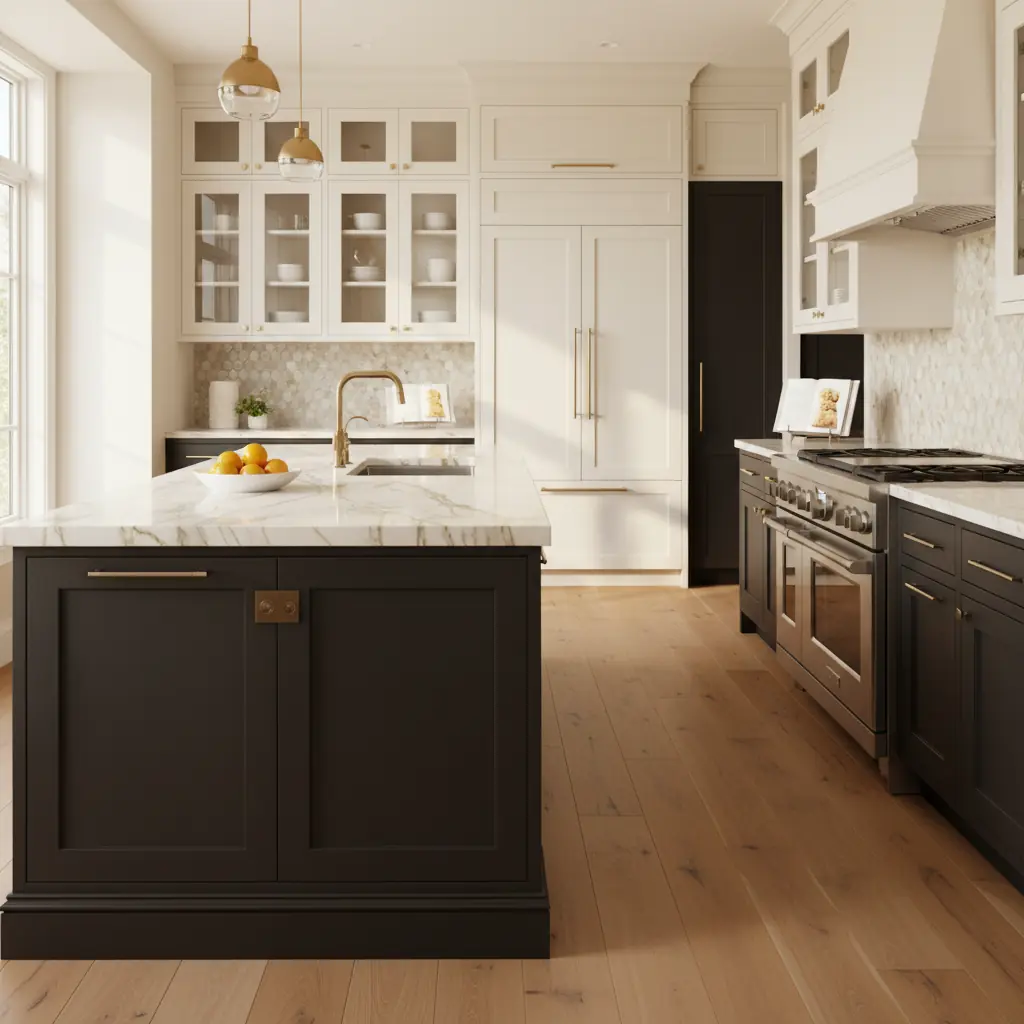
¿Qué es la renovación de frentes de gabinetes (refacing) de cocina y qué implica?
La renovación de frentes de gabinetes (refacing), también conocida como revestimiento de gabinetes, es una renovación estética que le da a sus gabinetes de cocina existentes un aspecto completamente nuevo sin la demolición y el gasto significativo de un reemplazo total. El principio fundamental es preservar las cajas existentes de los gabinetes –las estructuras principales montadas en sus paredes– y reemplazar únicamente los componentes exteriores visibles.
Aquí le presentamos un desglose de lo que el proceso suele implicar:
1. **Reemplazo de Puertas y Frentes de Cajones:** Todas las puertas y frentes de cajones existentes se retiran y se reemplazan por nuevos. Esta es la parte más impactante de la transformación, ya que estos elementos definen en gran medida el estilo de los gabinetes. 2. **Aplicación de Chapa o Revestimiento (Veneer):** Una capa delgada de material nuevo, llamada chapa o revestimiento (veneer), se aplica directamente sobre los marcos expuestos de las cajas de los gabinetes existentes. Esta chapa se corta y adhiere cuidadosamente para que coincida con las nuevas puertas y frentes de cajones, creando una apariencia uniforme y sin costuras. Las chapas pueden estar hechas de varios materiales, incluyendo: - **Thermofoil:** Una película de vinilo duradera aplicada con calor y presión, que ofrece una amplia gama de colores y estilos, a menudo a un precio más bajo. - **Laminate:** Un material sintético que imita la veta de la madera o colores sólidos, conocido por su durabilidad y facilidad de limpieza. - **Chapa de Madera:** Láminas delgadas de madera real (p. ej., arce, cerezo, roble) que ofrecen el aspecto y la sensación natural de los gabinetes de madera maciza. 3. **Renovación de Herrajes:** Por lo general, se instalan bisagras nuevas, a menudo mejoradas para incluir mecanismos de cierre suave (soft-close) para una sensación más lujosa. También se pueden reemplazar o mejorar los rieles de los cajones. Finalmente, se instalan nuevas manijas y tiradores, transformando completamente la estética de los herrajes. 4. **Mejoras Complementarias:** Muchos propietarios optan por incluir mejoras adicionales durante la renovación de frentes, como añadir nuevas molduras de cornisa, rieles de iluminación o adornos decorativos para realzar aún más el aspecto. También se pueden integrar accesorios interiores como estantes extraíbles u organizadores de despensa.
Un proyecto típico de renovación de frentes cuesta entre $4,000 y $10,000 para una cocina de tamaño promedio (20-30 pies lineales de gabinetes). El precio varía según el material de las puertas: el termoformado o laminado se sitúa en el extremo inferior ($4K-$6K), las puertas de madera maciza se acercan a los $8K-$10K. El plazo suele ser bastante rápido, a menudo completado en 3 a 5 días de trabajo in situ. Esto significa que su cocina vuelve a ser utilizable en una semana, minimizando las interrupciones en su vida diaria. La renovación profesional de frentes de gabinetes suele costar entre un 30% y un 50% menos que un reemplazo completo de gabinetes, ofreciendo ahorros significativos sin comprometer un aspecto fresco y actualizado.
El resultado final puede parecer notablemente cerca de gabinetes completamente nuevos. Con la elección correcta de materiales e instalación profesional, la mayoría de los invitados no podrán notar la diferencia entre gabinetes con frentes renovados y gabinetes recién instalados, especialmente si también actualiza los herrajes, añade bisagras de cierre suave e instala iluminación debajo de los gabinetes.
¿Cuándo es la renovación de frentes (refacing) la opción inteligente para su cocina?
La renovación de frentes es una opción de renovación altamente estratégica, pero no siempre es la opción adecuada. Tiene más sentido en escenarios específicos donde sus ventajas realmente brillan.
### Las Cajas de Sus Gabinetes Están Estructuralmente Sanas
Esta es la regla de oro de la renovación de frentes. Antes incluso de considerar la estética, debe inspeccionar a fondo las cajas de sus gabinetes existentes. Abra varios gabinetes al azar, especialmente los que están debajo del fregadero, cerca del lavavajillas o en áreas de alto tráfico. Busque:
- **Sin daños visibles por agua:** El aglomerado hinchado, descolorido o desmenuzado (especialmente común en gabinetes antiguos hechos de este material) es una señal de alerta. El daño por agua a menudo conduce a moho y debilidad estructural. - **Sin moho persistente ni olores a humedad:** Esto podría indicar problemas ocultos de humedad o moho. - **Estantes sólidos y estables:** Si sus estantes se curvan significativamente bajo cargas normales o se sienten endebles, la construcción de la caja puede estar comprometida. - **Cajas firmemente fijadas a las paredes:** Los gabinetes que se separan de la pared indican posibles problemas de instalación o fatiga estructural. - **Uniones intactas:** Revise las esquinas y uniones de las cajas de los gabinetes. ¿Están apretadas y escuadradas, o se están separando?
Si sus cajas existentes de contrachapado o aglomerado están sólidas, secas y no muestran signos de delaminación o deformación, es probable que tengan mucha vida útil por delante. Muchas cajas de gabinetes de calidad desde la década de 1980 en adelante se construyeron para durar entre 30 y 50 años, incluso si sus puertas ahora parecen muy anticuadas.
### Está Satisfecho con la Distribución Actual de Su Cocina
La renovación de frentes es fundamentalmente una actualización cosmética. Funciona mejor cuando está perfectamente contento con la distribución y organización actual de su cocina. Si no necesita:
- Mover el fregadero o la estufa a una nueva ubicación - Añadir una isla o expandir una existente - Reconfigurar las líneas de gabinetes (p. ej., extender gabinetes hasta el techo, añadir unidades de despensa) - Derribar paredes para abrir el espacio - Crear más espacio en el mostrador moviendo electrodomésticos
...entonces no hay razón para arrancar cajas perfectamente funcionales. La renovación de frentes le permite transicionar sin problemas de, digamos, roble miel de los años 90 a un estilo moderno shaker blanco o azul marino en menos de una semana, sin el polvo, los escombros, las desconexiones de fontanería o el trabajo eléctrico que acompaña a una demolición completa.
### El Presupuesto Es un Factor Principal en Su Renovación
Para muchos propietarios, el presupuesto es la razón más común y convincente para elegir la renovación de frentes. Si su presupuesto total de renovación de su cocina está en el rango de $15,000-$20,000, gastar $6,000 en la renovación profesional de frentes (en lugar de $18,000+ en gabinetes nuevos) deja fondos sustanciales para otras mejoras críticas que realmente afectan la vida diaria y la comodidad. Esto le permite asignar dinero para:
- Encimeras de mejor calidad (cuarzo o piedra natural vs. laminado) - Un impresionante nuevo salpicadero - Electrodomésticos mejorados y de bajo consumo - Diseño de iluminación mejorado - Pisos nuevos
La cocina es un sistema, y los gabinetes son solo un componente. Optimizar su presupuesto en todos los elementos asegura una renovación cohesiva e impactante. Los propietarios que eligen la renovación de frentes reportan una tasa de satisfacción promedio de más del 85% con sus cocinas actualizadas, a menudo elogiando la rapidez y la rentabilidad de la transformación. Herramientas impulsadas por IA pueden incluso ayudarle a visualizar diferentes estilos y acabados en la distribución actual de su cocina, haciendo que el proceso de decisión sea mucho más fluido. Por ejemplo, [las herramientas impulsadas por IA pueden incluso ayudarle a visualizar diferentes estilos y acabados](/blog/ai-generated-room-designs-realistic) en la distribución actual de su cocina, haciendo que el proceso de decisión sea mucho más fluido.
¿Cuándo debería considerar el reemplazo total de los gabinetes de cocina?
Si bien la renovación de frentes ofrece un valor increíble, existen escenarios definitivos donde arrancar y reemplazar sus gabinetes no solo es aconsejable, sino necesario.
### Las Cajas de Sus Gabinetes Están Comprometidas
Este es el factor más crítico. Si sus cajas de gabinetes existentes muestran signos significativos de fallo estructural, renovar sus frentes sería una inversión miope y potencialmente derrochadora. Busque:
- **Daños por agua visibles u ocultos:** El aglomerado hinchado y delaminado, especialmente debajo de los fregaderos o cerca de los lavavajillas, indica una estructura comprometida. Esto puede conducir a moho, plagas y, eventualmente, al colapso total. - **Infestación de moho o plagas:** Si encuentra crecimiento de moho o signos de plagas (como hormigas carpinteras o termitas) dentro de las cajas de los gabinetes, el reemplazo es esencial para garantizar una cocina sana y segura. - **Estantes combados o marcos torcidos:** Si las cajas de sus gabinetes están visiblemente arqueadas, torcidas o tienen estantes que se curvan gravemente, han perdido su integridad estructural. - **Cajas que se separan de las paredes:** Esto puede indicar una instalación incorrecta o sujetadores deteriorados y a menudo requiere una remediación profesional, que podría extenderse a un reemplazo total.
Renovar frentes de cajas dañadas es similar a pintar una cerca podrida: se ve bien durante seis meses, pero el problema subyacente inevitablemente saldrá a la superficie, lo que llevará a reparaciones más costosas en el futuro.
### Está Cambiando Significativamente la Distribución de la Cocina
Si la distribución actual de su cocina simplemente no funciona para su estilo de vida, ninguna cantidad de renovación cosmética corregirá sus fallas fundamentales. El reemplazo total es necesario si está planificando cualquiera de estos cambios importantes en la distribución:
- **Añadir o expandir una isla:** Esto a menudo requiere redirigir la fontanería o la electricidad, lo que las nuevas cajas de gabinetes pueden acomodar con mayor facilidad. - **Mover electrodomésticos grandes:** Reubicar su refrigerador, estufa o fregadero requerirá nuevas configuraciones de gabinetes para soportarlos e integrar la fontanería/electricidad. - **Derribar paredes:** Crear un espacio de concepto abierto al eliminar paredes casi siempre requiere nuevas líneas de gabinetes para llenar el área expandida. - **Cambiar la forma de la cocina:** Convertir una cocina lineal en forma de L o U, o expandir una cocina pequeña a un espacio adyacente, exige cajas de gabinetes completamente nuevas diseñadas para la nueva distribución. - **Añadir características personalizadas:** Las unidades de despensa empotradas, los garajes para electrodomésticos o los gabinetes a medida para llenar espacios únicos se logran mejor con cajas nuevas y construidas para un propósito específico.
La renovación de frentes solo funciona con la distribución existente. Cualquier deseo de cambiar la "estructura" de su cocina significa que el reemplazo total es el camino a seguir.
### Desea Mayor Calidad o Características Específicas
El reemplazo total también abre la puerta a mejorar la calidad general, la construcción y la personalización de sus gabinetes. Los niveles de calidad de los gabinetes impactan significativamente el costo, la durabilidad y las características:
- **Gabinetes Estándar ($8K-$14K):** Prefabricados en tamaños estándar, fácilmente disponibles en grandes tiendas. Estilos y acabados limitados, pero la opción nueva más económica. - **Gabinetes Semi-Personalizados ($12K-$20K):** Ofrecen más opciones de tamaños, acabados y accesorios que los gabinetes estándar. Se construyen después de realizar un pedido, permitiendo cierta personalización. - **Gabinetes a Medida ($18K-$40K+):** Construidos específicamente para su cocina, ofrecen flexibilidad de diseño ilimitada, tamaños únicos, materiales de primera calidad y características personalizadas. Estos ofrecen la mayor calidad de construcción y acabado, pero conllevan el precio más alto y los plazos de entrega más largos.
El plazo para el reemplazo total es significativamente más largo que la renovación de frentes: espere de 2 a 4 semanas para la instalación después de un tiempo de entrega de 3 a 8 semanas para la fabricación de gabinetes. Durante la instalación, su cocina es prácticamente inutilizable – planifique comidas para llevar o una estación de cocina temporal. Si bien una remodelación completa de la cocina tiene un ROI (retorno de inversión) promedio nacional del 52-56%, actualizar gabinetes anticuados pero funcionales mediante la renovación de frentes a menudo puede generar un valor percibido más alto por un costo inicial menor. Sin embargo, un reemplazo completo bien ejecutado puede ofrecer un impulso más significativo en el valor de la vivienda si la cocina existente es verdaderamente disfuncional o está gravemente anticuada.
Utilizar una [aplicación de diseño de interiores impulsada por IA](/blog/ai-interior-design-apps-compared-2026) como Habitas puede acelerar drásticamente la fase de diseño, permitiéndole experimentar con diferentes distribuciones y estilos de gabinetes en una fracción del tiempo que tomaría con los métodos tradicionales. Esto asegura que la inversión sustancial en nuevos gabinetes realmente ofrezca el resultado que imagina.
Explorando opciones de transformación de gabinetes DIY para propietarios con presupuesto limitado
Si el punto de entrada de $4,000 para la renovación profesional de frentes (refacing) sigue siendo demasiado alto, existen caminos creíbles y económicos para hacer usted mismo (DIY) para transformar sus gabinetes de cocina. Estas opciones requieren tiempo significativo, esfuerzo meticuloso y disposición para aprender, pero pueden producir resultados sorprendentemente profesionales por una fracción del costo.
### Pintura de Gabinetes DIY
Pintar sus gabinetes es la ruta DIY más accesible y popular. Un galón de pintura de alta calidad para gabinetes (como Benjamin Moore Advance, Sherwin-Williams Emerald Urethane Trim Enamel o Fusion Mineral Paint) cuesta entre $55 y $75 y puede cubrir más de 20 puertas.
La clave, sin embargo, es la preparación. La preparación apresurada es la razón número uno por la que los trabajos de pintura de gabinetes DIY parecen aficionados y fallan prematuramente. El proceso exige una atención meticulosa a los detalles:
1. **Desengrasado:** Los gabinetes acumulan grasa y suciedad. Use un desengrasante fuerte (como TSP o un limpiador de gabinetes específico) para limpiar a fondo cada superficie. 2. **Lijado:** Lije ligeramente todas las superficies con papel de lija de grano 120-180. Esto crea una "textura" para que el primer se adhiera. ¡No se salte este paso! 3. **Imprimación:** Aplique un primer adherente de alta calidad (p. ej., Zinsser B-I-N Shellac-Based Primer o Kilz Adhesion) para asegurar que la pintura se adhiera, especialmente a superficies lisas o previamente acabadas. Dos capas finas suelen ser mejores que una gruesa. 4. **Pintura:** Aplique dos (o a veces tres) capas finas de la pintura para gabinetes elegida. Deje un tiempo de secado amplio entre capas, a menudo 24 horas.
Calcule entre $200 y $400 para un trabajo de pintura DIY completo (pintura, primer, papel de lija, pinceles de alta calidad, pequeños rodillos de espuma, cinta de pintor, lonas protectoras). La inversión de tiempo es sustancial: de 3 a 5 días completos distribuidos en dos fines de semana, teniendo en cuenta los tiempos de secado. Para el mejor acabado, retire todas las puertas y cajones, etiquete todo con cuidado y píntelos planos sobre caballetes en un garaje o taller bien ventilado. Pintar con pistola pulverizadora HVLP (High Volume Low Pressure) de $50-$100 puede dar el acabado más liso y similar al de fábrica, pero requiere práctica y un área de pulverización dedicada y libre de polvo. Un trabajo de pintura de gabinetes DIY de calidad puede ahorrar a los propietarios más de $3,500 en comparación con la renovación profesional de frentes, siendo la inversión principal el tiempo y el esfuerzo meticuloso.
### Reemplazar Solo las Puertas Mientras Se Pintan los Marcos Frontales
Esta opción ofrece un término medio entre la pintura DIY completa y la renovación profesional de frentes. Aborda los componentes más visibles y definitorios del estilo (las puertas) mientras le permite manejar la tarea menos intrincada de pintar los marcos frontales de los gabinetes usted mismo.
Empresas como Cabinet Door World, Barker Door, o incluso tiendas locales de gabinetes a medida venden puertas y frentes de cajones sin terminar en tamaños estándar y varios estilos (shaker, lisos, con panel elevado). Los precios suelen oscilar entre $20 y $60 por puerta, dependiendo del material y el estilo.
La clave aquí es la **medición precisa**. Los tamaños de las puertas de gabinetes varían según el fabricante y la época, así que mida cada puerta y frente de cajón varias veces. También deberá decidir si desea bisagras nuevas (las bisagras de cierre suave son muy recomendables y relativamente económicas). Una vez que lleguen las nuevas puertas, las pinta junto con los marcos frontales de los gabinetes existentes. Esto entrega un resultado casi profesional por $800-$1,500 más su mano de obra, ofreciendo una mejora significativa en estilo y sensación.
¡No olvide el poder de los nuevos herrajes! Incluso con solo un trabajo de pintura, cambiar las perillas y tiradores viejos y deslustrados por unos modernos puede refrescar drásticamente la estética de su cocina por $100-$300.
Tomando la decisión informada: un marco práctico para sus gabinetes de cocina
Decidir entre renovar los frentes (refacing) y reemplazar sus gabinetes de cocina es una inversión significativa, tanto en términos de dinero como de tiempo. Para ayudarle a navegar por esta elección, aquí le presentamos un marco práctico y paso a paso:
1. **Evalúe Primero la Integridad Estructural:** Esto no es negociable. - Abra cinco gabinetes al azar, prestando mucha atención a los que están debajo de los fregaderos, junto a los lavavajillas y en áreas de alto tráfico. - Inspeccione cualquier signo de daño por agua (hinchazón, decoloración), puntos blandos, olores persistentes a humedad o estanterías inestables. - Si más de dos o tres cajas de gabinetes muestran un compromiso significativo, inclínese firmemente hacia el reemplazo total. Renovar frentes de cajas comprometidas es como tirar el dinero.
2. **Evalúe Su Satisfacción con la Distribución:** - Pregúntese honestamente: "¿Estoy realmente contento con el flujo y la funcionalidad de la distribución actual de mi cocina?" - ¿Desea constantemente que el refrigerador estuviera en otro lugar, o que tuviera más espacio en el mostrador en un área específica? - Si se encuentra diciendo: "Ojalá pudiéramos mover esto..." o "realmente necesitamos añadir aquello...", la renovación de frentes no resolverá estos problemas fundamentales de distribución. Estos son claros indicadores para un reemplazo total. - Si la distribución funciona bien, pero la estética está anticuada, la renovación de frentes es un fuerte contendiente.
3. **Haga los Cálculos de Presupuesto (Holísticamente):** - Obtenga cotizaciones detalladas tanto para la renovación de frentes como para el reemplazo total. - Luego, considere el sistema _completo_ de la cocina. Si la renovación de frentes por $6,000 más nuevas encimeras por $4,000, un nuevo salpicadero por $2,000 y electrodomésticos mejorados por $5,000 suman $17,000 y le dan el 90% de lo que desea, esa es una renovación muy rentable. - Compare esto con gastar $20,000 en gabinetes nuevos (que podría ser el extremo inferior para buena calidad), dejándolo sin nada para encimeras, salpicadero o electrodomésticos. Una cocina funcional y hermosa requiere atención a todos sus componentes, no solo a los gabinetes. - Para aquellos que consideran una renovación completa, explorar cómo el [diseño de interiores con IA puede ayudar a comparar costos](/blog/ai-interior-design-vs-hiring-cost) con los diseñadores tradicionales también podría ser beneficioso.
4. **Considere Sus Planes Futuros y el Valor de Reventa:** - ¿Está planeando vender su casa en los próximos 1-3 años, o es esta su casa para siempre? - Si vende pronto, la renovación de frentes ofrece un excelente retorno de inversión, proporcionando un aspecto fresco y actualizado que atrae a los compradores sin sobrecapitalizar. - Si planea vivir allí por muchos años, invertir en gabinetes nuevos y de mayor calidad para un espacio completamente rediseñado podría valer el costo adicional para su disfrute a largo plazo. - Mientras que una remodelación completa de la cocina suele ofrecer un ROI promedio nacional del 52-56%, la renovación estratégica de frentes a menudo puede ofrecer un valor percibido más alto en relación con su menor costo, lo que la convierte en una opción atractiva para los vendedores.
5. **Visualice Antes de Comprometerse:** - Antes de embarcarse en cualquier renovación importante, visualice sus ideas con herramientas como Habitas para asegurarse de que sus elecciones de diseño se alineen con su visión y presupuesto. Suba una foto de su cocina real y experimente con diferentes estilos, colores y acabados de gabinetes. - Si tiene dificultades con el flujo de la habitación o problemas de distribución que los gabinetes nuevos por sí solos no solucionarán, una [herramienta de organización de muebles con IA](/blog/ai-furniture-arrangement-tool) puede ayudar a optimizar su espacio antes de comprometerse con una renovación costosa.
En última instancia, la mejor opción depende de una evaluación cuidadosa de la condición actual de su cocina, sus objetivos de diseño, su presupuesto y sus planes a largo plazo. Con la información correcta, puede tomar una decisión segura que dé nueva vida y funcionalidad al corazón de su hogar.
Preguntas Frecuentes
### ¿Cuánto cuesta típicamente la renovación de frentes de gabinetes (refacing) en comparación con el reemplazo?
La renovación profesional de frentes de gabinetes (refacing) para una cocina promedio suele costar entre $4,000 y $10,000. Esto es significativamente menos que el reemplazo total de gabinetes, que puede oscilar entre $8,000 para gabinetes estándar hasta $25,000 o incluso $40,000+ para opciones semi-personalizadas o a medida. En promedio, la renovación de frentes cuesta entre un 30% y un 50% menos que el reemplazo, convirtiéndola en una forma económica de actualizar el aspecto de su cocina.
### ¿Cuánto tiempo lleva la renovación de frentes de gabinetes (refacing) en comparación con el reemplazo total?
La renovación de frentes de gabinetes es un proceso mucho más rápido. El trabajo in situ para la renovación de frentes suele tardar de 3 a 5 días, lo que significa que su cocina suele estar completamente funcional de nuevo en una semana. El reemplazo total de gabinetes, sin embargo, implica un plazo más largo. Después de un tiempo de entrega de 3 a 8 semanas para la fabricación de gabinetes, el proceso de instalación en sí puede tardar de 2 a 4 semanas, durante las cuales su cocina puede ser en gran medida inutilizable.
### ¿Puedo cambiar la distribución de mi cocina o añadir una isla con la renovación de frentes de gabinetes (refacing)?
No, la renovación de frentes de gabinetes no permite cambios en la distribución de su cocina. La renovación de frentes implica mantener las cajas de sus gabinetes existentes en sus posiciones actuales. Si desea mover electrodomésticos, añadir una isla, reconfigurar las líneas de gabinetes o realizar cualquier cambio estructural en la huella de su cocina, deberá optar por un reemplazo total de gabinetes.
### ¿Qué tipos de acabados y materiales están disponibles para la renovación de frentes de gabinetes (refacing)?
La renovación de frentes de gabinetes ofrece una amplia variedad de acabados y materiales para elegir. Las opciones comunes para nuevas puertas, frentes de cajones y chapas incluyen:
- **Thermofoil:** Una película de vinilo duradera y asequible disponible en muchos colores y estilos (p. ej., colores sólidos, vetas de madera). - **Laminate:** Un material sintético conocido por su resistencia a los arañazos y la humedad, también disponible en varios patrones y colores. - **Chapa de Madera:** Láminas delgadas de madera real (como arce, roble, cerezo) que proporcionan el aspecto y la sensación auténtica de los gabinetes de madera maciza, a menudo tintables para que coincidan con la estética deseada. - **Madera Maciza:** Para un aspecto premium, puede elegir nuevas puertas y frentes de cajones hechos de madera maciza.
### ¿Es la renovación de frentes de gabinetes (refacing) una buena inversión para el valor de reventa de la vivienda?
Sí, la renovación de frentes de gabinetes puede ser una excelente inversión para el valor de reventa de la vivienda, especialmente si sus gabinetes actuales son funcionales pero anticuados. Proporciona una estética fresca y moderna que atrae a los posibles compradores sin el mayor costo y la interrupción de una remodelación completa. Si bien una remodelación completa de la cocina tiene un ROI promedio nacional del 52-56%, la renovación de frentes puede ofrecer un fuerte retorno en relación con su menor costo inicial, lo que la hace atractiva para aquellos que buscan vender en un futuro cercano.