8 Genius Design Tricks to Make Low Ceilings Feel Taller
Transform oppressive low-ceiling rooms into airy, spacious havens with these 8 expert design strategies. Discover curtain hacks, paint illusions, smart furniture choices, and clever lighting tricks.
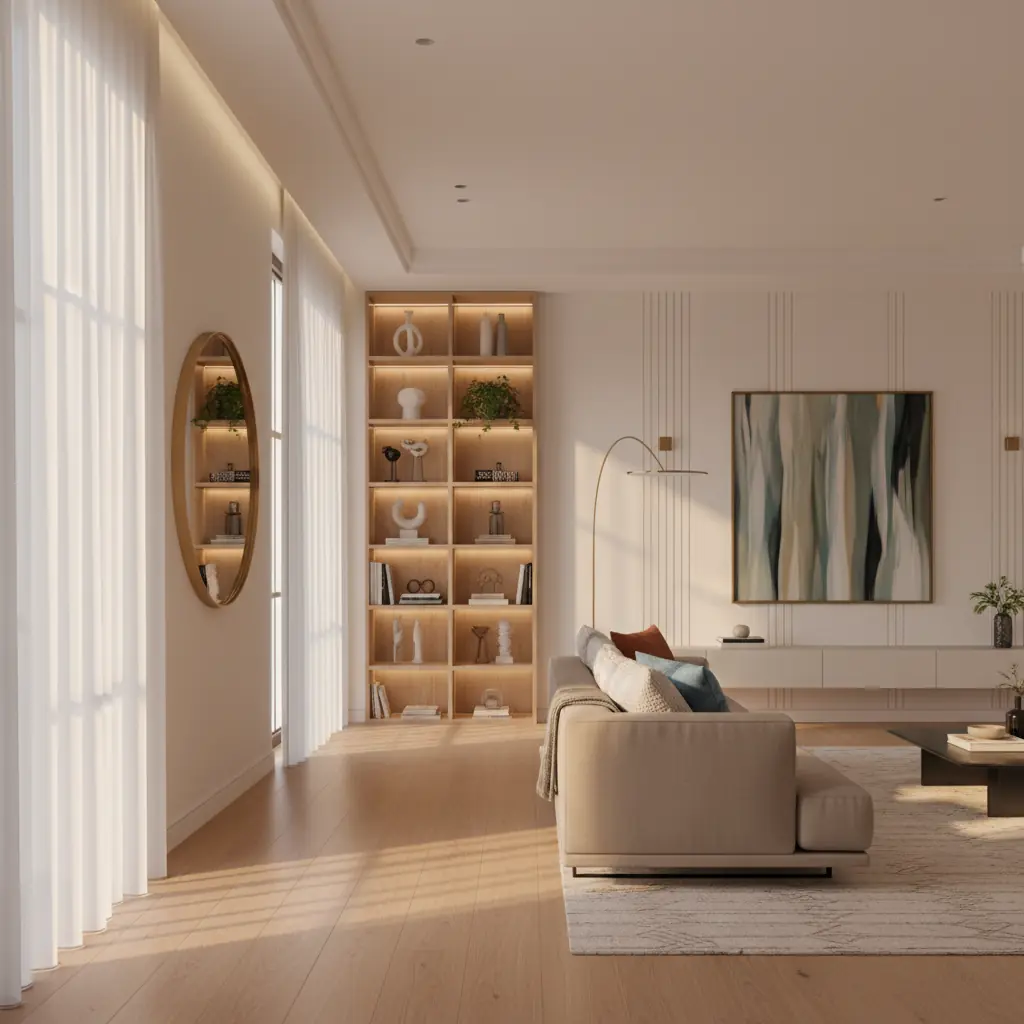
Why low ceilings feel oppressive and how to create an illusion of height
Standard ceiling height in modern homes typically ranges from 8 to 9 feet, offering a comfortable sense of openness. However, many older apartments, basements, and converted attic spaces often feature ceilings at 7 feet or even lower. This missing foot (or two) creates a disproportionate psychological effect. The room can feel compressed, heavy, and even claustrophobic in a way that the actual square footage doesn't quite explain. The reason is profound: our perception of room size is often more heavily influenced by vertical proportions than horizontal ones. A 200-square-foot room with 10-foot ceilings feels undeniably spacious, even grand. The same 200-square-foot room with 7-foot ceilings can feel like a cramped box.
Studies in environmental psychology have even indicated that higher ceilings can improve cognitive performance and a sense of freedom. In fact, research published in the Journal of Environmental Psychology suggests that rooms with higher ceilings are associated with feelings of freedom and creativity, whereas lower ceilings can evoke feelings of constraint.
The good news: tricking the eye into perceiving more height is surprisingly achievable. Every technique we'll explore below works by either drawing the eye upward, blurring the physical boundary between wall and ceiling, or creating strong vertical visual lines that subtly elongate the room. Used together, these strategies can make a 7-foot ceiling feel much closer to 8 — a critical difference that transforms uncomfortable into perfectly fine, and even inviting. Habitas allows you to experiment with many of these techniques on your actual room photo, letting you visualize the impact before making any changes.
How can floor-to-ceiling curtains make a room feel taller?
This is arguably the single highest-impact trick for low ceilings, and it costs almost nothing extra compared to standard curtain installations. The principle is simple yet powerful: hang curtain rods as close to the ceiling as possible — ideally mounted on the ceiling itself with track systems or within 2-3 inches of the ceiling line. Then, let the curtains fall all the way to the floor (or even puddle slightly for a luxurious touch). When curtains span the full height of the wall, the eye reads the fabric as a continuous, uninterrupted vertical line from floor to ceiling, which dramatically elongates the perceived wall height.
The common mistake most people make is hanging curtains at the window frame. This creates an unintentional horizontal line across the wall at window height (typically 6-7 feet), effectively drawing a visual boundary that lowers the ceiling further. Even if the curtains then drop to the floor, that prominent horizontal rod line interrupts the crucial vertical flow. By mounting high and letting them fall, the room immediately feels taller. For maximum effect, choose curtains in a color similar to your walls so the fabric blends seamlessly with the wall, rather than creating a contrasting block that breaks up the vertical plane.
Sheer curtains or lightweight fabrics work especially well in low-ceiling rooms because they allow natural light to filter through, preventing the space from feeling heavy or enclosed, while still creating that essential floor-to-ceiling vertical line. The translucency prevents the fabric from adding visual weight to an already compressed space, maintaining an airy feel. Consider also using a [color drenching technique](/blog/color-drenching-technique) where curtains, walls, and even trim are painted or chosen in very similar tones to further blur boundaries and enhance perceived height.
What paint strategies make a low ceiling appear higher?
The strategic use of paint is a low-cost, high-impact way to manipulate perception. When the ceiling is the lightest surface in the room, it visually recedes — the brain instinctively interprets lighter colors as farther away. Paint your ceiling a crisp, bright white (or the absolute lightest tone in your chosen color palette) even if your walls are a medium tone. This contrast creates an illusion that the ceiling is floating above the walls rather than pressing down on them.
To take this concept further, extend the ceiling color 6-12 inches down the wall. This technique, often called a "ceiling stripe" or "faux crown molding," blurs the conventional wall-ceiling boundary and tricks the eye into reading the ceiling as larger (and therefore higher) than it actually is. For instance, if your walls are a medium gray, paint the top 8-10 inches of the wall in the same brilliant white as the ceiling. The transition point between the white stripe and the wall color then reads as the ceiling line, even though the actual ceiling is lower. It’s a subtle optical illusion, but one that undeniably works. You can explore different [AI color palette generator](/blog/ai-color-palette-generator) options to find the perfect light shade for your ceiling.
Another powerful paint strategy involves vertical stripes. Whether through wallpaper, a painted accent wall, or subtle stenciling, vertical stripes are the pattern equivalent of floor-toceiling curtains. They create strong upward visual lines that naturally elongate the room. For an elegant and sophisticated effect, consider thin stripes (1-2 inches wide) in a subtle tone-on-tone palette — for example, alternating matte and semi-gloss stripes in the exact same color. This adds vertical movement without feeling busy or overly dramatic. Conversely, avoid horizontal stripes entirely in low-ceiling rooms, as they widen the room but make ceilings feel even lower.
How does furniture height impact the perception of ceiling height?
Furniture height relative to ceiling height critically determines how much open air is visible above your furniture line, and thus how spacious a room feels. In a room with standard 8-foot ceilings, a typical 30-inch-high sofa leaves a generous 66 inches of visible wall above it, providing plenty of breathing room. However, in a room with 7-foot ceilings, that same 30-inch sofa leaves only 54 inches, making the room feel noticeably stuffed and compressed. Switching to a low-profile sofa (around 24-26 inches high) instantly recovers 4-6 inches of visible wall, which is perceptually significant.
Apply this principle to every piece of furniture in the room:
- **Beds:** Opt for platform beds or bed frames with low headboards instead of tall, ornate ones. - **Storage:** Choose low-profile dressers or credenzas over tall chests or armoires. - **Tables:** Select coffee tables under 16 inches high instead of the standard 18-20 inches. - **Shelving:** Avoid tall bookcases that extend close to the ceiling – they effectively close the gap between furniture and ceiling, exacerbating the feeling of compression. If shelving is necessary, consider open, floating shelves positioned lower or with significant vertical spacing.
For seating, floor cushions, poufs, and low armchairs (Japanese-inspired furniture styles are excellent here) further lower the visual center of gravity of the room. The room feels most spacious and airy when you are in it, sitting at a low vantage point with the maximum amount of visible wall and ceiling above you. Before making any purchases, use an [AI furniture arrangement tool](/blog/ai-furniture-arrangement-tool) to test different heights and configurations in your space. This approach not only enhances the feeling of height but also promotes a more open, uncluttered aesthetic, which is essential for smaller or lower rooms.
How can vertical artwork and visual lines make a low-ceiling room feel taller?
The orientation and placement of your wall decor play a crucial role in directing the eye. Always hang artwork in portrait (vertical) orientation rather than landscape (horizontal). A tall, narrow piece naturally draws the eye upward, emphasizing the vertical dimension of the room. Conversely, a wide, short piece will emphasize the horizontal, which is the exact opposite of what you want in a low-ceiling space. If you are creating a gallery wall, arrange pieces in vertical columns or a clustered vertical composition rather than sprawling horizontal rows.
Beyond framed art, consider other elements that create strong vertical lines:
- **Mirrors:** A tall, lean mirror leaning against a wall or hung vertically is incredibly effective. It not only draws the eye up but also reflects light and visual space, further enhancing the feeling of openness. This is a classic trick used by designers to make rooms feel larger in all dimensions. - **Vertical Wall Paneling or Wainscoting:** If considering architectural details, vertical shiplap or beadboard can add texture and interest while creating strong upward lines. Ensure the wainscoting doesn't stop too high, which could cut off the wall and visually lower the ceiling. - **Tall, Slender Plants:** Introducing a tall, narrow houseplant, such as a Fiddle Leaf Fig or a Dracaena, in a corner can draw the eye upwards without adding bulk. - **Open Vertical Shelving:** Instead of bulky closed cabinets, opt for open shelving units that are tall and narrow. These create vertical lines and allow the wall behind them to show through, maintaining an open feel.
These deliberate choices in artwork and decorative elements help to continuously guide the viewer's gaze from the floor towards the ceiling, counteracting the natural tendency to notice the ceiling's low height.
What is the best lighting for rooms with low ceilings?
Lighting is a potent tool for manipulating perception, and it's where many people make critical mistakes in low-ceiling rooms. Pendant lights and chandeliers that hang 12-18 inches (or more) below the ceiling are disastrous. They effectively bring the ceiling height down to eye level, create head-clearance issues, and make the room feel incredibly cramped and busy.
The best strategy for general illumination in low-ceiling rooms is **recessed lighting** (can lights or pot lights). These fixtures sit flush with the ceiling, providing ample illumination without stealing any precious headroom or adding visual clutter. If recessed lighting is not an option (common in rental properties or older homes due to installation complexity and cost), **flush-mount fixtures** that sit directly against the ceiling are the next best alternative. Look for sleek, minimalist designs that provide good light dispersion.
However, the real secret weapon for enhancing height with lighting is **uplighting**.
- **Floor Lamps with Uplight:** Positioned in the corners of a low-ceiling room, floor lamps that direct light upward onto the ceiling wash it with brightness. This creates a dramatic perception of height – the brightly illuminated ceiling appears to float above the dimmer walls. - **Wall Sconces with Upward Light:** Similar to floor lamps, wall sconces that cast light upwards create vertical light lines and brighten the upper portions of the walls and ceiling. - **Picture Lights/Accent Lights:** Even small lights aimed strategically at the top edge of walls or art can create subtle uplighting effects.
Combine uplighting with the light-painted ceiling strategy, and the effect compounds, making the ceiling feel significantly higher. Habitas lets you experiment with different lighting and furniture arrangements before buying anything — upload your room and generate variants to see which combination of low furniture, vertical elements, and lighting gives you the most height and spaciousness. In just minutes, you can get realistic [AI generated room designs](/blog/ai-generated-room-designs-realistic) to visualize your options.
Can mirrors and reflective surfaces make a low-ceiling room appear taller?
Absolutely! Mirrors are an age-old designer's trick for expanding any space, and they are particularly effective in rooms with low ceilings. By reflecting light, views, and the room itself, mirrors create an illusion of depth and openness that can dramatically mitigate the feeling of compression.
**How to use mirrors effectively:**
- **Tall, Vertical Mirrors:** As mentioned with artwork, a large mirror hung vertically or leaning against a wall immediately draws the eye upwards. The reflection of the ceiling in the upper portion of the mirror will visually extend the ceiling height. - **Strategic Placement:** Position mirrors opposite windows to reflect natural light and outdoor views, making the room feel brighter and less enclosed. Placing a mirror behind a light source, like an uplighting floor lamp, can also amplify its effect. - **Mirrored Furniture:** Consider furniture pieces with mirrored accents, such as a mirrored coffee table or a dresser with a mirrored top. These subtle reflections can contribute to the overall feeling of spaciousness without being overwhelming. - **Avoid Overuse:** While powerful, too many mirrors can make a room feel disorienting. A few strategically placed pieces are more effective than covering every wall.
Beyond traditional mirrors, any reflective surface can contribute. High-gloss paint finishes on walls (though often avoided in favor of matte for ceilings to recede) or furniture can bounce light around, helping a room feel more open and airy.
The power of vertical storage and minimalist design
Clutter is the enemy of perceived space, especially in rooms with low ceilings. A cluttered room feels smaller and more compressed, drawing attention to its physical boundaries. Embracing a minimalist approach, where every item has its place and surfaces are kept clear, can significantly enhance the feeling of openness.
**Vertical Storage Solutions:**
- **Built-in Cabinetry:** If renovation is an option, consider built-in cabinetry that extends to the ceiling. Unlike freestanding tall bookcases that can break up the wall plane, built-ins create a seamless, vertical line that visually elongates the wall. - **Floating Shelves:** Opt for floating shelves rather than bulky closed units. Arrange them vertically to guide the eye upwards. Ensure they are not overfilled, as this negates their airy effect. - **Slim Wall-Mounted Units:** Choose slim, wall-mounted storage solutions that don't protrude far into the room, maintaining clear sightlines. - **Avoid Overhead Cabinets:** In kitchens, for example, consider open shelving or fewer upper cabinets to prevent the feeling of a heavy, oppressive ceiling line.
By prioritizing vertical storage and maintaining a minimalist aesthetic, you prevent visual "noise" from dragging the eye down. This enhances the impact of all other height-enhancing tricks. For budget-friendly ideas on decluttering and maximizing space, you might find inspiration in our guide on [apartment decorating on a budget](/blog/apartment-decorating-budget).
Using doors and trim to enhance verticality
Often overlooked, the treatment of doors and trim can subtly reinforce the illusion of height. Standard door frames can create a strong horizontal break at 80 inches, further emphasizing a low ceiling.
**Strategies for doors and trim:**
- **Paint Doors the Same Color as Walls:** Painting doors and their frames the same color as the surrounding walls helps them blend in, reducing visual interruptions that chop up the vertical plane. This allows the eye to flow continuously across the wall. - **Tall Baseboards:** While it might seem counterintuitive, opting for taller baseboards (6-8 inches or more) can actually make walls appear taller. This is because they anchor the room firmly to the floor, making the vertical space above them seem more substantial by comparison. - **Extend Door Frames:** If possible during a renovation, extending door frames (architraves) closer to the ceiling or even up to the ceiling can create an impressive, grander opening that visually lifts the entire room. This is a more involved change but can have a dramatic effect.
By treating these architectural details thoughtfully, you contribute to a cohesive vertical flow that enhances the perception of height without drawing attention to the actual ceiling line.
Integrating natural light and open concepts
While not always an option in every low-ceiling room (especially basements), maximizing natural light and embracing open concepts can significantly enhance the feeling of spaciousness and height.
- **Unobstructed Windows:** Keep windows as clear as possible. Avoid heavy drapes or blinds that block light. Use sheer curtains (as discussed) or simple roller blinds that recede when open. - **Reflective Surfaces:** Position furniture and decor to bounce natural light around the room. White or light-colored walls and ceilings are particularly effective at amplifying ambient light. - **Open Concept Layouts:** If you have the flexibility, an open-concept living area—where living, dining, and kitchen spaces flow together without walls—can create a much larger, airier feel. While it doesn't physically raise the ceiling, the expanded horizontal sightlines can compensate for the vertical constraint. In today's market, properties with open layouts are highly desirable; a recent survey found that **43% of homebuyers** rank an open-concept kitchen-living area as their most wanted feature.
By combining these strategies, you're not just decorating; you're actively re-engineering the visual perception of your space. Remember, good design for low ceilings isn't about ignoring the challenge, but ingeniously overcoming it. Tools like Habitas can help you visualize these complex transformations instantly, allowing you to mock up dozens of design variations in minutes, a process that might take weeks with traditional designers and **save up to 80% on initial design costs**.
---
Frequently Asked Questions
### What is considered a low ceiling height?
While there's no strict universal definition, ceilings under 8 feet (2.4 meters) are generally considered low in modern interior design. Many older homes, apartments, and basement conversions can have ceilings as low as 7 feet or even 6 feet 8 inches, which significantly impacts the room's psychological feel. Standard modern construction typically aims for 8 to 9 feet, with luxury homes often featuring 10 feet or higher.
### Should I paint low ceilings white?
Yes, absolutely. Painting low ceilings a bright, crisp white is one of the most effective ways to make them feel higher. White reflects light, making the ceiling visually recede and appear further away. Lighter colors, in general, create a sense of openness. You can further enhance this effect by extending the ceiling color a few inches down the walls.
### Can mirrors really make a room with low ceilings look taller?
Yes, mirrors are incredibly effective. A tall, vertical mirror not only draws the eye upwards but also reflects light and the visual space of the room, creating an illusion of depth and openness. Placing a large mirror strategically to reflect natural light or an interesting view can make a room feel significantly larger and less confined.
### What kind of lighting should I avoid with low ceilings?
You should definitely avoid hanging pendant lights, chandeliers, or any fixture that dangles significantly below the ceiling line. These types of lights bring the effective ceiling height down to eye level, creating head-clearance issues and making the room feel cramped and visually cluttered. Stick to flush-mount fixtures or, ideally, recessed lighting.
### Are vertical stripes a good idea for walls in a low-ceiling room?
Yes, vertical stripes are an excellent idea. Similar to how floor-to-ceiling curtains draw the eye up, vertical stripes create strong upward visual lines that elongate the room. For a sophisticated look, choose subtle tone-on-tone stripes (e.g., matte and semi-gloss in the same color) rather than bold, contrasting ones, which can feel too busy in a small space.