Mid-Century Modern Kitchen Design: Retro Style for 2026
Craft a stunning mid-century modern kitchen for 2026: explore flat-front cabinets, bold colors, terrazzo, Sputnik lights, and integrated tech.
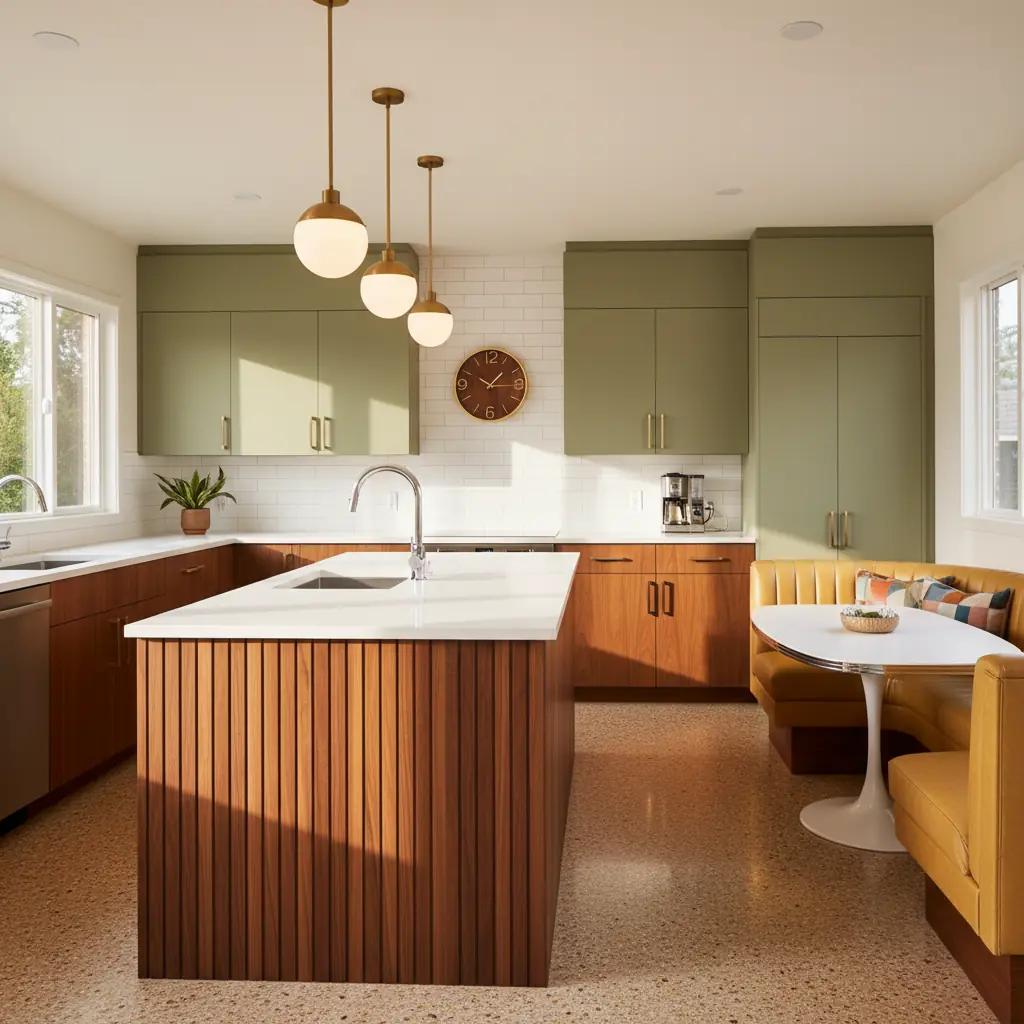
What defines a mid-century modern kitchen?
Mid-century modern kitchens pull from the design movement that dominated the 1950s through 1970s — an era when kitchens transitioned from hidden workrooms to showcases of modern living. This pivotal shift saw the kitchen become the heart of the home, a space for both cooking and entertaining. The defining DNA of this style is clear: clean horizontal lines, flat surfaces, organic curves as a contrast, bold color used with confidence, and a thoughtful mix of natural and manufactured materials. Unlike the sterile all-white kitchens that dominated the 2010s (for tips on those, see [all-white room design tips](/blog/all-white-room-design-tips)), mid-century kitchens burst with personality and an inviting warmth.
The architectural hallmarks include flat-front cabinetry with minimal hardware, open shelving mixed with closed storage, integrated appliances where possible, and a strong connection between kitchen and living space. The mid-century era pioneered the open-plan kitchen, a design choice that continues to resonate today. According to a recent Houzz study, over 65% of homeowners prioritize open-concept living in their kitchen renovations, a direct lineage from mid-century design principles. The best modern interpretations maintain that flow while incorporating current technology — induction cooktops, smart refrigerators, and convection ovens hidden behind period-appropriate cabinet fronts.
What makes mid-century modern particularly appealing in 2026 is its inherent optimism. These kitchens celebrate color, fun, and expressive design in a way that feels fresh against the decade of gray-and-white minimalism that preceded it. The retro references are joyful without being kitschy — a fine line that separates good mid-century design from costume. It's about a curated nod to the past, infused with the convenience and innovation of the present.
Cabinet styles and configurations for an authentic mid-century look
Flat-front (slab) cabinets are the absolute foundation of a mid-century modern kitchen. No raised panels, no shaker profiles, no ornamental molding. The beauty comes from the material and color rather than the joinery detail. For an authentic mid-century feel, choose warm wood tones — walnut is the quintessential choice, beloved for its rich, dark grain. Teak and white oak are close seconds, offering lighter but equally inviting aesthetics. A full set of custom walnut slab cabinets can run $15,000-$30,000; semi-custom options from brands like Reform (which makes mid-century fronts for IKEA cabinet boxes) bring this down to a more accessible $5,000-$10,000. Consider responsibly sourced or reclaimed wood veneers for a sustainable choice that still achieves the desired look and feel.
Two-tone cabinets are a signature mid-century move: warm wood on the lowers and a painted color or white on the uppers, or the reverse. This technique breaks the visual weight of a full kitchen of cabinetry while introducing the playful color dynamics that define the era. The upper cabinets can also incorporate glass fronts with thin metal frames — a detail borrowed from the iconic Case Study Houses that feels both retro and current. Frosted or reeded glass can add texture and obscure contents for a cleaner aesthetic.
Hardware should be minimal or invisible. Integrated finger pulls routed directly into the cabinet edge ($0 if built into the door) are the purest mid-century choice, offering seamless lines. If you prefer visible hardware, slim brass or brushed gold bar pulls ($3-$8 each, Schoolhouse or Rejuvenation offer period-appropriate options) in a horizontal orientation maintain the clean horizontal lines crucial to the style. Avoid knobs — their traditional round profile is too contrasting for mid-century's sleek aesthetic.
Mid-century color palette: bold accents on warm foundations
The mid-century color story starts with warm wood tones and white or cream as the neutral base, then introduces one or two bold colors as deliberate accents. Avocado green — yes, it is back, and it has been rehabilitated from its 1970s harvest gold association — works beautifully on a lower cabinet run, an island, or a tiled backsplash. The 2026 version is slightly muted, more sage-olive than the original, making it livable as a kitchen color rather than a novelty.
Mustard yellow, teal blue, and burnt orange are the other classic mid-century accent options. These vibrant hues infuse energy and playfulness. Use them on one prominent surface — the island, a section of cabinetry, or the backsplash — not everywhere. The discipline of restraint is what separates chic mid-century from retro costume. A walnut and white kitchen with a mustard yellow island is sophisticated and striking. That same kitchen with mustard cabinets, a teal backsplash, and orange barstools risks becoming a theme park. For help visualizing these bold choices, an [AI color palette generator](/blog/ai-color-palette-generator) can be incredibly useful.
Warm wood tones (walnut, teak, white oak) function as a color in themselves, providing depth and natural texture. A kitchen with white walls, walnut cabinets, brass hardware, and a single avocado green backsplash wall has a rich, layered color story using only two actual colors. The wood provides warmth and visual depth that counts as a full design element, grounding the space and connecting it to nature.
Countertops and backsplash: butcher block, terrazzo, and geometric tile
Butcher block countertops ($30-$60 per square foot for walnut, $15-$30 for maple) are the most authentically mid-century surface. They are warm, forgiving, and develop a beautiful character and patina over years of use. The maintenance concern is real — they need oiling every 4-6 weeks and cannot handle standing water without vigilance — but many homeowners find the patina process rewarding rather than burdensome. For areas around sinks where water contact is constant, pair butcher block on the island with a more durable surface like quartz or stainless steel on the perimeter.
Terrazzo is the mid-century countertop making the strongest comeback. Originally popular in 1950s and 60s institutional and residential projects, terrazzo features chips of marble, quartz, or glass suspended in a cement or epoxy matrix. Modern terrazzo slabs ($60-$120 per square foot installed) come in custom color combinations — warm white with blush and terracotta chips reads distinctly mid-century, while black with white and primary colored flecks offers a bolder statement. Prefabricated terrazzo-look quartz ($50-$80 per square foot) offers the visual appeal at a lower cost and with zero maintenance, making it a highly practical choice for busy households.
Backsplashes are where mid-century pattern truly enters the kitchen. Geometric tile — hexagonal, elongated diamond, or fish-scale shapes — in a bold color or with contrasting grout creates the visual pop that mid-century demands. Fireclay Tile and Mercury Mosaics offer handmade options ($15-$30 per square foot) in authentic mid-century colors like olive, mustard, and deep teal. A budget alternative: large-format subway tile in a non-standard color (sage, mustard, or pale blue) with contrasting grout for $3-$8 per square foot. This approach offers a clean, modern take on a classic. While a full kitchen renovation can range from $20,000 to $60,000 for a mid-sized space, upgrading countertops and backsplash offers one of the highest returns on investment, with homeowners recouping an average of 75-80% of the cost.
Lighting fixtures: Sputnik pendants, globe lights, and Nelson-inspired designs
Lighting is the single highest-impact mid-century element because the era produced some of the most iconic fixture designs in history — and faithful reproductions are widely available. The Sputnik chandelier, with its starburst of radiating arms tipped with small bulbs, is the definitive mid-century statement light. Often featuring brass or chrome, its atomic-age aesthetic instantly transports a space. Original vintage Sputniks command $500-$2,000+, but excellent reproductions run $150-$400 (West Elm, AllModern, and Etsy sellers offer quality options). Place it centrally in the kitchen or over an island for maximum impact.
George Nelson-inspired bubble pendants and saucer lights ($100-$300 for reproductions, $500+ for authentic Herman Miller originals) provide softer, diffused light that works beautifully over kitchen islands and dining areas. Their organic, sculptural forms, often made of a translucent plastic material, contrast with the clean cabinet lines in a way that feels intentionally designed rather than mismatched. Globe pendants — simple spheres in opal glass or smoked glass, mounted singly or in clusters — are a more subtle mid-century choice that works in kitchens where a Sputnik might feel too dramatic, offering understated elegance.
Under-cabinet lighting is the functional layer that cannot be overlooked. LED strip lights ($20-$50 for a full run) concealed beneath upper cabinets illuminate countertops without visible fixtures, providing essential task lighting. For mid-century authenticity, choose warm white LEDs (2700K) — the era predated the cool blue LED aesthetic by decades. The combination of a statement overhead fixture and hidden task lighting creates the layered illumination that makes a kitchen both beautiful and functional for actual cooking.
Appliances that fit the look and modern needs
Retro-styled appliances are the finishing touch that commits a kitchen to the mid-century era while providing all the functionality of 2026. SMEG ($1,500-$2,500 for a refrigerator, $300-$500 for a toaster or kettle) offers the most recognizable retro line — their rounded, chrome-detailed appliances in colors like pastel green, cream, red, and black are designed specifically to evoke the 1950s. The SMEG FAB refrigerator in pastel green or cream against a walnut cabinet wall is one of the most photographed kitchen combinations on design social media for good reason.
Big Chill ($4,000-$8,000 for a full-size refrigerator) takes the retro concept further with full-size appliances in over 200 custom colors, all with professional-grade modern internals. Their ranges, refrigerators, and dishwashers look like they belong in a 1960s showcase home but perform to 2026 standards, often incorporating smart technology like WiFi connectivity and energy-efficient ratings. For a lower budget, GE and Samsung both offer panel-ready appliances that can be fronted with custom walnut or painted panels to integrate seamlessly with mid-century cabinetry, maintaining sleek lines.
Small appliances matter too. A KitchenAid stand mixer in a bold color ($300-$400) left on the counter doubles as a design object. Ratio coffee makers ($300-$500) and Fellow kettles ($100-$165) feature designs clean enough to sit alongside mid-century furniture, marrying form and function. Habitas can generate kitchen redesigns that incorporate specific appliance styles and colors, allowing you to visualize how a cream SMEG refrigerator or a walnut-paneled dishwasher would look in your actual kitchen layout before making significant purchases. In fact, using AI-powered design platforms like Habitas can reduce the initial design phase from several weeks to just minutes, generating high-fidelity visualizations instantly. Learn more about [how AI interior design works](/blog/ai-interior-design-how-it-works).
Flooring Choices for a Mid-Century Modern Kitchen
The right flooring choice is essential to complete the mid-century modern aesthetic, providing a cohesive foundation for your design. Several options can achieve the look while offering modern durability and comfort.
**Hardwood:** Classic hardwood floors, particularly in warm tones like walnut or oak, are an authentic choice. They offer timeless elegance and connect seamlessly with the wood cabinetry. Opt for wide planks with a natural finish to enhance the organic feel. While beautiful, hardwood requires careful maintenance, especially in a high-traffic area like a kitchen.
**Linoleum:** Period-authentic and making a significant comeback, modern linoleum is a sustainable and durable option. Unlike vinyl, true linoleum is made from natural materials (linseed oil, cork dust, wood flour) and comes in a vast array of colors, including those vibrant mid-century hues. It's soft underfoot, naturally antimicrobial, and highly resilient.
**Cork:** Another excellent eco-friendly and period-appropriate choice, cork flooring offers incredible warmth, sound absorption, and comfort underfoot. Its natural patterns and warm tones complement the mid-century palette perfectly. Cork is also water-resistant (when properly sealed) and provides a unique textural element.
**Large-Format Tile:** For a more contemporary interpretation, large-format porcelain or ceramic tiles in a solid color (like a muted sage, cream, or even a dark charcoal) or a subtle geometric pattern can work. This offers exceptional durability and ease of maintenance, making it a practical choice for modern families. Ensure grout lines are minimal for a clean, sleek appearance.
Styling Your Mid-Century Modern Kitchen
Beyond the major elements, the right styling and accessories elevate a mid-century modern kitchen from merely retro-inspired to truly authentic and inviting.
**Organic Forms and Textures:** Incorporate pottery, glassware, and serving dishes with organic, sculptural forms. Look for pieces in earthy tones, bold primary colors, or textured ceramics. Avoid overly ornate or rustic items.
**Houseplants:** Biophilic design, the integration of nature into interiors, was a subtle but important part of mid-century modern homes. Lush houseplants in ceramic planters add life and soften the clean lines of the kitchen. Consider snake plants, ZZ plants, or monsteras for their sculptural forms. For more ideas on integrating greenery, see our guide on [best plants for interior design](/blog/best-plants-for-interior-design).
**Art and Wall Decor:** Simple, abstract art prints or graphic posters from the era can add personality. Consider pieces with geometric shapes or bold color fields. Metal wall sculptures or clocks with atomic-age designs are also perfect accents.
**Textiles:** While less prominent in kitchens, dish towels, oven mitts, and even small rugs can introduce subtle patterns or accent colors. Look for geometric prints, abstract designs, or solid colors that echo your overall palette. The key is restraint – don't overcrowd surfaces.
**Vintage Touches:** A few carefully chosen vintage pieces, like a classic Danish modern serving tray, a ceramic cookie jar, or a collection of mid-century cookbooks, can add character without becoming kitschy. The goal is to blend old and new seamlessly, creating a space that feels lived-in and thoughtfully designed.
Frequently Asked Questions
### What defines a mid-century modern kitchen?
A mid-century modern kitchen is characterized by clean horizontal lines, flat-front (slab) cabinetry, a confident use of bold accent colors against warm wood tones, a mix of natural and manufactured materials, and a strong connection to adjacent living spaces, often embracing an open-plan layout. It emphasizes functionality, optimism, and an understated elegance.
### What colors are best for a mid-century modern kitchen?
The best colors for a mid-century modern kitchen typically start with a warm neutral base of white, cream, or natural wood tones (like walnut, teak, or white oak). Bold accent colors such as avocado green (a muted sage-olive is popular now), mustard yellow, teal blue, or burnt orange are then introduced on specific elements like an island, a section of cabinets, or the backsplash to provide pops of personality.
### Are mid-century modern kitchens practical for 2026?
Absolutely. Mid-century modern kitchens are highly practical for 2026. While they evoke a retro aesthetic, modern interpretations seamlessly integrate contemporary technology like induction cooktops, smart refrigerators, and integrated appliances. The emphasis on clean lines and minimal clutter also promotes efficient and easy-to-maintain spaces, making them ideal for modern living.
### How can I achieve a mid-century modern look on a budget?
To achieve a mid-century modern look on a budget, focus on key impact elements. Opt for semi-custom flat-front cabinet fronts for IKEA boxes (like Reform), choose budget-friendly butcher block or terrazzo-look quartz countertops, and use large-format subway tile in an accent color with contrasting grout for the backsplash. For lighting, look for high-quality reproductions of Sputnik or globe pendants rather than originals. Utilize bold paint colors strategically, and scour vintage shops for authentic small accessories.
### What are key elements of mid-century modern lighting?
Key elements of mid-century modern lighting include iconic statement fixtures like Sputnik chandeliers, which feature radiating arms and multiple bulbs, and George Nelson-inspired bubble or saucer pendants, known for their organic, diffused glow. Globe pendants (simple spheres in opal or smoked glass) are also popular. Layering is crucial, combining these decorative fixtures with functional, concealed under-cabinet LED task lighting.
### Is terrazzo a good choice for kitchen countertops?
Yes, terrazzo is an excellent choice for modern mid-century kitchen countertops. Its unique visual appeal, featuring chips of marble, quartz, or glass in a binder, is authentically mid-century. Modern terrazzo is durable, easy to clean, and available in custom color combinations. Terrazzo-look quartz is also a fantastic, low-maintenance alternative that provides the same aesthetic with even greater resistance to stains and scratches.