Diseño de Habitaciones Multifuncionales: Domina Tu Espacio de Triple Función con Estilo
Diseña una habitación que sirva múltiples propósitos sin esfuerzo, desde home office hasta habitación de huéspedes, gimnasio o sala de juegos. Obtén estrategias expertas para muebles transformables, separación visual y almacenamiento inteligente.
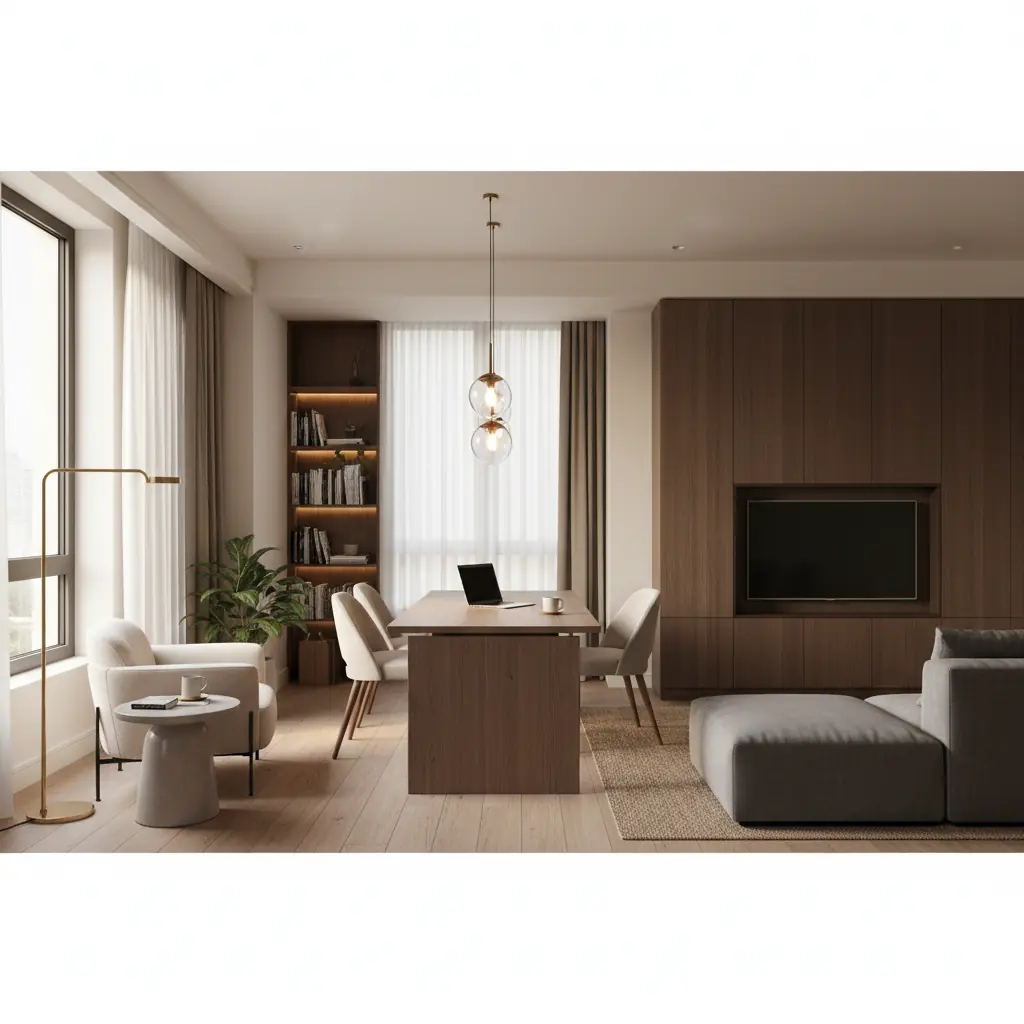
El Ascenso de la Habitación de Triple Función: ¿Por Qué Tu Hogar Necesita Trabajar Más?
Nuestros hogares están evolucionando, impulsados por cambios en el estilo de vida y el creciente costo del espacio. Atrás quedaron los días en que una habitación de sobra permanecía ociosa, esperando a los huéspedes que llegaban solo unas pocas veces al año. Hoy, es probable que esa misma habitación sea un ajetreado home office, un tranquilo rincón de lectura y un cómodo refugio para los visitantes. La sala de estar podría transformarse de un espacio elegante para el entretenimiento en una animada sala de juegos en un instante.
Esto no es solo una tendencia; es una necesidad. Un estudio reciente encontró que **aproximadamente el 35% de la fuerza laboral global ahora trabaja de forma remota al menos a tiempo parcial**, lo que ha impulsado significativamente la demanda de soluciones eficientes para el home office. Mientras tanto, con el costo promedio del metro cuadrado residencial en las principales áreas metropolitanas superando a menudo los $500, optimizar cada centímetro de tu hogar es más crucial que nunca. El desafío no es solo hacer que una habitación cumpla múltiples funciones, es hacer que las cumpla _bien_, sin que ninguna función se sienta como una ocurrencia tardía o cree una abrumadora sensación de desorden.
Las combinaciones multifuncionales más comunes que encontramos son la oficina-más-habitación de huéspedes, la sala de juegos-más-sala de estar y el gimnasio-más-dormitorio. Si bien cada combinación tiene demandas únicas, todas se basan en los mismos principios fundamentales: mobiliario transformable, separación visual inteligente, almacenamiento ingenioso y oculto, y una clara jerarquía de funciones. Profundicemos en cómo puedes diseñar una habitación de triple función verdaderamente versátil y armoniosa.
Mobiliario Que Transforma Tu Habitación Con Facilidad
La piedra angular de cualquier espacio multifuncional exitoso es el mobiliario que puede adaptarse, desaparecer o cambiar su propósito con un mínimo esfuerzo. Esto no se trata de los incómodos sofás cama de décadas pasadas; el mobiliario transformable moderno es elegante y altamente práctico.
### El Poder de las Camas Abatibles (Murphy Beds)
Para una combinación de home office y habitación de huéspedes, una cama abatible (o Murphy bed) es posiblemente la mejor inversión individual. Los diseños modernos están muy lejos de sus torpes predecesoras. Se pliegan planas contra la pared, integrándose perfectamente en la arquitectura de la habitación. Muchos modelos contemporáneos incluyen estantes integrados, un escritorio plegable en el panel exterior, o incluso un sofá incorporado, creando una elegante sala de estar cuando la cama está guardada.
Cuando la cama está levantada, tienes un home office completo y sin compromisos o un espacio de vida secundario. Cuando llegan los huéspedes, la habitación se convierte en cuestión de segundos. La calidad del colchón también ha mejorado enormemente, y la mayoría ahora admite colchones de espuma viscoelástica estándar de hasta veinticinco centímetros de grosor, asegurando que tus huéspedes duerman cómodamente. Los costos de instalación para una cama abatible básica pueden oscilar entre $1,500 y $5,000, pero la funcionalidad añadida y el espacio cuadrado preservado la convierten en una inversión que vale la pena.
### Más Allá de la Cama Abatible: Otros Héroes Convertibles
- **Escritorios Convertibles:** Busca escritorios que se plieguen desde una unidad de pared, que tengan ruedas o incluso que se transformen en un tocador o una mesa consola. Estos son perfectos para combinaciones de home office y dormitorio, proporcionando un espacio de trabajo dedicado que puede desaparecer cuando llega el momento de relajarse. - **Mesas Nido:** Un juego de mesas nido ofrece una versatilidad increíble. Pueden expandirse para proporcionar múltiples superficies para el entretenimiento o proyectos, luego guardarse ordenadamente para liberar espacio en el suelo para jugar o hacer ejercicio. - **Pufs y Bancos de Almacenamiento:** Estas son maravillas multitarea. Un puf resistente puede servir como asiento adicional, una mesa de centro (especialmente con una bandeja) y, fundamentalmente, una solución de almacenamiento discreta para juguetes, mantas o equipo de ejercicio. - **Sofás Cama y Divanes:** Para escenarios de habitaciones de huéspedes donde una cama abatible completa no es factible, un sofá cama de alta calidad o un diván con cama nido ofrecen cómodas opciones para dormir que también sirven como asientos durante el día. Invierte en un buen colchón para el sofá cama; los días de las incómodas barras han terminado en gran medida con los mecanismos más nuevos. - **Estanterías Modulares:** Los sistemas que te permiten reconfigurar estantes, añadir superficies de escritorio o incluso incorporar gabinetes son increíblemente flexibles. Pueden adaptarse a medida que tus necesidades cambian, apoyando diferentes funciones de la habitación a lo largo del tiempo.
Para las combinaciones de gimnasio y dormitorio, el objetivo es mantener el equipo de fitness invisible cuando no se usa. Considera un banco de ejercicio plegable que se guarde en un armario, bandas de resistencia colgadas ordenadamente en ganchos de pared detrás de una puerta, y una colchoneta de yoga que se enrolle debajo de la cama. Incluso un juego de mancuernas ajustables puede guardarse en un puf de almacenamiento. El principio aquí es simple: si requiere una transformación complicada, no se usará.
Separación Visual Estratégica y Zonificación para Espacios de Uso Múltiple
Incluso en un espacio pequeño, cada función en una habitación multifuncional se beneficia de tener una zona definida. No se trata de construir nuevas paredes; se trata de crear límites psicológicos y visuales que ayuden a la transición entre actividades y mantengan el orden.
### Creando "Habitaciones Dentro de una Habitación"
- **Alfombras de Área:** La herramienta más simple pero más efectiva para la zonificación. Una alfombra distintiva debajo del área del escritorio y otra diferente debajo del área de asientos o de la cama crea instantáneamente dos "habitaciones" dentro de una. Esto define el propósito y agrupa los muebles. - **Cortinas y Divisores de Ambiente:** Una cortina en un riel de techo ofrece una flexibilidad increíble. Puede ocultar la configuración del home office por completo cuando los huéspedes están durmiendo, o cuando deseas que la habitación se sienta menos orientada al trabajo. Elige una tela que complemente tu decoración: transparente para una separación sutil, opaca para una ocultación total. Alternativamente, las [soluciones para habitaciones con formas irregulares](/blog/awkward-room-shape-solutions) a menudo incluyen pantallas independientes, paneles deslizantes o incluso divisores de madera con listones para una sensación de división más permanente, pero aún abierta. - **Estanterías Abiertas y Unidades de Almacenamiento en Cubos:** No son solo para libros; son excelentes divisores de ambiente. Cuando se coloca perpendicularmente a una pared, una estantería con respaldo abierto permite el paso de la luz mientras crea una barrera visual. Puedes usar cestas decorativas en un lado para juguetes y libros en el otro para una oficina. - **Paredes de Acento o Zonas Pintadas:** Un color de pintura diferente, papel tapiz o incluso un elemento textural en una pared puede definir sutilmente una zona sin ninguna barrera física. Por ejemplo, un tono relajante en la pared detrás de la cama y un color más estimulante en el rincón del home office. - **Disposición de los Muebles:** Coloca los muebles para crear caminos y límites naturales. Un sofá mirando en dirección opuesta a un área de escritorio indica claramente un cambio de función. Una mesa consola detrás de un sofá también puede actuar como divisor.
**Consejo Habitas:** Visualizar estas diferentes configuraciones es crucial. Con Habitas, puedes subir una foto de tu habitación y probar si una cama abatible funciona mejor en la pared norte o en la pared este, o cómo se vería un divisor de estantería dividiendo el espacio. Nuestra [herramienta de organización de muebles con IA](/blog/ai-furniture-arrangement-tool) te permite experimentar con diseños y ver resultados inmediatos y realistas antes de mover un solo mueble.
El Arma Secreta: Soluciones de Almacenamiento Inteligentes
Las habitaciones multifuncionales fallan notablemente cuando la evidencia de una función se desborda en otra. Papeles de oficina visibles desde la cama de invitados, juguetes esparcidos por la sala de estar de adultos o equipo de gimnasio desordenando el suelo del dormitorio pueden anular rápidamente todos los demás esfuerzos de diseño. Aquí es donde el almacenamiento inteligente se convierte en el factor decisivo. La investigación sugiere que **un ambiente desordenado puede reducir la productividad hasta en un 20% y aumentar significativamente los niveles de estrés**, destacando la importancia de un almacenamiento bien pensado.
### Estrategias para un Almacenamiento Impecable
- **Gabinetes Integrados:** Los gabinetes hechos a medida son el estándar de oro para espacios multifuncionales. Pueden diseñarse para integrarse perfectamente con las paredes, ofreciendo almacenamiento de suelo a techo que se ve intencionado e integrado. Pueden albergar cualquier cosa, desde archivos y papel de impresora hasta ropa de cama de invitados y equipo de ejercicio, manteniendo todo fuera de la vista. - **Mobiliario de Almacenamiento Cerrado:** Opta por cómodas, aparadores y consolas multimedia con puertas y cajones en lugar de estanterías abiertas si deseas ocultar el desorden. Estas piezas pueden ser elegantes a la vez que proporcionan un almacenamiento oculto esencial. - **Almacenamiento Vertical:** No subestimes el poder de tus paredes. Unidades de estanterías de suelo a techo, gabinetes montados en la pared y paneles perforados (pegboards) pueden maximizar el almacenamiento sin ocupar un valioso espacio en el suelo. - **Almacenamiento Oculto:** - **Almacenamiento debajo de la cama:** Cajones incorporados en el armazón de la cama o contenedores planos con ruedas pueden guardar ropa de cama, ropa de temporada o juguetes. - **Pufs y bancos de almacenamiento:** Como se mencionó, son invaluable para organizar rápidamente. - **Mobiliario hueco:** Algunas mesas de centro o mesas auxiliares están diseñadas con compartimentos ocultos. - **Organizadores para puertas:** Ideales para objetos pequeños como bandas de resistencia, suministros de oficina o artículos de tocador para invitados. - **Contenedores y Cestas Etiquetadas:** Dentro de tus gabinetes o estanterías, usa contenedores y cestas atractivos y uniformes para categorizar y guardar los artículos. Las etiquetas aseguran que todo tenga un lugar, facilitando el guardar y encontrar las cosas más tarde. Este sistema significa que cada función puede guardarse por completo cuando otra función tiene prioridad. - **Desorden Digital:** Para los espacios de oficina, aprovecha el almacenamiento en la nube y los documentos digitales para minimizar el desorden de papel físico. Un escáner puede transformar documentos físicos en archivos digitales, liberando un espacio de almacenamiento significativo.
Priorizando y Programando el Espacio: Viviendo con Flexibilidad
Una habitación multifuncional perfectamente diseñada aún necesita una estrategia operativa clara. Cada una de estas habitaciones necesita una función principal, la que sirve la mayor cantidad de horas de la semana. Esa función obtiene el mejor espacio: la luz natural, el mobiliario más cómodo y permanente, y la configuración destacada. Las funciones secundarias se adaptan a su alrededor.
### Definiendo la Jerarquía de Tu Habitación
- **Primero la Función Principal:** Si trabajas desde casa a diario pero recibes invitados trimestralmente, el home office es claramente la función principal. Tu escritorio debe ser un elemento permanente, quizás cerca de una ventana. La configuración de la cama de invitados, entonces, es la que se guarda. Si tu sala de estar es principalmente para la relajación de adultos pero necesita adaptarse al juego diario, los asientos principales y la decoración deben reflejar la estética adulta, con elementos aptos para niños fácilmente accesibles pero almacenables. - **El "Ritual de Reinicio":** Para las familias que comparten una sala de juegos-sala de estar, la programación importa inmensamente. Los contenedores de juguetes se sacan durante el día y se guardan a una hora específica cada noche. El ritual de transición —ordenar, atenuar las luces, cambiar del modo de juego al modo adulto, quizás incluso encender una vela— se convierte en una rutina del hogar en lugar de una batalla constante contra el desorden. Diseña el almacenamiento para que esta transición sea rápida y sin fricciones, y realmente sucederá. Este ritual también se aplica a la transición de home office a habitación de huéspedes, asegurando que tu espacio de invitados se sienta acogedor y no como una ocurrencia tardía de oficina.
Profundizando: Arquetipos Específicos de Habitaciones Multifuncionales
Exploremos combinaciones comunes con soluciones de diseño más personalizadas.
### 1. El Dúo Dinámico: Home Office y Habitación de Huéspedes
Este es quizás el desafío multifuncional más común. La clave es asegurar que ninguna función comprometa a la otra.
- **Consideraciones de Diseño:** Si es posible, coloca el escritorio principal cerca de la luz natural, pero asegúrate de que el área para dormir de los huéspedes no esté directamente expuesta a un sol matutino intenso. Una cama abatible con accesorio de escritorio puede colocarse a lo largo de una pared más larga. Considera un escritorio más pequeño y menos obtrusivo si la habitación es realmente compacta. - **Conectividad:** Asegúrate de que haya suficientes tomas de corriente disponibles cerca tanto del área del escritorio como de la cama para cargar dispositivos. Considera integrar puertos USB en el mobiliario o usar regletas inteligentes. - **Comodidad del Huésped:** Cuando la habitación está en "modo huésped", asegúrate de que las superficies estén despejadas para sus pertenencias personales. Proporciona una pequeña mesa de noche (incluso una mesa nido puede servir), una lámpara de lectura y acceso a un armario o cajón vacío. Los [diseños de habitaciones realistas generados por IA](/blog/ai-generated-room-designs-realistic) para habitaciones de huéspedes a menudo incluyen detalles bien pensados como una pequeña tetera y una taza para el café de la mañana. - **Acústica:** Si el home office se utilizará para videollamadas, considera añadir paneles acústicos o cortinas gruesas para ayudar a absorber el sonido, evitando ecos y manteniendo la privacidad para ambas funciones. - **Personalización vs. Neutralidad:** Mantén la decoración general relativamente neutra para atraer a los diferentes gustos de los huéspedes, incorporando toques personales que sean fáciles de quitar u ocultar cuando lleguen los invitados.
### 2. El Centro Familiar: Sala de Juegos y Sala de Estar
Este espacio requiere durabilidad, flexibilidad y una organización inteligente para equilibrar la sofisticación adulta con la diversión apta para niños.
- **Materiales Duraderos y Telas Lavables:** Elige telas de tapicería que sean resistentes a las manchas y fáciles de limpiar (por ejemplo, telas de alto rendimiento, cuero). Las alfombras de área deben ser duraderas y lavables. El piso de madera o laminado a menudo se prefiere sobre la alfombra por su facilidad de limpieza. - **Almacenamiento Integrado para Niños:** En lugar de que los contenedores de juguetes de plástico dominen la habitación, integra el almacenamiento de juguetes en el mobiliario de adultos. Piensa en pufs de almacenamiento, aparadores bajos con cestas decorativas o asientos de ventana incorporados con almacenamiento de tapa elevable. - **Seguridad Primero:** Asegúrate de que todos los muebles estén anclados a la pared para evitar que se vuelquen. Usa bordes redondeados en las mesas cuando sea posible. Mantén los enchufes eléctricos cubiertos. - **Diseño que Crece:** Opta por muebles que puedan adaptarse a medida que los niños crecen. Una estantería baja puede guardar juguetes ahora y exhibir libros o decoración más tarde. Una mesa versátil puede usarse para manualidades, tareas escolares o juegos de mesa familiares. - **Designa una Zona de Juegos:** Incluso sin un divisor físico, una alfombra grande y colorida puede definir el área de juegos de los niños, dejando claro dónde deben estar los juguetes y de dónde deben recogerse.
### 3. El Santuario de Bienestar: Gimnasio y Dormitorio
Transformar un dormitorio en un gimnasio requiere una planificación cuidadosa para mantener un ambiente de descanso sereno mientras se adapta al uso activo.
- **Espacio para el Movimiento:** Asegúrate de que haya suficiente espacio despejado en el suelo para tus ejercicios previstos cuando el gimnasio esté en uso. Esto podría significar que la cama sea de plataforma sin un marco que se extienda más allá del colchón, o que otros muebles sean fácilmente movibles. - **Ventilación e Iluminación:** Una buena circulación de aire es crucial para los entrenamientos. Si es posible, coloca tu zona de entrenamiento cerca de una ventana. Se necesita iluminación brillante y orientada a tareas para el ejercicio, mientras que una iluminación más suave y ambiental es esencial para dormir. Los reguladores de intensidad (dimmers) son clave aquí. - **Equipo Oculto:** Esto es primordial. Elige equipo compacto y plegable. Los estantes montados en la pared para colchonetas de yoga, bandas de resistencia y pesas pequeñas pueden colocarse detrás de una puerta o dentro de un armario. Considera equipos de gimnasio inteligentes para el hogar que se plieguen o se integren en la decoración. - **Colocación del Espejo:** Un espejo de cuerpo entero es útil para verificar la forma durante los entrenamientos. Colócalo estratégicamente para que no refleje la cama ni cree desorden visual cuando la habitación esté en "modo dormitorio". - **Insonorización:** Si es posible, considera elementos que absorban el sonido, como alfombras gruesas o cortinas pesadas, para minimizar las molestias a otras personas en la casa durante los entrenamientos.
Más Allá de lo Básico: Elementos de Diseño Olvidados para Habitaciones Multifuncionales
El diseño multifuncional exitoso va más allá de solo muebles y almacenamiento. Estos elementos a menudo pasados por alto pueden elevar tu espacio de funcional a verdaderamente inspirador.
### Diseño de Iluminación por Capas
La iluminación es quizás la herramienta más poderosa para definir zonas y ambientes.
- **Iluminación de Tarea:** Luz brillante y enfocada para tu escritorio (modo home office) o tocador (modo dormitorio). - **Iluminación Ambiental:** Luz general y suave para la iluminación general de la habitación (habitación de huéspedes, sala de estar). - **Iluminación de Acento:** Iluminación decorativa para resaltar obras de arte o características arquitectónicas, añadiendo calidez y personalidad. - **Reguladores de Intensidad (Dimmers) e Iluminación Inteligente:** Absolutamente esenciales. Los dimmers te permiten ajustar la intensidad para diferentes actividades. Los sistemas de iluminación inteligente se pueden programar con escenas para "modo trabajo", "modo huésped" o "modo relajación", cambiando la temperatura de color y el brillo con un toque.
### Color y Materiales Que Definen y Unifican
- **Zonificación por Color:** Usa cambios sutiles en la paleta de colores para delimitar áreas. Por ejemplo, un tono ligeramente más oscuro en la zona del home office o un tono relajante y tenue en el área de descanso. No te excedas; la continuidad sigue siendo importante. - **Materiales Duraderos y de Fácil Cuidado:** Para áreas de alto tráfico o espacios que se transforman con frecuencia, selecciona suelos robustos (como madera de ingeniería o baldosas de gran formato) y telas de alto rendimiento para la tapicería que puedan soportar el desgaste. - **Cohesión Sensorial:** Asegúrate de que, si bien cada zona cumple un propósito diferente, la paleta de materiales y la combinación de colores en general se sientan cohesivas e integradas, no desarticuladas.
### Integración de Tecnología Inteligente
La tecnología puede mejorar los espacios multifuncionales sin añadir desorden visual.
- **Cables Ocultos:** Invierte en soluciones de gestión de cables para mantener los cables ordenados y fuera de la vista. - **Carga Integrada:** Los muebles con puertos USB incorporados o almohadillas de carga inalámbrica son un cambio de juego para habitaciones de huéspedes y home offices. - **Sistemas de Hogar Inteligente:** Controla la iluminación, la temperatura e incluso las persianas desde una única aplicación, simplificando las transiciones entre las funciones de la habitación.
### El Poder de una Buena Acústica
En una habitación donde una actividad ruidosa (como un entrenamiento o niños jugando) podría superponerse con una tranquila (trabajar o dormir), la acústica importa.
- **Mobiliario Blando:** Alfombras, cortinas pesadas, muebles tapizados y cojines absorben el sonido. - **Librerías:** Una librería llena puede actuar como amortiguador de sonido. - **Arte de Pared:** El arte de pared basado en tela o incluso paneles acústicos (ahora disponibles en diseños elegantes) pueden ayudar.
Errores Comunes a Evitar en el Diseño de Habitaciones Multifuncionales
Incluso con las mejores intenciones, es fácil cometer errores que comprometen la eficacia de tu habitación multifuncional.
1. **Exceso de Desorden:** El mayor enemigo. Intentar meter demasiados elementos o funciones en un espacio pequeño sin un almacenamiento adecuado inevitablemente conducirá a ruido visual y estrés. Menos es a menudo más. 2. **Ignorar la Función Principal:** No dejes que las funciones secundarias eclipsen el uso principal. Si es principalmente un home office, asegúrate de que funcione de manera óptima como home office primero. 3. **Mala Iluminación:** Depender de una sola luz de techo para todas las funciones dará como resultado un espacio de trabajo mal iluminado o un área para dormir demasiado brillante. 4. **Falta de Flexibilidad:** Elegir muebles difíciles de mover o reconfigurar hará que las transiciones diarias sean engorrosas, lo que llevará a características subutilizadas. 5. **Subestimar las Necesidades de Almacenamiento:** Siempre asume que necesitas más almacenamiento del que crees. En caso de duda, añade más almacenamiento cerrado. 6. **Descuidar la Personalización:** Si bien la versatilidad es clave, no hagas que el espacio se sienta estéril. Incorpora toques personales que reflejen tu estilo y te traigan alegría.
Conclusión: Libera Todo el Potencial de Tu Hogar
Diseñar una habitación multifuncional es más que solo encajar cosas; se trata de crear un entorno dinámico y adaptable que realmente mejore tu vida diaria. Se trata de ser estratégico, reflexivo y creativo con cada centímetro de tu hogar. Al adoptar muebles transformables, almacenamiento inteligente y zonificación intencional, puedes transformar un espacio ordinario en un centro extraordinario que transiciona sin problemas de un espacio de trabajo productivo a un tranquilo refugio para invitados, o de una vibrante sala de juegos a una sofisticada sala de estar.
Con herramientas como Habitas, ya no tienes que adivinar cómo se verán estos cambios. Nuestra plataforma te permite subir fotos de tu habitación real, experimentar con diferentes diseños, tipos de muebles y técnicas de separación visual, proporcionando [diseños de habitaciones realistas generados por IA](/blog/ai-generated-room-designs-realistic) en minutos. Esto puede ahorrarte incontables horas y miles de dólares, permitiéndote iterar en tu visión multifuncional hasta que sea perfecta. Los hogares que están cuidadosamente diseñados para maximizar el espacio y la funcionalidad pueden ver un aumento promedio del **10-15% en el valor percibido y atraer compradores un 25% más rápido** si se venden, demostrando que el diseño inteligente realmente vale la pena. ¡Acepta el desafío y libera todo el potencial de tu hogar!
---
Preguntas Frecuentes
### ¿Cómo hago que una habitación pequeña sea multifuncional sin que se sienta abarrotada?
La clave para hacer que una habitación pequeña sea multifuncional sin que se sienta abarrotada es la planificación estratégica y la priorización. Concéntrate en muebles transformables (como camas abatibles o mesas nido), soluciones de almacenamiento vertical (estanterías de suelo a techo, unidades montadas en la pared) y la creación de zonas distintas utilizando alfombras o cambios sutiles de color. Evita los muebles voluminosos, opta por colores más claros y asegúrate de tener una iluminación abundante para que el espacio se sienta más grande y abierto. El almacenamiento oculto es vital para mantener el desorden fuera de la vista.
### ¿Cuáles son los mejores muebles para una habitación multiusos?
Los mejores muebles para una habitación multiusos son adaptables, compactos y a menudo proporcionan almacenamiento oculto. Las mejores opciones incluyen: camas abatibles (Murphy beds), sofás cama o divanes de alta calidad con camas nido, pufs de almacenamiento, mesas nido, escritorios plegables, sistemas de estanterías modulares y bancos con almacenamiento interno. Busca piezas que cumplan al menos dos funciones y que puedan moverse, plegarse o guardarse fácilmente cuando no estén en uso.
### ¿Cómo puedo separar visualmente las zonas en una habitación multifuncional de concepto abierto?
La separación visual en una habitación multifuncional de concepto abierto se puede lograr a través de varios métodos no permanentes. Utiliza grandes alfombras de área para definir diferentes zonas, coloca estratégicamente estanterías con respaldo abierto o mesas consola como divisores sutiles, o instala cortinas montadas en el techo que se puedan correr para ocultar un área. Las paredes de acento con diferentes colores de pintura o papel tapiz también pueden crear una distinción visual sin barreras físicas. El objetivo es crear una sensación de propósito distinto para cada área sin bloquear la luz o el flujo.
### ¿Cuál es el mayor error que comete la gente al diseñar una habitación multifuncional?
El mayor error que comete la gente es subestimar sus necesidades de almacenamiento y no priorizar una función principal. Sin un almacenamiento suficiente, fácilmente accesible y a menudo oculto, la habitación se llena rápidamente de desorden, con la "evidencia" de una función desbordándose en otra. Además, si una habitación no tiene un propósito principal claro, o si las funciones secundarias son demasiado difíciles de configurar o guardar, la habitación se sentirá caótica y, en última instancia, no cumplirá su propósito previsto de manera efectiva.