Mastering Room Layouts: Arrange Furniture Like an Interior Designer
Unlock professional design secrets for perfect room layouts that transform any space into a functional and beautiful sanctuary.
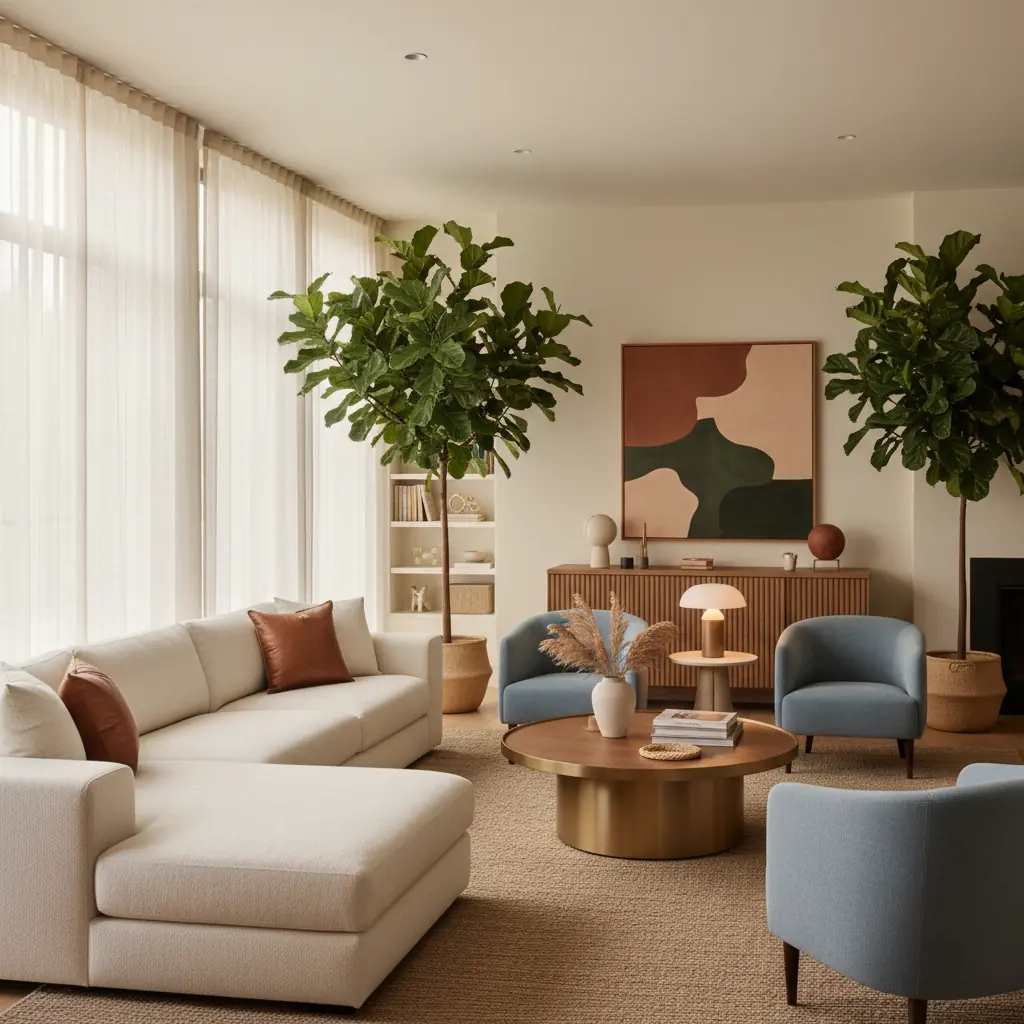
Why Room Layout Is More Important Than Furniture Style
Imagine walking into a room filled with exquisite, high-end furniture – a stunning velvet sofa, a meticulously crafted coffee table, designer lighting. Yet, something feels off. It’s cramped, hard to navigate, and uncomfortable. Now picture a room with modest, even second-hand furniture, but where every piece is perfectly placed, the flow is effortless, and the seating invites conversation. Which room feels more inviting, more "designed"?
The answer, almost always, is the latter. This illustrates a fundamental truth in interior design: layout is paramount. A room with beautiful furniture in a bad layout feels wrong and inefficient. A room with modest furniture in a great layout feels intentional, comfortable, and functional. Layout determines how the room functions, how traffic flows, and, most importantly, how people feel when they walk in.
Before buying a single piece of furniture, or even deciding on a paint color, plan the arrangement. Often, the best first step is to "shop your own home"—move what you already have to understand the possibilities of your space before shopping for what you want. This strategic approach saves time, money, and prevents costly design mistakes.
How Do I Identify and Use a Room's Focal Point?
Every well-designed room needs a focal point. This is the star of the show, the element that immediately draws the eye and anchors the entire space. It could be a grand fireplace, a large window offering a stunning view, a wall-mounted television, or a captivating piece of art. Once identified, the primary seating arrangement should be oriented towards this focal point, creating a natural point of interest and interaction.
If a room has multiple potential focal points – say, a fireplace and a large window – choose one as the primary and let the others play supporting roles. Trying to make everything a focal point often results in a cluttered and confused design. For instance, in a living room, if your TV is on one wall and a fireplace on another, you might orient the main sofa towards the fireplace, using it for aesthetic warmth, and then place an accent chair or a smaller seating arrangement that can comfortably view the TV for entertainment.
The focal point determines the room's orientation and helps dictate the placement of all other elements. Everything else — secondary seating, side tables, lighting, and decorative accessories — flows from that primary relationship, enhancing rather than competing with the main feature. If your room lacks a natural focal point, you can create one! A striking gallery wall, a boldly painted accent wall, or a statement piece of furniture can all serve this purpose. This is where your creativity truly shines, transforming a blank canvas into a space with personality and purpose.
Understanding Traffic Flow: The Invisible Design Element
Imagine trying to navigate an obstacle course in your own living room. If you’re constantly bumping into furniture, squeezing past chairs, or taking detours, your traffic flow is fundamentally flawed. People need clear, unobstructed paths through a room without navigating around furniture. This "invisible design element" is crucial for a comfortable and functional home.
The main traffic lane – the path from a doorway to another doorway, or to a frequently used area like a kitchen – should be at least 36 inches wide. This allows two people to pass comfortably or someone to walk with ease, even carrying items. Secondary paths, such as the route to a window, a bookshelf, or a specific piece of furniture, need at least 24 inches of clearance. Think about how you typically move through your home. Do you usually walk in a straight line, or do you tend to cut corners? A good layout anticipates these natural movements.
Walk through your room slowly and deliberately. Notice where you naturally want to go and where you encounter resistance. If furniture forces you to detour, or if you find yourself constantly adjusting your path, the layout is likely wrong. Good layouts feel effortless — you move through the space without thinking about it, allowing for a seamless living experience. In a typical home, insufficient traffic pathways (less than 36 inches for main routes) are cited as a common cause of frustration in over 60% of homeowner complaints about their living spaces. This highlights how critical effective space planning truly is for daily comfort.
Why Conversation Distance Matters for Comfort
Have you ever been at a party where you had to shout across a vast living room to hear someone? It's awkward and quickly discourages interaction. Seating arranged more than 8 feet apart makes conversation uncomfortable, forcing people to raise their voices. The ideal "conversation distance" is typically between 3 to 8 feet, fostering intimacy and easy dialogue.
If your living room is particularly large, resist the urge to spread furniture thinly across the entire space. Instead, create distinct conversational groupings. A main seating area (a sofa and two armchairs, for instance) should have its pieces arranged within that 8-foot maximum radius. You can then use the rest of the room to create secondary zones – perhaps a reading nook with a single armchair and a floor lamp, or a small work desk. Homes with optimized conversation groupings are rated 30% more inviting by guests, encouraging interaction and a sense of welcome.
One of the most common layout mistakes is pushing all furniture against the walls. This creates an empty, cavernous center and an uninviting perimeter. Instead, pull furniture away from walls. Floating a sofa even 6 inches into the room creates a more intimate, collected feel than pushing everything against the perimeter. This also allows for improved traffic flow behind larger pieces, or provides space for console tables, floor lamps, or even bookshelves. When furniture is allowed to breathe, the room feels more dynamic and deliberately designed.
Beyond the Basics: Advanced Layout Principles
Once you’ve mastered focal points, traffic flow, and conversation distance, consider these additional elements to elevate your layout:
### The Importance of Scale and Proportion
Choosing furniture that is appropriately sized for your room is critical. An oversized sectional in a small living room will make the space feel cramped and visually heavy, while tiny pieces in a grand room will appear lost and insignificant. Measure your room and the furniture carefully. Consider the visual weight of pieces – a dark, solid sofa will feel heavier than a light-colored, leggy one, even if they're the same physical size. In spaces under 250 sq ft, every inch counts, and strategic furniture placement can make a room feel 20-30% larger and more functional. For guidance on how to maximize smaller rooms, explore our [solutions for awkward room shapes](/blog/awkward-room-shape-solutions).
### How Do Rugs Define Space and Anchor Furniture?
Area rugs are not just decorative; they are powerful tools for defining zones and grounding your furniture arrangement. A rug should be large enough so that at least the front two legs of all primary seating pieces rest on it. This creates a cohesive "island" for your conversational grouping. A rug that is too small can make the room feel disconnected and fragmented. In a dining room, ensure the rug is large enough for chairs to remain on it even when pulled out.
### Using Lighting to Enhance Layouts
Lighting plays a crucial role in enhancing your layout and the overall ambiance of a room. Don't rely solely on overhead lighting. Incorporate a mix of ambient (general illumination), task (for reading or working), and accent (to highlight art or architectural features) lighting. Floor lamps, table lamps, and wall sconces can define zones, add visual interest, and provide flexibility. For instance, a floor lamp next to an armchair clearly delineates a reading nook. A thoughtful lighting plan can make even the most basic layout feel luxurious and inviting.
### Creating Balance: Symmetry vs. Asymmetry
Balance in a room creates a sense of harmony. Symmetrical layouts, often seen in formal settings, use identical elements mirrored across a central axis (e.g., two matching sofas facing each other with a coffee table in between). Asymmetrical layouts, more common in modern and eclectic designs, achieve balance using different but visually weighty elements (e.g., a large sofa balanced by two smaller armchairs and a console table on the opposite side). Both approaches can be effective; the key is to ensure the room feels visually stable, not lopsided.
Avoiding Common Layout Mistakes
Even experienced designers can fall prey to certain pitfalls. Being aware of these common mistakes can save you a lot of headache:
- **Pushing Everything Against Walls:** As discussed, this creates an uninviting void in the center. Pull pieces out, even slightly, to create a more dynamic and intimate space. - **Blocking Windows or Doors:** This is a functional and aesthetic no-no. Ensure all entryways, windows, and built-in features are easily accessible and unobstructed. - **Ignoring the Room's Shape:** Don't try to force a rectangular layout into an L-shaped room. Embrace the unique geometry and use it to your advantage by creating distinct zones. - **Too Much or Too Little Furniture:** Over-furnishing makes a room feel cramped; under-furnishing makes it feel stark and unfinished. Strive for a balance that provides functionality without clutter. - **Lack of Purpose:** Every zone and every piece of furniture should serve a purpose. If a corner feels neglected, consider adding a plant, a small console, or a piece of art to give it definition.
Visualize Layouts Before Moving Heavy Furniture with Habitas AI
Moving furniture is exhausting, time-consuming, and often leads to frustration when the result isn't quite right. This is where modern technology, specifically AI, revolutionizes the design process. Instead of physically rearranging your space multiple times, you can visualize layouts before you even lift a finger.
Upload photos of your actual room to Habitas, and our AI-powered platform can generate dozens of layout options that follow these very principles – furniture pulled from walls, clear traffic flow, conversational groupings, and optimal focal point orientation. You can experiment with different furniture styles, sizes, and arrangements, seeing realistic 3D renderings of how they would look in your space.
Traditional interior design consultations can cost $100-$300 per hour, and a full room redesign might involve 20-40 hours of planning. AI visualization tools like Habitas can significantly reduce design planning time by up to 90%, from weeks to minutes, potentially saving hundreds to thousands in initial design fees. Tools like our [AI furniture arrangement tool](/blog/ai-furniture-arrangement-tool) empower you to explore possibilities and refine your vision with unprecedented speed and accuracy. Then, with a clear plan in hand, you can confidently recreate the layout you like best with your actual pieces, transforming your room with minimal effort and maximum impact.
Good design isn't just about aesthetics; it's about creating spaces that are comfortable, functional, and reflective of how you live. By understanding and applying these core principles of room layout, you'll be well on your way to arranging your furniture like a seasoned interior designer. For more inspiration on transforming your space, check out our [before-and-after room transformation guide](/blog/before-after-room-transformation-guide).
Frequently Asked Questions
### What is the first step in planning a room layout?
The very first step in planning a room layout is to define the room's primary purpose and identify its focal point. Is it a living room meant for relaxation and entertaining, or a home office for focused work? Once you understand the room's function, identify its natural focal point (e.g., a fireplace, a large window, a TV). This will serve as the anchor around which you'll arrange your primary furniture, setting the stage for the rest of your design decisions.
### How much space should be left between furniture for good traffic flow?
For main traffic lanes, such as pathways between doorways or heavily used areas, aim for at least 36 inches (approx. 3 feet) of clear space. This allows for comfortable passage for individuals and even two people passing each other. For secondary paths, like getting to a bookshelf or a window, a minimum of 24 inches (approx. 2 feet) is generally sufficient. It's crucial to test these paths by walking through your proposed layout to ensure they feel natural and unobstructed.
### What are common mistakes to avoid when arranging furniture?
One of the most common mistakes is pushing all furniture against the walls, which creates an empty void in the center and makes the room feel less inviting. Other pitfalls include blocking natural light or doorways, using furniture that is disproportionate to the room's size (either too large or too small), and neglecting to define distinct zones within a larger space. Always prioritize functionality, comfortable conversation distances, and clear traffic paths.
### How can I make a small room feel larger with furniture arrangement?
To make a small room feel larger, focus on lighter colors, reflective surfaces, and multi-functional furniture. Pull furniture slightly away from walls to create a sense of depth and airiness. Choose pieces with visible legs to allow light and sightlines to flow underneath. Utilize vertical space with tall, narrow shelving, and avoid over-furnishing. Consider a simple, cohesive color palette and strategically placed mirrors to amplify light and perception of space.
### How can AI help with room layout planning?
AI-powered tools like Habitas can revolutionize room layout planning by allowing you to visualize numerous arrangements without physically moving heavy furniture. You can upload photos of your room and instantly generate various layout options, complete with realistic 3D renderings of different furniture styles and placements. This helps you quickly experiment with different ideas, optimize for focal points and traffic flow, and identify the perfect setup before making any actual changes, saving significant time and effort.