Small Bedroom Design Ideas: Maximize Space & Style with AI
Practical design strategies for small bedrooms that maximize space and style.
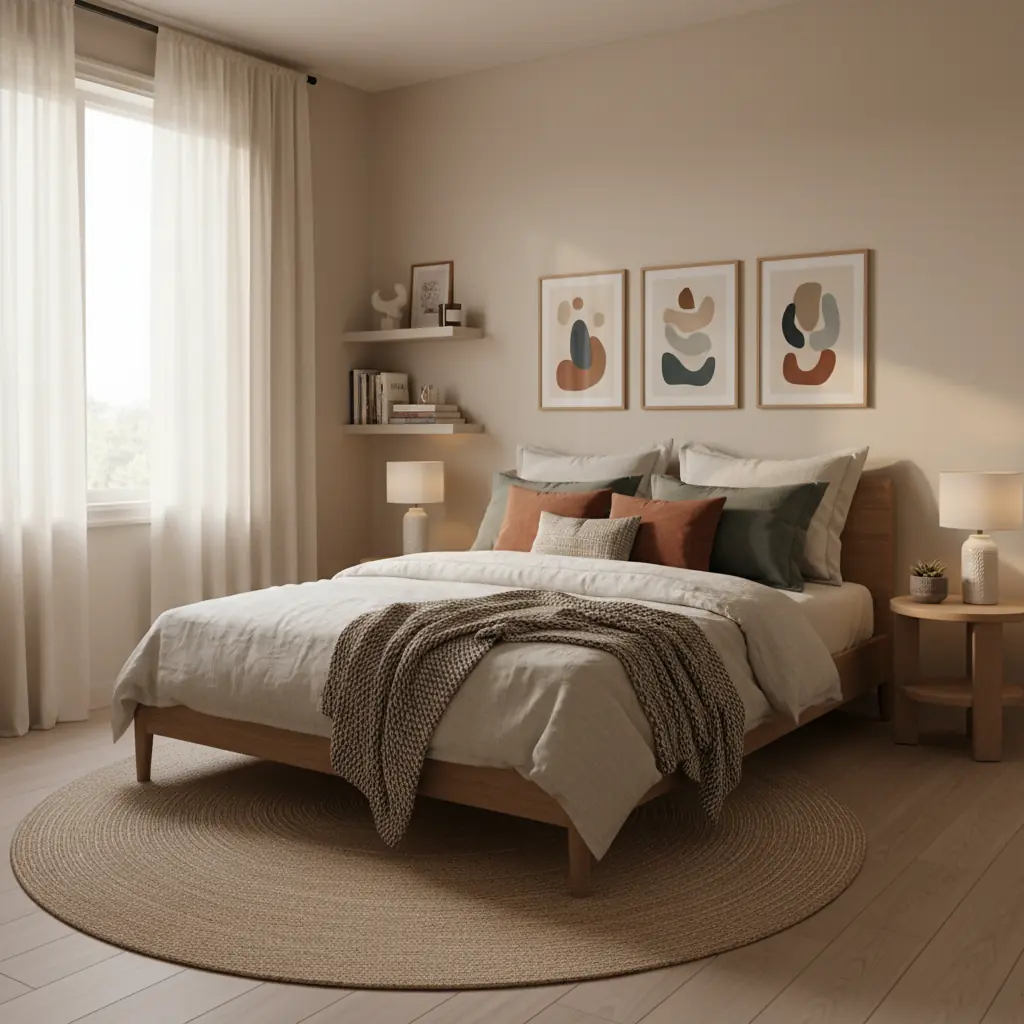
Small bedrooms deserve great design
A small bedroom isn't a design obstacle; it's an invitation to be incredibly intentional and creative. Far from being a compromise, a compact space offers a unique opportunity to cultivate intimacy, coziness, and highly personalized comfort. Think of the most enchanting boutique hotel rooms – many are compact, yet they exude luxury and thoughtful design, proving that size is less about square footage and more about smart planning. With the average new home size shrinking by nearly 8% in the last decade and urban living spaces becoming more compact, efficient design is more crucial than ever for creating a sanctuary.
The core principles for transforming a small bedroom are deceptively simple but incredibly powerful: maximize perceived space through clever use of color and light, choose furniture that serves multiple purposes, and edit ruthlessly so every object earns its place. This isn't about sacrificing style; it's about refining it.
The bed is everything: How to make your bed work harder
In a small bedroom, the bed is undeniably the dominant feature. Instead of fighting its presence, embrace it as the room's hero. This means making strategic choices that integrate storage, style, and spatial efficiency.
### Choosing the right bed frame
- **Platform Beds with Built-in Storage:** These are a game-changer. By incorporating drawers directly into the base, a platform bed eliminates the need for a separate dresser or chest of drawers. This can free up significant floor space, often replacing an entire closet's worth of traditional dresser storage. Look for models with deep drawers on smooth glides for maximum functionality. - **Murphy Beds (Wall Beds):** For extremely compact spaces or rooms that need to serve multiple functions (e.g., a guest room/home office), a Murphy bed can be transformative. It folds neatly into a wall cabinet, completely freeing up the floor during the day. Modern Murphy beds often include integrated shelving or a desk that folds down when the bed is stored. - **Captain's Beds:** Similar to platform storage beds but often with even more integrated compartments, shelves, and sometimes even a pull-out desk. These are ideal for children's rooms or maximizing every inch. - **Loft Beds:** By elevating the sleeping area, a loft bed creates valuable space underneath for a desk, seating, or additional storage. This strategy essentially doubles the usable square footage vertically.
### The power of the headboard
A statement headboard can do more than just provide a comfortable backrest; it can be a vital storage and organizational element.
- **Integrated Shelving Headboards:** A headboard with built-in shelves or cubbies instantly replaces the need for traditional nightstands. This provides space for books, a small lamp, glasses, or decorative items without taking up floor space. - **Upholstered Headboards:** While not providing physical storage, an upholstered headboard adds a soft texture and visual depth that can make a small room feel more luxurious and inviting. Opt for a slim profile to maintain a sense of space. - **Slatted or Open-Frame Headboards:** These allow light to pass through, preventing the bed from feeling like a heavy, monolithic block in a small room. - **Built-in Headboards with Alcoves:** If you're willing to invest in custom solutions, a recessed headboard wall with built-in niches for lighting, books, and charging stations creates a seamless, high-end look while maximizing functionality.
### Bed height matters
Consider the bed height carefully, as it significantly impacts the perceived ceiling height and overall spaciousness.
- **Low Platform Beds:** These make ceilings feel higher and the room feel more expansive because there's more visual space above the bed. They also contribute to a minimalist, uncluttered aesthetic often favored in small spaces. - **Storage Beds with Drawers or Lift-Up Mechanisms:** While potentially taller, the immense storage benefit often outweighs the visual impact. The key is to ensure the base is clean-lined and doesn't appear bulky.
Wall-mounted everything: Reclaiming your floor space
In a small bedroom, the floor is premium real estate. Every item that can be elevated or mounted frees up valuable square footage, creating a cleaner visual footprint and enhancing the feeling of openness.
- **Floating Nightstands:** These are perfect for keeping essentials within reach without cluttering the floor. They can be simple shelves or small, drawer-equipped units. - **Floating Shelves:** A single, well-placed floating shelf above the bed can serve multiple purposes – replacing a headboard, acting as a nightstand, and providing display space for a small plant, a book, and a reading light. For more robust storage, consider vertical stacks of floating shelves along a wall. - **Swing-Arm Reading Lights:** These flexible fixtures can be mounted on either side of the bed, eliminating the need for bulky table lamps on nightstands or floor lamps. They provide focused task lighting without encroaching on surfaces. - **Wall-Mounted Desks or Vanities:** For multi-functional rooms, a slim, fold-down or fixed wall-mounted desk provides a workspace that can disappear or minimize its presence when not in use. Paired with a compact, backless stool, it's an efficient solution. - **Wall-Mounted TVs:** Mounting your television flush against the wall saves space and creates a streamlined look. - **Vertical Storage Systems:** Explore modular wall systems that combine shelving, cabinets, and even a small desk unit to create a custom storage wall. This leverages vertical space efficiently and can be adapted to your specific needs.
By thoughtfully employing wall-mounted solutions, you minimize visual clutter and make the room feel much larger than its dimensions suggest.
Color and light tricks: The illusion of grandeur
The strategic use of color and light is perhaps the most impactful way to manipulate the perception of space in a small bedroom. It’s all about creating an expansive, airy feel.
### The magic of light colors
- **Light Walls and Ceilings:** Soft whites, very pale grays, and subtle pastels on all four walls and the ceiling make the room read as one unbroken volume. This continuity visually pushes the boundaries outwards, making the space feel larger and more open. Avoid contrasting trim colors if you want to maximize this effect; painting trim the same color as the walls creates a seamless flow. - **Avoid Dark Accent Walls:** While tempting for a dramatic touch, a dark accent wall in a small bedroom will visually pull that wall forward, making the room feel shorter and narrower. If you crave depth, there are other, more effective strategies.
### Tone-on-tone for subtle richness
If you desire depth and sophistication without the visual fragmentation that multiple contrasting colors cause, embrace the tone-on-tone approach. This involves using the same base color in slightly different shades or textures across various elements:
- **Walls:** A pale sage green. - **Bedding:** A slightly deeper olive green or a textured linen in sage. - **Curtains:** A sheer fabric in a lighter, almost translucent sage. - **Accessories:** Small touches of a darker forest green.
This creates richness and layering, adding visual interest without making the room feel busy or cramped. It’s a sophisticated way to introduce color while maintaining an expansive feel. For more inspiration, explore our article on the [all-white room design tips](/blog/all-white-room-design-tips) or dive into the concept of [color drenching technique](/blog/color-drenching-technique).
### Harnessing natural and artificial light
- **Maximize Natural Light:** Keep window treatments minimal and light. Sheer curtains or light-filtering blinds allow maximum daylight to penetrate, which is crucial for making a small room feel open. Ensure they can be drawn fully to the sides to expose the entire window. - **Strategic Mirror Placement:** Mirrors are masters of illusion. Placing a large mirror opposite a window will reflect natural light and the view, effectively doubling the perceived size of the room. A full-length mirror leaning against a wall also adds depth without requiring installation. - **Layered Lighting:** Don't rely on a single overhead fixture. Incorporate ambient lighting (a flush-mount ceiling fixture or recessed lights), task lighting (wall-mounted reading lights, as mentioned), and accent lighting (small table lamps or strip lights under shelves). This creates depth, highlights specific features, and allows you to adjust the mood, making the room feel more dynamic and less claustrophobic.
Smart storage solutions: Every inch counts
Beyond the bed and wall-mounted elements, a truly functional small bedroom hinges on ingenious storage solutions that often go unnoticed.
- **Vertical Storage:** Always look up! Tall, slim bookcases or custom built-ins that stretch from floor to ceiling draw the eye upwards, making the room feel taller. They also maximize storage density. - **Under-Bed Storage (Beyond Drawers):** If your bed doesn't have built-in drawers, use fabric bins or rolling crates that fit neatly underneath. These are perfect for off-season clothing, extra linens, or rarely used items. - **Door Back Organizers:** The back of your bedroom door is prime real estate for hooks, shoe organizers, or hanging storage for accessories. - **Built-in Millwork:** While an investment, custom built-ins can transform a small room. They can wrap around windows, incorporate a desk, shelving, and wardrobe space seamlessly. While custom built-ins can be an investment, savvy choices like a platform storage bed can cost as little as $500-$1500, often replacing multiple pieces of furniture and offering a better long-term value than multiple disparate pieces. - **Decluttering as a Lifestyle:** This is perhaps the most crucial "storage solution." A small room cannot tolerate clutter. Adopt a minimalist mindset, keeping only what is truly essential and loved. Studies show that a cluttered environment can reduce focus by up to 20%, impacting your ability to relax and rejuvenate in your own bedroom. Regularly purge items, donate what you don't need, and ensure everything has a designated home.
Multi-functional furniture beyond the bed
Every piece of furniture in a small bedroom should ideally serve more than one purpose. This is where clever design truly shines.
- **Nesting Tables:** A set of nesting tables can act as a nightstand, then be pulled apart to provide extra surface area for a cup of tea, a book, or a decorative item when needed. - **Storage Ottomans or Benches:** An ottoman with a removable lid offers hidden storage for blankets, extra pillows, or magazines, while also providing a comfortable seat or a place to rest your feet. A bench at the foot of the bed can do the same. - **Pull-Out Desks or Vanity:** Some dressers or console tables feature a hidden pull-out surface that can function as a small desk or vanity, easily stowing away when not in use. - **Convertible Seating:** A small armchair that folds out into a bed can be a lifesaver for occasional guests without requiring a dedicated guest room.
Strategic layouts & zones: Defining your compact space
Even in a tiny room, thoughtful layout can create a sense of distinct areas, making the space feel more organized and functional.
- **The Bed as the Anchor:** Typically, the bed will dictate the layout. Position it against the longest wall to maximize pathways, or consider pushing it into a corner if necessary to free up the opposite wall for other functions. - **Creating "Zones":** Use area rugs to define different zones within the room – a plush rug under the bed clearly marks the sleeping area, for instance. A small, comfy armchair in a corner with a reading light can create a cozy reading nook, even if it’s just a few square feet. - **Flow and Pathways:** Ensure there's a clear, unobstructed path around the bed and to the closet or door. Avoid placing furniture in ways that create awkward bottlenecks. An [AI furniture arrangement tool](/blog/ai-furniture-arrangement-tool) can be incredibly helpful for experimenting with different layouts virtually.
Textiles, textures, and curated decor: Adding warmth without bulk
While avoiding clutter is key, a small bedroom shouldn't feel sterile. Thoughtful use of textiles and decor adds warmth, personality, and visual interest.
- **Layered Bedding:** Use a mix of textures in your bedding – a soft linen duvet, a chunky knit throw, and plush pillows – to create an inviting, luxurious feel. - **Window Treatments:** Opt for light, airy fabrics like linen or sheer cotton. Full-length curtains, hung high and wide, can make a window appear larger and ceilings taller, even in a small room. - **Area Rugs:** A well-chosen rug can ground the space, add warmth, and introduce color or pattern without overwhelming the walls. Ensure it's appropriately sized for the room; too small will make the room feel disjointed, too large will feel cramped. - **Curated Art and Decor:** Choose a few impactful pieces of art rather than many small ones. A single, large piece above the bed can create a focal point and draw the eye. Small, meaningful decorative items should be displayed thoughtfully, not in excess. Remember, a recent survey indicated that 85% of people feel more relaxed and productive in a well-designed space.
See your small bedroom transformed with Habitas
Imagining how these strategies will look in _your_ specific small bedroom can be challenging. This is where Habitas, an AI-powered interior design platform, becomes an invaluable tool. Upload a photo of your current small bedroom to Habitas and instantly see it redesigned in styles specifically suited to compact spaces – Scandinavian, Japandi, and Modern Minimal all excel in small rooms due to their emphasis on clean lines, natural materials, and functional simplicity.
Our AI understands spatial constraints and designs accordingly, generating realistic design options in under 60 seconds, a stark contrast to the 2-4 weeks a traditional designer might take for initial concepts. This allows you to experiment with different bed types, wall-mounted solutions, color palettes (try our [AI color palette generator](/blog/ai-color-palette-generator)), and furniture arrangements to truly [see your before and after room transformation](/blog/ai-interior-design-before-and-after) before making any purchases or commitments. Habitas empowers you to visualize every suggestion and confidently bring your dream small bedroom to life.
Frequently Asked Questions
### How do I make a small bedroom look bigger?
To make a small bedroom look bigger, focus on maximizing light and creating visual continuity. Use light, monochromatic color schemes on walls and ceilings, strategically place large mirrors to reflect light and views, and utilize layered lighting to add depth. Prioritize clean lines, wall-mounted furniture, and minimal clutter to keep floor space open and pathways clear.
### What is the best furniture for a tiny bedroom?
The best furniture for a tiny bedroom is multi-functional and space-efficient. Opt for platform beds with built-in storage, Murphy beds, or loft beds. Choose wall-mounted nightstands, floating shelves, and swing-arm reading lights. Storage ottomans, nesting tables, and slim-profile desks that fold or attach to the wall are also excellent choices. Every piece should serve a purpose beyond its primary function.
### Can I use dark colors in a small bedroom?
While light colors generally make a room feel larger, you can use dark colors strategically in a small bedroom for a cozy, intimate feel. Instead of an accent wall (which can pull the wall forward), consider "color drenching" the entire room, including walls, ceiling, and trim, in a deep, moody tone. This blurs the boundaries, creating a sophisticated, enveloping effect. Ensure you compensate with ample lighting and reflective surfaces like mirrors to prevent it from feeling too cave-like.
### How can I add storage to a small room without making it feel cluttered?
Adding storage to a small room without clutter requires clever, integrated solutions. Utilize vertical space with floor-to-ceiling shelving or custom built-ins. Choose beds with integrated drawers or use under-bed storage bins. Wall-mounted elements like floating shelves or nightstands free up floor space. Organize regularly and declutter frequently, ensuring every item has a designated home and is easily accessible but out of sight.
### What are some clever lighting ideas for small bedrooms?
Clever lighting in small bedrooms involves layering and strategic placement. Avoid bulky floor or table lamps. Instead, use wall-mounted swing-arm reading lights on either side of the bed. Install recessed lighting or a flush-mount fixture for ambient light. Add strip lighting under floating shelves or behind a headboard for subtle accent lighting, creating depth and a warm glow without taking up physical space.