No-Demo Room Transformation: Redesign Any Space Without Renovation
Unlock the secret to a stunning room transformation without construction. Discover high-impact changes using paint, furniture, lighting, and textiles for a dramatic no-demo makeover.
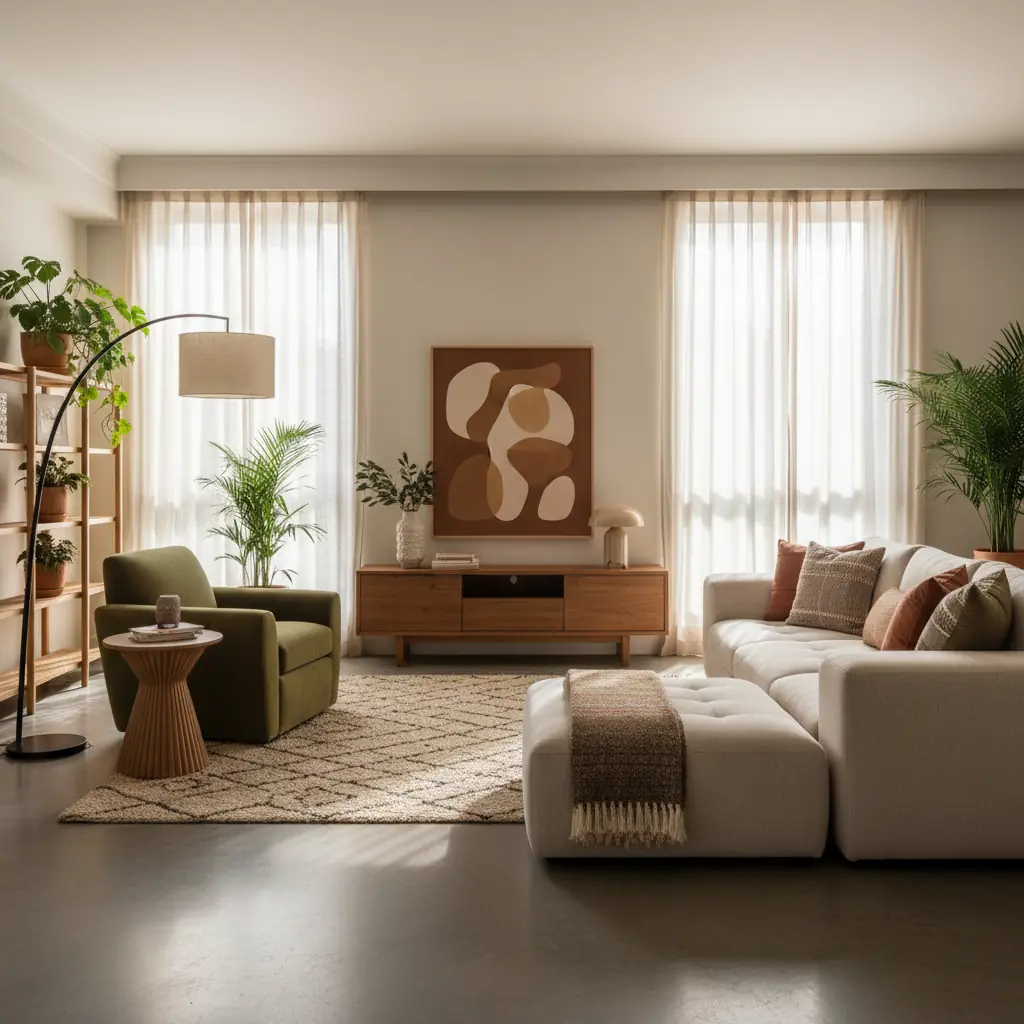
The 80/20 Rule of Room Transformation: Why No-Demo is High Impact
Here's what most people don't realize: roughly 80% of a room's visual impact and emotional resonance comes from elements that require zero construction. Paint color, thoughtful furniture arrangement, layered lighting, carefully selected textiles (curtains, rugs, pillows), and compelling art collectively determine how a room feels and functions. These elements carry far more weight in defining a space's personality than fixed structural components like countertops, built-in cabinetry, or new flooring. Renovation, while impactful, primarily addresses the remaining 20% — the foundational 'bones' of a space. But if the 80% is overlooked or executed poorly, even a lavish $50,000 gut remodel can feel sterile, uninviting, or simply "off."
This understanding is profoundly liberating if you're working with a tight budget, renting a property, or simply not ready for the disruptive chaos and significant financial outlay of a traditional renovation. You possess the power to fundamentally alter how a room looks and feels, often within a single weekend, utilizing nothing more advanced than a paint roller and a tape measure. The true genius lies in discerning which changes deliver the most substantial impact and executing them in a logical, cohesive sequence. Embracing the 80/20 rule means prioritizing flexibility, creativity, and a keen eye for detail over costly demolition and construction.
Paint: The Highest ROI Change in Any Room
No other single element offers such a dramatic transformation for such a modest investment as paint. A gallon of premium quality interior paint typically costs between $35-$70 and covers approximately 350-400 square feet — enough for a medium-sized bedroom. For an investment of $100-$200 in materials and a dedicated weekend of effort, you can completely redefine a room's personality, mood, and perceived dimensions. This makes painting arguably the highest return on investment (ROI) change you can make, with studies suggesting that a fresh coat of paint can increase perceived home value by 1-3% and significantly enhance buyer appeal.
### Mastering Color Psychology and Finishes
The choice of color is paramount. Dark and moody hues, such as deep charcoals (Farrow & Ball's Railings) or rich blues (Benjamin Moore's Hale Navy), can make larger spaces feel intimate and sophisticated, creating a "cocooned" effect. Conversely, light and airy shades like crisp whites (Simply White, Chantilly Lace) or soft neutrals (Sherwin-Williams Accessible Beige) open up spaces, reflect natural light, and create a sense of expansive calm. An accent wall in a carefully chosen saturated color can add depth and a focal point without overwhelming the entire room. Don't forget the ceiling – painting it a lighter shade than the walls can make a room feel taller, or a darker, contrasting color can create an unexpected, luxurious envelope.
Beyond color, the _finish_ of your paint also plays a critical role in a room's aesthetic and durability:
- **Matte/Flat:** Offers a non-reflective, sophisticated look that hides imperfections well. Ideal for low-traffic areas like bedrooms and dining rooms. - **Eggshell/Satin:** Provides a soft sheen, more durable and easier to clean than matte. Excellent for living rooms, hallways, and children's rooms. - **Semi-Gloss/Gloss:** Highly durable and reflective, perfect for trim, doors, and high-moisture areas like bathrooms and kitchens, though it highlights wall imperfections.
### Avoiding Common Paint Mistakes
The most common paint mistake stems from choosing a color from a tiny swatch under unflattering store lighting. This is a recipe for disappointment. Always buy sample pots ($8-$12 each) of your top two or three color contenders and paint large test patches (at least 2 feet square) on different walls within the actual room. Observe these patches meticulously throughout the day — morning, noon, and evening — as natural light direction and intensity will dramatically alter how the color appears. Cool grays, for instance, can often reveal unexpected blue undertones at night, while warm whites might cast a yellow glow in direct sunlight.
If you find yourself paralyzed by the sheer volume of color choices, modern tools can offer invaluable assistance. Platforms like Habitas allow you to upload a photo of your actual room and digitally render it in various paint palettes, eliminating the costly and time-consuming trial-and-error phase that often deters individuals from attempting to paint at all. This digital visualization ensures you commit to a color with confidence. For more guidance on finding your perfect shade, explore our guide on [AI color palette generators](/blog/ai-color-palette-generator).
Furniture Arrangement: Free and Surprisingly Powerful
Most rooms are unconsciously arranged the way they were on move-in day, often resulting in furniture pushed rigidly against walls in the most obvious, yet least effective, configuration. This approach can make a room feel static, smaller, and less inviting. Thoughtful furniture rearrangement, a completely free endeavor, is one of the most transformative no-demo changes you can make.
### Principles of Effective Furniture Layout
- **Create Breathing Room:** Pulling a sofa or main seating away from the wall by just 6-12 inches can create an illusion of space and actually make the room feel larger and more intentional. This also allows for better air circulation and light reflection. - **Define Conversation Zones:** Instead of lining up seating against a single wall or solely facing a TV, arrange furniture to foster interaction. Angle armchairs at 45 degrees to a sofa, or use two sofas facing each other to create a true conversation area. This is particularly effective in living rooms. - **Prioritize Flow:** Ensure clear pathways through the room, allowing people to move freely without bumping into furniture. Aim for at least 30-36 inches of clearance for main walkways. - **Anchor Your Space:** Use an area rug to visually group furniture, especially in open-concept layouts. This defines zones and creates a sense of cohesion. - **Bedroom Bliss:** Float your bed away from a corner if space permits. Centering it on the longest wall with matching nightstands on either side instantly creates symmetry, balance, and a luxurious, hotel-like ambiance. - **Dining Dynamics:** In dining areas, ensure at least 36 inches of clearance around the table from any wall or other furniture to allow for comfortable chair movement and easy access.
These seemingly minor adjustments cost absolutely nothing, yet they can profoundly alter how a room feels, functions, and is perceived. In fact, professional home staging, which primarily relies on expert furniture arrangement and decluttering, has been shown to help 73% of home buyers visualize a property as their own, leading to homes selling 25% faster on average. For a deeper dive into optimizing your furniture layout, consider exploring tools like our [AI furniture arrangement tool](/blog/ai-furniture-arrangement-tool) for customized solutions.
Lighting Upgrades That Require No Wiring
Often overlooked, lighting is perhaps the most critical element in shaping a room's atmosphere and functionality. Most homes rely solely on a single, often harsh, overhead fixture, which creates flat, unflattering, and uninviting illumination. The secret to a professionally designed space lies in layering three distinct types of light: ambient, task, and accent.
### The Three Layers of Light
1. **Ambient (General) Lighting:** This is your foundational light source, providing overall illumination. If you lack recessed cans or a central overhead fixture, a plug-in pendant light ($40-$100) hung from a ceiling hook can serve as a stylish focal point. Alternatively, strategically placed floor lamps with diffused light shades can provide excellent ambient glow. 2. **Task Lighting:** Designed for specific activities. This includes reading lamps next to a sofa or bed, desk lamps for a home office, or under-cabinet lighting in a kitchen. Ensure task lighting is bright enough to prevent eye strain and positioned correctly to avoid glare. 3. **Accent Lighting:** This layer adds drama, highlights features, and creates mood. Think battery-operated picture lights ($20-$50 each) illuminating artwork for gallery-quality flair, LED strip lights behind a TV or under shelves, or even just well-placed candles. Accent lighting is all about creating depth and visual interest.
### Smart Solutions for Effortless Ambiance
A simple yet highly impactful change is to swap all existing bulbs to warm white LEDs (2700K-3000K). This single action transforms a clinical, cold atmosphere into one that feels instantly cozy and inviting. Look for bulbs with a high Color Rendering Index (CRI of 90+) to ensure colors in your room appear true to life.
For rooms without existing overhead wiring, consider these no-fuss solutions:
- **Plug-in Wall Sconces:** Many stylish sconces now come with a plug, allowing you to mount them on the wall and simply plug them into an outlet, offering elegant ambient or accent lighting without an electrician. - **Smart Bulbs:** Replace existing bulbs with smart versions that allow you to control color temperature, brightness, and even turn them on/off via an app or voice command. This offers incredible flexibility in creating different moods. - **Battery-Operated Lamps:** Advancements in battery technology mean there are now beautiful, long-lasting cordless lamps perfect for shelves, entryways, or even dining tables, adding light where outlets are scarce.
Proper lighting doesn't just make a room look better; it significantly impacts mood, productivity, and overall well-being. Studies have shown that access to appropriate lighting can increase productivity by up to 15% and reduce instances of seasonal affective disorder.
Textiles and Art: The Finishing Layer of Personality
Textiles and art are the soul of a room, injecting the much-needed color, pattern, texture, and personality that elevate a space from merely furnished to truly lived-in and layered. These elements are your opportunity to express your unique style.
### Curtains: Framing Your Views
New curtains are a powerful visual statement. The key is how you hang them. To make windows appear taller and rooms feel grander, hang curtain rods 4-6 inches _above_ the window frame, extending 8-12 inches _past_ each side. This maximizes light when open and creates a luxurious, full look when closed.
- **Material Matters:** Choose fabrics that complement your style – sheer linen for a light, airy feel; rich velvet for opulence; sturdy cotton for a clean, classic look. - **Length:** Curtains should ideally just kiss the floor or lightly puddle for a more formal aesthetic. Avoid curtains that hover awkwardly above the floor. - **Functionality:** Consider lined curtains for insulation and light control, or blackout curtains for bedrooms.
### Area Rugs: Anchoring and Warming Your Space
A quality area rug does more than just protect hard flooring; it grounds the space, defines zones, adds warmth, and introduces critical texture and pattern.
- **Sizing is Key:** This is where many go wrong. For living rooms, select a rug large enough for at least the front two legs of all main seating furniture to rest on it. An 8x10 or 9x12 rug is a common starting point for a standard living room. For bedrooms, an 8x10 rug placed under the bottom two-thirds of a queen or king bed, extending out on either side, creates a plush landing. In dining rooms, the rug should be large enough to accommodate chairs pulled out without falling off the edge. - **Material:** Wool offers durability and softness, jute/sisal provides natural texture, and synthetic blends are budget-friendly and easy to clean.
### Decorative Pillows and Throws: Layers of Comfort and Color
Pillows and throws are your opportunity to easily introduce pops of color, interesting patterns, and luxurious textures. Don't be afraid to mix patterns, but keep a cohesive color palette in mind. Invest in quality inserts (down or down alternative) for a plush, high-end feel. Throws draped over a sofa or armchair add an inviting touch and practical warmth.
### Art: The Conversation Starters
For wall art, commitment to scale is crucial. One large, impactful piece (24x36 inches or larger) often makes a stronger, more sophisticated statement than a scattered collection of small frames. If budget is a concern, large-format prints from online services can cost $30-$80 and can be framed or hung on a floating mount for a modern look.
- **Gallery Walls:** These work beautifully for showcasing multiple pieces. Plan your layout on the floor first, then use paper templates taped to the wall to visualize the arrangement before making any holes. - **Mirrors as Art:** Don't underestimate the power of a large, decorative mirror. It reflects light, makes a room feel larger, and can act as a stunning focal point, especially when placed opposite a window or an interesting architectural feature. - **Placement:** Hang art so its center is approximately at eye level (around 57-60 inches from the floor) for comfortable viewing.
The seamless flow of your redesign relies on a strategic sequence: **paint first, then arrange furniture, then install lighting, then add textiles, and finally hang art.** Each layer thoughtfully builds upon the previous one, ensuring a cohesive vision and preventing costly, time-consuming adjustments down the line. To gain confidence in your design choices before you begin, consider using platforms like [Habitas](/blog/ai-generated-room-designs-realistic) to visualize the entire end result, helping you commit to a unified direction rather than making piecemeal decisions that might not harmonize. This methodical approach ensures your room transformation is both stunning and satisfying. For more inspiration, explore our [Before & After Room Transformation Guide](/blog/before-after-room-transformation-guide).
Decluttering and Organization: The Foundation of Any Makeover
Before you even think about new paint or furniture, the most impactful — and free — change you can make is to declutter and organize. A room, no matter how beautifully decorated, will never feel truly transformed if it's visually chaotic and filled with excess. Think of decluttering as creating a blank canvas upon which to build your new design.
### The Power of "Less is More"
Embrace the principle of editing. Go through every item in the room with a critical eye, asking yourself: "Do I truly love this? Is it functional? Does it contribute to the room's desired aesthetic?" Remove anything that doesn't meet these criteria. This might mean donating, selling, or rehoming items that no longer serve a purpose or bring you joy. A statistic from the National Association of Realtors shows that decluttering and organizing significantly increase buyer interest, proving its immense value.
### Smart Storage Solutions
Once you've decluttered, implement smart storage solutions to maintain order:
- **Hidden Storage:** Ottomans with storage, baskets, and decorative boxes can discreetly house blankets, remotes, or children's toys. - **Vertical Space:** Utilize shelves, tall bookcases, or wall-mounted cabinets to draw the eye upwards and maximize storage without encroaching on floor space. - **Multi-functional Furniture:** Opt for pieces that serve a dual purpose, like a console table that doubles as a desk, or a daybed that provides extra seating and an emergency guest bed.
A well-organized room not only looks better but also functions more efficiently and feels more serene.
Bringing Nature Indoors: The Biophilic Touch
Adding elements of nature to your room is another incredibly effective, no-demo way to enhance its atmosphere, improve well-being, and introduce organic beauty. This practice, known as biophilic design, focuses on connecting occupants with the natural environment.
### Integrating Greenery and Natural Textures
- **Houseplants:** Even a few strategically placed houseplants can dramatically improve air quality, reduce stress, and add vibrant life to a room. Opt for low-maintenance varieties like snake plants, ZZ plants, or pothos if you're new to plant care. Use attractive planters that complement your decor style. - **Natural Materials:** Incorporate natural textures through materials like jute rugs, wooden decorative bowls, linen curtains, or wool throws. These elements add tactile richness and a sense of calm. - **Natural Light:** Maximize natural light by keeping windows unobstructed and using sheer curtains where privacy allows. Natural light is a powerful mood enhancer.
Introducing natural elements creates a sense of tranquility and makes a room feel more vibrant and alive. For a deeper dive into this design philosophy, explore our [Biophilic Design Guide](/blog/biophilic-design-guide).
Frequently Asked Questions
### How long does a no-renovation room makeover typically take?
The timeline for a no-renovation room makeover can vary significantly depending on the scope of changes and your dedication. A focused transformation involving paint, furniture rearrangement, and new textiles in a single room can often be completed within a long weekend (2-3 days). Larger projects involving multiple rooms or more complex art installations might extend to a week or two, especially if you're waiting for deliveries like custom curtains or large rugs. The most time-consuming aspects are usually painting and the initial decluttering phase.
### What is the most cost-effective way to update a room?
Without a doubt, painting is the most cost-effective way to dramatically update a room. For an investment of $100-$200 in materials, you can completely change a room's mood and perceived size. Following paint, intelligent furniture rearrangement costs nothing and has an outsized impact on flow and comfort. Swapping out light bulbs to warm LEDs is also an inexpensive change that significantly improves atmosphere. After these, affordable textiles like new throw pillows or a well-chosen piece of large-format art offer excellent value.
### Can a no-demo makeover really increase my home's value?
While a no-demo makeover won't deliver the same quantifiable appraisal value as a full kitchen or bathroom renovation, it absolutely can increase your home's _perceived value_ and marketability. Fresh paint, thoughtful staging, updated lighting, and attractive textiles create an inviting atmosphere that appeals to potential buyers. Homes that appear well-maintained and stylish often sell faster and for closer to their asking price. For example, homes with professional staging (which largely relies on no-demo techniques) sell 25% faster on average. These subtle transformations make a house feel like a desirable home, which is invaluable in a competitive market.
### How do I choose the right paint color for my room?
Choosing the right paint color involves more than just picking a shade you like. First, consider the room's natural light exposure (north-facing rooms need warmer tones; south-facing can handle cooler). Second, think about the mood you want to create – calm, energetic, cozy. Third, take into account existing fixed elements like flooring, trim, and large furniture. Always buy sample pots and paint large swatches on different walls to observe how the color changes throughout the day. Don't be afraid to use digital visualization tools like Habitas to preview colors in your actual space before committing.
### What are common mistakes to avoid in a no-renovation makeover?
Several common pitfalls can undermine a no-demo makeover. One major mistake is failing to declutter first – a cluttered room can't be truly transformed. Another is poor paint color selection, often due to not testing samples in the actual room's lighting. Neglecting the importance of layered lighting, relying solely on overhead fixtures, is another common error. Lastly, choosing the wrong size rug (too small) or hanging curtains too low can drastically diminish a room's perceived size and elegance. Always prioritize functionality, scale, and test elements in your space before making final commitments.