Maximize Small Spaces: 7 AI-Powered Interior Design Secrets
How to make any small room feel bigger using AI interior design tools.
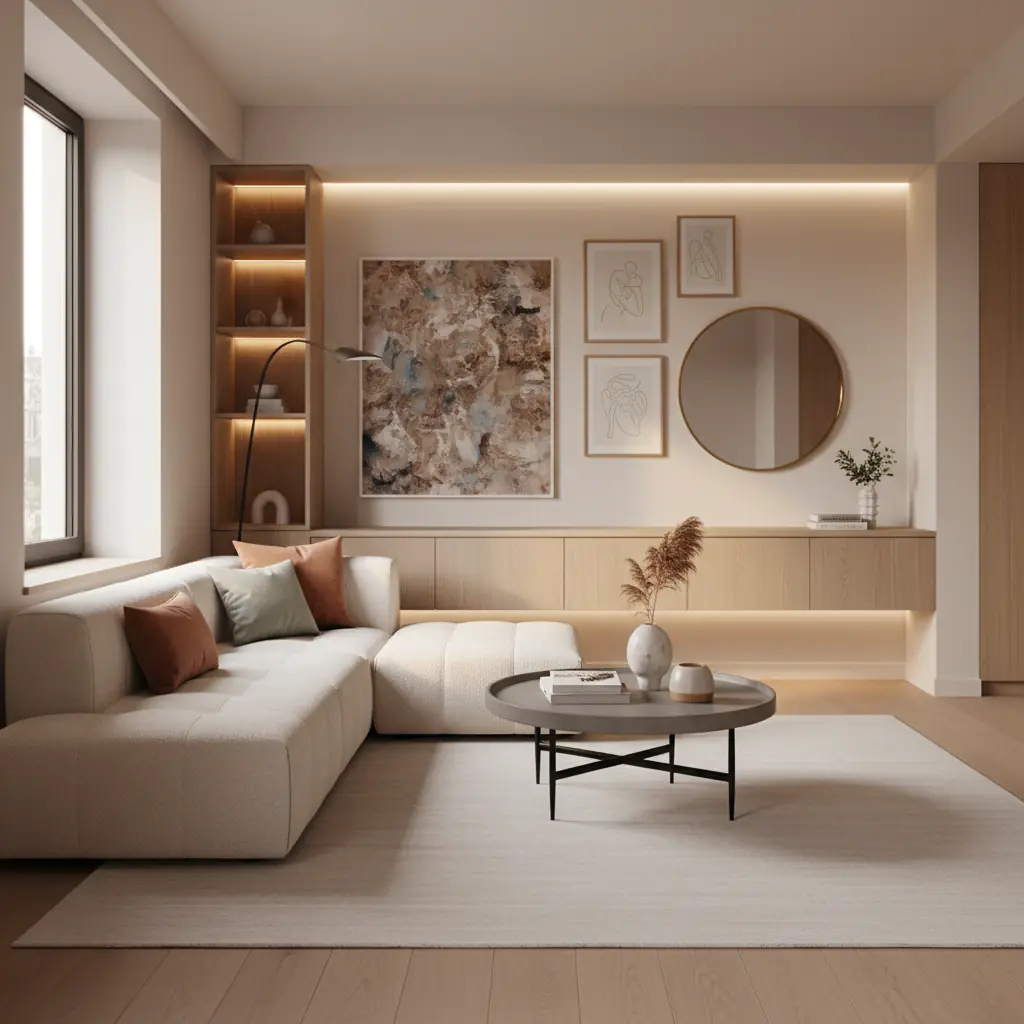
Small spaces, big potential: Redefining compact living with AI
Small rooms are often perceived as design limitations, but we at Habitas see them as exciting canvases that demand creativity and smart solutions. The truth is, a compact space isn't a sentence to cramped living; it's an invitation to explore innovative design strategies that make every square inch count. With the right choices in color, furniture, layout, and lighting, a 10x10 room can feel dramatically more open and twice its actual size.
The challenge, historically, has been the guesswork. Will that oversized mirror overwhelm the wall? Does a deep emerald green make the room feel cozy or claustrophobic? Traditional design processes involve expensive mood boards, countless samples, and often, costly mistakes. This is precisely where AI interior design tools like Habitas revolutionize the game. Instead of simply imagining whether a light gray or a warm white will work better, you can instantly see both options applied to your actual room photo in seconds. This eliminates uncertainty, empowers your creativity, and ensures your design decisions are informed, not just hopeful.
Let's dive into seven AI-powered tips that will transform your small room from a challenge into a sanctuary of style and spaciousness.
1. Light colors expand walls visually and emotionally
One of the most powerful illusions in interior design is the strategic use of color. Light colors—especially on walls, ceilings, and floors—create an immediate sense of openness and airiness. These hues don't just reflect light; they visually recede, pushing the boundaries of your room outward and creating the illusion of more space. Think of it as painting the sky on your walls: limitless and expansive.
### Why light colors work
Light colors possess a higher Light Reflectance Value (LRV), meaning they bounce more natural and artificial light around the room. This increased light reflection brightens the space and minimizes shadows, which can make a room feel smaller. Psychologically, lighter shades evoke feelings of calm, cleanliness, and openness, contributing to a less confined perception. Studies have even shown that lighter color palettes can make a room feel up to **20% larger** than those adorned with darker, more saturated tones.
### Choosing the right light shades
While pure white is a classic, don't limit yourself. Explore a spectrum of pale grays, soft pastels, and creamy off-whites.
- **Warm Whites**: Shades with subtle undertones of yellow or pink (e.g., Benjamin Moore's "Swiss Coffee" or Sherwin-Williams "Alabaster") create a welcoming, soft glow. - **Cool Grays**: Light grays with blue or green undertones (e.g., Farrow & Ball's "Skimming Stone") offer a sophisticated, contemporary feel while maintaining brightness. - **Soft Pastels**: Pale blues, mint greens, and blush pinks can introduce personality without overwhelming. These colors work especially well in styles like Scandinavian, Coastal, and even Modern Farmhouse, all known for their emphasis on light and open spaces. - **Greiges**: A perfect blend of gray and beige, these versatile neutrals offer warmth without sacrificing the expansive effect.
Remember to consider the natural light your room receives. A north-facing room with cooler light might benefit from warmer whites, while a south-facing room with abundant warm light can handle cooler grays or blues beautifully. Tools like the [AI Color Palette Generator](/blog/ai-color-palette-generator) on Habitas can help you experiment with various light shades and see how they interact with your room's existing light before you pick up a paintbrush. For deeper insights into embracing lighter schemes, check out our guide on [all-white room design tips](/blog/all-white-room-design-tips).
2. Mirrors: Your secret weapon for instant depth
Mirrors are more than just functional items; they are powerful design tools that can dramatically alter the perception of space. A strategically placed mirror doesn't just reflect your room; it creates an illusion of extended depth, making your small room feel boundless.
### Strategic mirror placement
The key to maximizing a mirror's impact lies in its placement:
- **Opposite a window**: This classic trick doubles your room's natural light, reflecting the outdoor view and bringing the outside in. The effect is an immediate expansion of visual space and brightness. - **Behind furniture**: Placing a large mirror behind a sofa or console table can create the illusion that the furniture piece is floating in a larger space. - **In narrow hallways or entryways**: A full-length mirror can transform a cramped passageway into a more inviting and open transition zone. - **Wall-to-wall mirrors**: For a truly dramatic effect, consider a wall covered in mirror panels. This bold choice can effectively double the perceived size of the entire room.
### Beyond the standard rectangular mirror
Experiment with different types and styles:
- **Large floor mirrors**: Leaning a grand, oversized mirror against a wall not only adds depth but also makes a powerful design statement, drawing the eye vertically. - **Mirrored furniture**: Coffee tables, side tables, or dresser drawers with mirrored finishes subtly reflect their surroundings, contributing to the open feel without being overtly reflective. - **Mirror galleries**: Arrange several smaller mirrors in a gallery wall style. While not providing the expansive depth of a single large mirror, they can break up a wall and add visual interest while still reflecting light.
When choosing mirrors, consider frameless options or those with thin, minimalist frames for an even more seamless, expansive look. Just remember to keep the reflected view tidy – mirrors are honest!
3. Multi-functional furniture: Every piece earns its space
In a small room, every item must justify its presence. Multi-functional furniture isn't just a trend; it's a necessity, allowing one piece to serve several purposes and thereby reduce clutter and maximize utility. This is where clever design truly shines.
### Smart furniture examples
- **Ottoman storage**: A stylish ottoman can serve as a footrest, extra seating, a coffee table (with a tray), and a hidden storage unit for blankets, books, or remote controls. - **Murphy beds/Sofa beds**: Transform a living area into a bedroom or vice versa. Modern Murphy beds are sleek and integrate seamlessly into wall units, disappearing when not needed. - **Nesting tables**: A set of tables that tuck neatly into one another can be spread out for entertaining and consolidated for everyday living. - **Wall-mounted desks/Fold-down tables**: Ideal for home offices or dining areas in tight spaces, these disappear when work or meals are done. - **Modular shelving units**: Customizable systems that can be reconfigured to suit changing needs, combining storage, display, and even seating. - **Benches with built-in storage**: Perfect for entryways, mudrooms, or dining nooks.
The beauty of multi-functional furniture is its ability to adapt. A well-chosen piece can save significant floor space; for instance, an ottoman with storage and a convertible top can save you from needing a separate coffee table, extra seating, and a storage bin, effectively saving **10-15 square feet** of perceived space. Habitas's [AI furniture arrangement tool](/blog/ai-furniture-arrangement-tool) can help you visualize how these adaptable pieces fit into your specific layout, optimizing flow and function.
4. Vertical space is your friend: Draw the eye upwards
When horizontal space is limited, the only way to go is up! Utilizing vertical space is a fundamental principle of small room design, drawing the eye upward and creating the perception of higher ceilings and more generous volume.
### Maximizing height
- **Tall shelving units**: Instead of short bookcases that cut off visual lines, opt for floor-to-ceiling shelving. This maximizes storage and creates a grander scale. Built-in shelves offer a custom look and can make a room feel more integrated and sophisticated. - **Floor-to-ceiling curtains**: Hang curtain rods as close to the ceiling as possible, extending the fabric all the way to the floor. This creates an uninterrupted vertical line, making windows appear taller and the room's ceiling higher. Choose light, airy fabrics to maintain the open feel. - **Vertical art and gallery walls**: Instead of spreading small art pieces horizontally, stack them vertically or create a tall gallery wall. A single large, tall piece of art can also have a dramatic effect, commanding attention and emphasizing height. - **Over-door storage and wall-mounted solutions**: Don't forget the space above doors, windows, and even the toilet. Floating shelves, wall-mounted cabinets, and over-door organizers can provide essential storage without encroaching on floor space.
Effectively leveraging vertical space can increase a small room's storage capacity by **up to 40%**, making it feel far more organized and expansive. It’s about tricking the eye into believing there's more air and volume than there might actually be.
5. Fewer, larger pieces beat many small ones
This tip often sounds counter-intuitive, but it's a golden rule for small space design. While you might be tempted to fill a small room with many dainty items, this actually contributes to visual clutter and makes the space feel more fragmented and cramped. Instead, opt for fewer, well-chosen, appropriately scaled larger pieces.
### The power of scale and negative space
- **Reduce visual clutter**: Too many small items break up the visual flow of a room. Each piece demands attention, creating a chaotic and overwhelming sensation. Fewer, larger pieces allow the eye to rest, creating cleaner sight lines and a sense of calm. - **Appropriate scale**: One generously sized sofa often makes a small living room feel larger than three smaller, individual chairs. Why? The sofa establishes a clear focal point and occupies a defined area, leaving more "breathing room" or negative space around it. This negative space is crucial for making a room feel open. - **Furniture with legs**: Choose furniture that is elevated on legs rather than skirting the floor. This allows light to pass underneath and creates a visual break, making the pieces feel lighter and less bulky. - **Clear pathways**: Ensure there are clear pathways between furniture. You should be able to move freely without bumping into obstacles. This contributes significantly to the feeling of spaciousness.
When selecting an area rug, follow a similar principle: choose one large enough to fit under all, or at least the front legs, of your main furniture pieces. A tiny rug "floating" in the middle of the room only highlights its small dimensions. By reducing the number of individual elements and focusing on substantial, well-proportioned pieces, you create a cohesive and expansive environment. Using an [AI furniture arrangement tool](/blog/ai-furniture-arrangement-tool) can be invaluable here, allowing you to experiment with different furniture scales and see their impact on your room's perceived size and flow.
6. Consistent flooring creates flow and continuity
Just as light colors expand walls, consistent flooring creates an uninterrupted visual plane that makes connected spaces feel like one larger, cohesive area. This eliminates visual breaks that chop up a floor plan and make individual rooms feel smaller and more isolated.
### Seamless transitions
- **Same flooring throughout**: If possible, use the same flooring material (hardwood, laminate, large format tile, or even carpet) across adjacent rooms, especially in open-concept living areas. This visual continuity guides the eye smoothly from one zone to another, enhancing the perception of flow and expanse. - **Large format tiles**: In bathrooms or kitchens, opt for larger tiles with minimal grout lines. Fewer lines mean less visual interruption, contributing to a more seamless and expansive look. - **Direction matters**: For plank flooring (hardwood, laminate, vinyl), lay the planks parallel to the longest wall in the room or follow the natural flow of traffic. This enhances the sense of length and draws the eye through the space.
### Rugs: When and how
If you love rugs, ensure they are appropriately sized. A large area rug that defines a seating area and fits under all or most of the furniture will unify the space, rather than a small rug that floats awkwardly and emphasizes the room's limited dimensions. Choose rugs with subtle patterns or lighter colors to avoid visually shrinking the floor. Avoiding harsh transition strips between different flooring materials also helps maintain that crucial sense of uninterrupted flow.
7. Visualize before you buy: The AI advantage
This is arguably the most crucial tip in the era of digital design. The greatest challenge in small room design is often a lack of confidence in your choices. Will that daring accent wall work? Is this exact shade of white the right one? Will a round coffee table make the room feel less cluttered than a square one? The stakes are higher in small spaces because mistakes are more noticeable and impactful.
### How AI interior design tools change the game
Traditional interior design can be a lengthy and expensive process. Hiring a professional designer might cost anywhere from $2,000 to $10,000 for a single room, often involving weeks of back-and-forth for concepts and revisions. AI design tools like Habitas transform this experience, offering instant, photorealistic visualizations.
- **Instant transformation**: Upload a photo of your actual small room to Habitas. In mere seconds, you can apply different paint colors, rearrange furniture, swap out decor items, experiment with lighting, and even change entire design styles (e.g., from Minimalist to Bohemian). - **Experiment without risk**: See how different layouts impact traffic flow, or how a vertical gallery wall truly looks in your space. You can try a variety of [AI-generated room designs](/blog/ai-generated-room-designs-realistic) to spark your creativity. - **Cost and time savings**: AI visualization tools can reduce design decision time by **80%** and prevent costly mistakes, saving an average of **$500-$2000** on re-dos, returns, and wasted materials. Imagine knowing with certainty that your chosen sofa fits perfectly and looks exactly as you envisioned before you even click 'add to cart'. For more on this, explore how [AI interior design works](/blog/ai-interior-design-how-it-works). - **Reduce decision fatigue**: With an endless array of options, making design choices can be overwhelming. AI streamlines this by allowing rapid iteration and comparison, empowering you to make confident decisions quickly. - **Share and collaborate**: Easily share your AI-generated room designs with family or friends to get feedback, making the design process a collaborative and fun experience.
This isn't just about guessing anymore; it's about knowing. It's the difference between hoping a purchase works out and seeing it come to life in your exact space, enabling you to make informed decisions that maximize your small room's potential without financial regret. Check out inspiring [AI interior design before and after](/blog/ai-interior-design-before-and-after) transformations to see the power in action.
Beyond the 7 Tips: Additional considerations for compact living
While the seven core strategies are fundamental, several other considerations can further enhance your small room design:
### Strategic lighting: Layer and lift
Beyond reflecting natural light, carefully designed artificial lighting is crucial. Avoid single, harsh overhead lights that cast shadows and flatten a room. Instead, employ layered lighting:
- **Ambient lighting**: Soft, general illumination, often from recessed lights or a stylish flush-mount fixture. - **Task lighting**: Directional light for specific activities, like a desk lamp for reading or under-cabinet lighting in a small kitchen. - **Accent lighting**: To highlight artwork or architectural features, adding depth and visual interest. Sconces and floor lamps that direct light upwards can also create the illusion of height.
### Decluttering: Less is always more
The golden rule for small spaces: ruthless decluttering. Every item that doesn't serve a purpose or bring joy is visual noise. Embrace a minimalist mindset. Hidden storage is your best friend – think integrated cabinets, storage beds, and baskets that blend with your decor. A clean, uncluttered space automatically feels larger and more peaceful.
### Strategic use of transparency
Glass, acrylic, or lucite furniture pieces are excellent choices for small rooms. Their transparent nature allows light to pass through and doesn't visually block the space, making them "disappear" and contribute to an open, airy feel. A glass coffee table, for example, offers functionality without the bulk.
### Thoughtful color accents
While light colors dominate, strategic pops of color can add personality without overwhelming. Use vibrant hues in small doses: a single accent pillow, a piece of art, a small decorative vase, or a beautifully bound collection of books. These deliberate color touches draw the eye to specific points without visually shrinking the room.
### Scalability and future-proofing
Consider how your design choices can adapt over time. Modular furniture, versatile pieces, and neutral core elements allow for easy refreshes with accessories, preventing the need for complete overhauls as your style evolves or your needs change.
Conclusion: Unleash your small room's true potential
Designing small rooms is an art form, a blend of strategy, creativity, and illusion. By embracing principles like light colors, reflective surfaces, multi-functional furniture, and vertical emphasis, you can transform even the most compact space into an open, inviting, and highly functional environment.
The real game-changer, however, is the integration of AI-powered design tools. Habitas empowers you to move beyond guesswork, visualize your boldest ideas, and make confident decisions before investing time or money. It puts the power of professional design at your fingertips, making small space challenges not just manageable, but truly inspiring.
Ready to see your small room's big potential? Upload your photo to Habitas today and start designing smarter, not harder.
Frequently Asked Questions
### How can I make a small bedroom look bigger?
To make a small bedroom look bigger, focus on light and airy elements. Paint walls in light, neutral colors like soft whites, pale grays, or light pastels. Use mirrors strategically, especially a large one opposite a window or behind a bed, to reflect light and create depth. Opt for a bed frame with legs to allow light and sightlines underneath, and choose vertical storage solutions like tall, slim dressers or wall-mounted shelves. Keep clutter to a minimum and use consistent, light-colored bedding and curtains hung high and wide to visually extend walls and ceilings.
### What paint colors make a small room feel larger?
The best paint colors for making a small room feel larger are those with high Light Reflectance Values (LRV) that bounce light around the space. This includes true whites, off-whites with subtle warm or cool undertones, pale grays, light blues (like sky blue or seafoam), soft greens (such as mint or sage), and very light pastels. These colors recede visually, preventing walls from feeling like they're closing in, and make the room appear brighter and more expansive. Consider painting the ceiling the same color or a slightly lighter shade than the walls for a seamless transition that further enhances height.
### Is multi-functional furniture worth it for small spaces?
Absolutely. Multi-functional furniture is highly worth it for small spaces as it maximizes utility and minimizes clutter by serving multiple purposes with a single piece. Examples include storage ottomans, sofa beds, nesting tables, and wall-mounted desks. These pieces help optimize every square inch, saving valuable floor space that would otherwise be occupied by separate items. Investing in quality, versatile multi-functional furniture is a smart long-term strategy for efficient and adaptable compact living, potentially saving you the cost and space of several individual pieces.
### How do interior designers maximize small spaces?
Interior designers maximize small spaces by employing a combination of strategic visual tricks and functional solutions. They prioritize light colors, ample lighting (both natural and artificial), and strategic mirror placement to create illusions of space. Designers often opt for multi-functional and appropriately scaled furniture, emphasizing fewer, larger pieces over many small ones to reduce visual clutter. They leverage vertical space with tall shelving and floor-to-ceiling curtains, ensure consistent flooring for visual flow, and utilize transparent materials like glass or acrylic to maintain an open feel. Ruthless decluttering and careful organization are also key pillars of their approach.
### Can AI really help with small room design?
Yes, AI can significantly help with small room design by providing instant visualizations and personalized recommendations. AI-powered platforms like Habitas allow you to upload a photo of your actual room and instantly experiment with different paint colors, furniture layouts, decor items, and even entire design styles. This eliminates guesswork, helps you see how changes will look before committing, and prevents costly mistakes. AI tools can also suggest optimal furniture placement for flow, recommend multi-functional pieces, and generate creative solutions you might not have considered, making the design process faster, more efficient, and highly confident for small spaces.