Diseño de Baños Japandi: Crea un Santuario Sereno Estilo Spa
La estética Japandi se adapta perfectamente a los baños. Descubre los materiales, colores, accesorios y principios de distribución que crean un refugio de baño verdaderamente sereno.
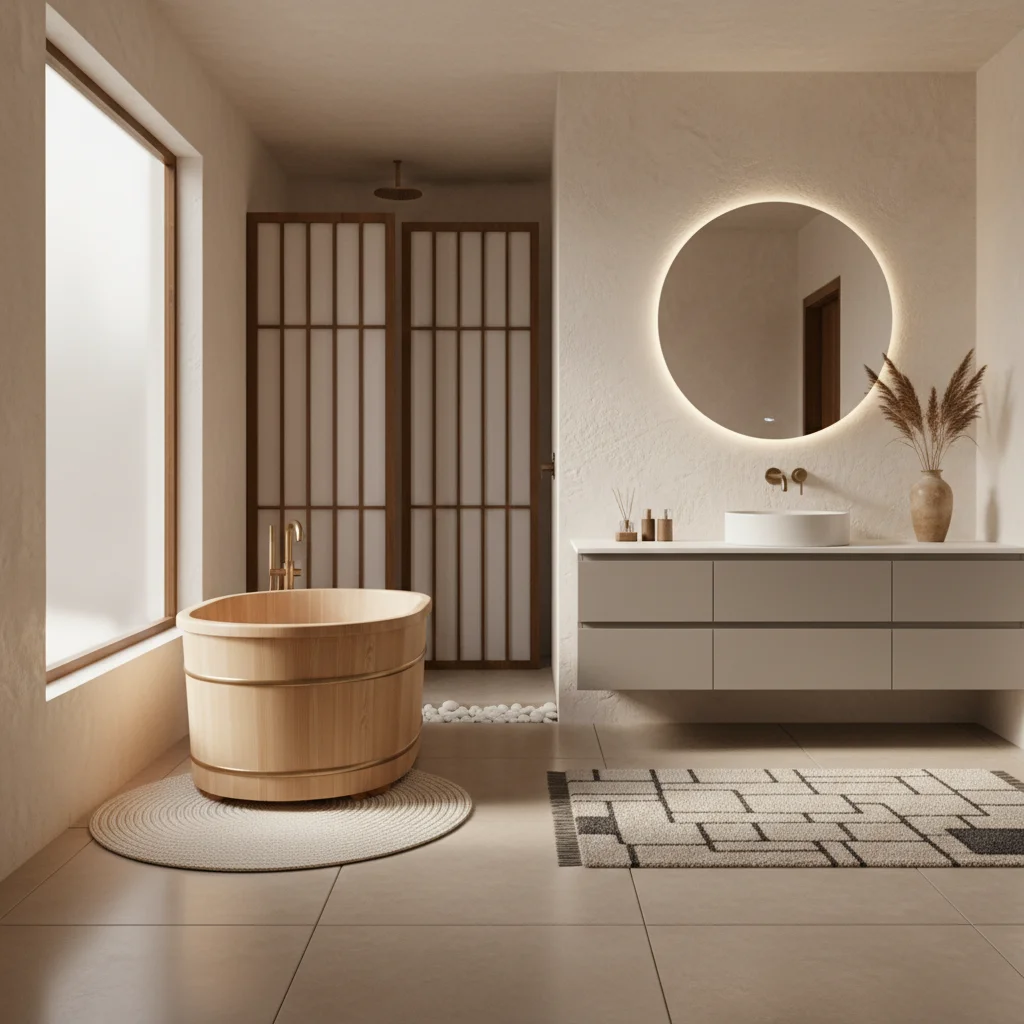
Por Qué Japandi Funciona Tan Bien en los Baños
El baño es, sin duda, la habitación más ritualística de una casa. Es donde nos preparamos para enfrentar el día y nos relajamos de sus exigencias. La calidad de estas transiciones diarias influye sutilmente en nuestro bienestar general. Esta profunda conexión hace que la filosofía Japandi —una mezcla armoniosa de la calidez funcional escandinava y la apreciación japonesa wabi-sabi por las imperfecciones naturales— sea particularmente adecuada para el diseño de baños. Ambas tradiciones elevan el acto de bañarse de mera higiene a una experiencia meditativa y consciente.
El resultado es un baño que no solo luce bien, sino que se siente profundamente restaurador. A diferencia del minimalismo a menudo frío y de alto brillo de un hotel de lujo, o la calidez a veces recargada de un baño rural tradicional, Japandi encuentra un equilibrio sublime. Abraza materiales con textura y calidez inherentes, geometrías simples pero acogedoras, y una sensación deliberada de amplitud que asegura que la habitación se sienta cuidadosamente editada, nunca desolada. De hecho, estudios muestran que invertir en un baño cuidadosamente diseñado puede aumentar el valor de reventa de una vivienda hasta en un **70% del costo de la renovación**, haciendo de una transformación Japandi una sabia inversión tanto en estilo de vida como en valor de propiedad.
La Paleta de Colores del Baño Japandi: Cultivando la Calma
Los baños Japandi se caracterizan por una paleta sobria y profundamente considerada de neutros naturales. El color base tiende típicamente a un blanco roto cálido, un beige piedra suave o un tono masilla relajante, evitando conscientemente los blancos fríos y crudos que pueden sentirse clínicos. Estos tonos fundamentales crean un telón de fondo tranquilo, invitando a la vista a descansar.
Los tonos secundarios amplían este esquema relajante con grises cálidos, verdes apagados y envejecidos (piensa en salvia, musgo o eucalipto), y sutiles negros cálidos o carbón. Estos colores no son declaraciones audaces, sino susurros sofisticados que añaden profundidad sin abrumar. Crucialmente, los tonos de madera natural de los gabinetes, estanterías y accesorios juegan un papel vital, anclando toda la paleta con calidez orgánica y evitando que los elementos de piedra y cerámica se sientan fríos o poco acogedores.
Una característica definitoria de la aplicación del color Japandi es que los tonos acento se derivan casi exclusivamente de la profundidad cromática inherente de los propios materiales, en lugar de superficies pintadas. Imagina el veteado sutil y orgánico en una losa de mármol apomazado, las variaciones matizadas de la veta en una pieza de roble blanco, o las motas minerales en un lavabo de cerámica mate. Este enfoque habla del principio wabi-sabi de encontrar la belleza en la textura natural y la variación discreta. Enfatiza que el verdadero color Japandi proviene de seleccionar materiales con profundidad intrínseca y permitir que su belleza natural hable por sí misma. Al elegir tu paleta, herramientas visuales como Habitas pueden ayudarte a [generar paletas de colores con IA](/blog/ai-color-palette-generator) que se alineen perfectamente con la estética Japandi, asegurando un espacio armonioso y equilibrado antes de comprometerte.
¿Qué Materiales Funcionan Mejor para Interiores Japandi?
La restricción de materiales es una piedra angular del diseño Japandi, particularmente en el baño. El principio rector es seleccionar una paleta limitada de tres o cuatro materiales primarios y luego usarlos de manera consistente y reflexiva en todo el espacio. Esto crea una sensación cohesiva, arraigada y lujosa.
- **Piedra:** El mármol apomazado, la arenisca, el travertino o la pizarra son opciones ejemplares para suelos y paredes. A diferencia de la piedra pulida, un acabado apomazado o mate muestra la textura natural del material y sus sutiles variaciones, alineándose con la estética wabi-sabi. Un azulejo de piedra de gran formato o incluso una sola losa de mármol bellamente veteada utilizada en una pared destacada puede definir el espacio con una elegancia discreta. La elección de la piedra a menudo informa el ambiente de toda la habitación; un travertino claro aporta calidez y ligereza, mientras que una pizarra más oscura introduce una profundidad terrosa y arraigada. Al seleccionar la piedra, considera su porosidad y requisitos de mantenimiento para asegurar su longevidad en un ambiente húmedo. - **Madera:** Maderas cálidas como la teca, hinoki (ciprés japonés) o roble blanco son indispensables. Se pueden encontrar en bases de tocador, estanterías abiertas, accesorios e incluso vigas estructurales expuestas si aplica. La teca, con su resistencia natural al agua y su veta rica, es particularmente adecuada para ambientes de baño húmedos. El hinoki es célebre en la cultura japonesa por su aroma y propiedades antibacterianas. El roble blanco ofrece una sensación más ligera y contemporánea, manteniendo la calidez. La madera debe dejarse típicamente en su acabado natural o ligeramente aceitada para preservar su textura y color orgánicos, nuevamente alineándose con el principio de belleza inherente. Aproximadamente el **65% de los diseñadores de interiores priorizan los materiales naturales** como la madera y la piedra en sus proyectos por sus cualidades estéticas y táctiles. - **Cerámica:** La cerámica mate es la opción preferida para accesorios como lavabos y, cuando corresponda, azulejos de pared. La ausencia de alto brillo refuerza la sensación de calma y discreción. La cerámica hecha a mano, con sus sutiles irregularidades y formas imperfectas, encarna maravillosamente el principio wabi-sabi, añadiendo un toque único y artesanal. Los colores deben hacerse eco de la paleta neutra: blancos rotos, grises cálidos o incluso sutiles tonos tierra. - **Metal:** Los herrajes y griferías deben presentar metales cepillados en lugar de acabados pulidos y brillantes. El latón cálido o el acero pavonado/oscurecido son excelentes opciones, ofreciendo un contraste sutil sin ser excesivamente decorativos. Estos acabados envejecen con gracia, desarrollando una pátina que añade carácter con el tiempo, otro guiño al wabi-sabi. La fontanería expuesta en un acabado complementario puede incluso convertirse en un elemento de diseño intencional.
La calidad de cada material supera la cantidad. Un solo lavabo de piedra exquisitamente elaborado o un tocador de madera meticulosamente terminado contribuyen más a la estética Japandi que una abundancia de materiales dispares de menor calidad. La filosofía de diseño japonesa a menudo hace referencia a _ma_, la pausa significativa o el espacio negativo entre elementos. En términos materiales, esto se traduce en usar menos materiales con más confianza, permitiendo que cada elemento elegido realmente "respire" y tenga su peso dentro del diseño. Este proceso de selección deliberada asegura que cada superficie contribuya a la sensación general de tranquilidad y autenticidad.
Accesorios: La Bañera Exenta y el Lavabo Sobre Encimera
Dos opciones de accesorios definen predominantemente el baño Japandi: la bañera de inmersión exenta y el lavabo sobre encimera o de piedra. Estas elecciones no son solo funcionales, sino esculturales, actuando como puntos focales que encarnan la estética.
Una bañera profunda y ovalada, idealmente en blanco mate o un compuesto de piedra natural, sirve como el ancla visual y experiencial del baño. Hace referencia directa a la tradición japonesa _ofuro_, donde un baño profundo y corto se utiliza para la contemplación tranquila en lugar de la limpieza. Su naturaleza exenta le da a la habitación una cualidad escultórica y, crucialmente, deja el suelo circundante en gran parte visible, lo que contribuye significativamente a que el espacio se sienta expansivo y despejado. Considera materiales como compuestos de superficie sólida por su tacto suave y cálido y su facilidad de limpieza, o incluso hierro fundido con esmalte mate para una presencia más tradicional y arraigada.
El lavabo sobre encimera – un lavabo que se asienta elegantemente sobre una encimera o losa simple y plana en lugar de estar empotrado – es la firma Japandi para la zona del tocador. Esta elección eleva inmediatamente la estética, transformando el lavabo en un objeto artístico. Combínalo con un grifo montado en la pared, posicionado directamente encima o a un lado, para mantener el espacio de la encimera completamente despejado, excepto por el propio lavabo. Este enfoque minimalista refuerza el diseño despejado e intencional. Un lavabo de piedra natural en travertino, mármol o piedra de río, o un lavabo de cerámica hecha a mano en una forma orgánica e irregular, introduce esa sutil imperfección wabi-sabi que evita que el espacio se sienta estéril o excesivamente clínico. Para más ideas generales sobre remodelaciones de baños, puedes explorar nuestras [ideas de remodelación de baños](/blog/bathroom-remodel-ideas).
Iluminación por Capas para el Ritual y el Descanso
La iluminación del baño Japandi evita la iluminación dura y brillante en favor de la calidez, la sutileza y la estratificación estratégica. El objetivo es crear un ambiente que propicie la relajación y las rutinas conscientes.
La fuente de luz principal debe ser siempre ambiental, a menudo una luminaria de techo minimalista grande, o luces empotradas discretas, todas con regulador de intensidad y ajustadas a una temperatura de color cálida de 2700K (Kelvin). Esto crea un brillo general suave que imita la luz natural al amanecer o al anochecer.
Añade iluminación de tarea en el espejo, que es esencial para el aseo diario. Los apliques de pared, colocados a la altura de la cara a cada lado del espejo (en lugar de encima), son ideales. Materiales como el latón cepillado, el negro mate o incluso un acento de madera natural complementan la paleta Japandi. Los apliques laterales eliminan las sombras poco halagüeñas proyectadas por las luces superiores del espejo, proporcionando una iluminación uniforme y suave.
Cuando las condiciones arquitectónicas lo permiten, la luz natural es el elemento más potente en un baño Japandi. Un tragaluz esmerilado o una ventana cuidadosamente colocada que inunda un suelo de piedra con luz natural difusa e indirecta es invaluable, ofreciendo una conexión con el mundo exterior mientras se mantiene la privacidad. Para baños sin opciones de luz natural directa, soluciones innovadoras pueden replicar su efecto. Tiras de LED cálidas, sutilmente ocultas debajo de un tocador flotante, a lo largo de la base de una bañera exenta, o incluso dentro de nichos de pared empotrados, pueden crear un efecto de "brillo desde abajo" que señala una atmósfera de spa sin ser excesivamente teatral. Los sistemas de iluminación inteligentes que permiten secuencias de atenuación programadas pueden mejorar aún más el aspecto ritualístico del baño, haciendo la transición de la luz brillante de la mañana a un suave resplandor vespertino con facilidad.
La Edición Japandi: Qué Eliminar para la Serenidad Suprema
Un baño Japandi se trata tanto del acto reflexivo de eliminar como de añadir elementos cuidadosamente seleccionados. El objetivo es lograr un estado de vacío sereno, donde cada objeto se gane su lugar.
Comienza con la superficie más visible: la encimera. Despeja todo. Esto significa guardar todas las botellas, herramientas, maquillaje y accesorios diarios en cajones, armarios cerrados o dentro de una bandeja simple y elegante de bambú o cerámica que pueda guardarse. Los únicos objetos permitidos en la encimera son aquellos que contribuyen a la estética o al ritual sin crear desorden visual; quizás una sola barra de jabón artesanal en un plato de piedra o madera, un soporte minimalista para cepillo de dientes, o una pequeña planta cuidadosamente elegida como un musgo colgante, una suculenta delicada o una pequeña orquídea. Todos los demás productos deben residir en un almacenamiento dedicado y fuera de la vista.
Luego, aborda las paredes. Quita cualquier gancho utilitario para toallas que interrumpa visualmente la calma. Reemplázalos con un toallero de madera tipo escalera, posicionado cuidadosamente en una esquina o contra una pared desnuda, permitiendo que las toallas cuelguen elegantemente. Considera reemplazar los espejos de botiquín voluminosos por un espejo simple sin marco o uno con un marco delgado de madera natural. La reducción intencional del ruido visual permite que el baño literalmente respire, cambiando inmediatamente su atmósfera hacia la calidad tranquila y considerada que define la estética Japandi. Este proceso de edición no cuesta nada, pero produce cambios inmediatos y profundos en la percepción y experiencia del espacio.
Diseñando para el Flujo: Principios de Distribución para un Baño Japandi
La distribución de un baño Japandi es primordial para lograr su característica sensación de calma y amplitud. No se trata solo de lo que incluyes, sino de cómo lo organizas para optimizar el movimiento y la tranquilidad visual. El principio fundamental es el espacio abierto y las líneas de visión claras, encarnando el concepto japonés de _ma_ en un sentido espacial.
Comienza evaluando el flujo natural de la habitación. ¿Puedes crear un camino despejado desde la puerta hasta los accesorios principales (tocador, inodoro, ducha, bañera) sin obstrucciones? Los elementos exentos como la bañera de inmersión deben colocarse donde puedan ser apreciados escultóricamente, a menudo en el centro o contra una pared destacada, en lugar de apretujarse en una esquina. Al dejar espacio alrededor de la bañera, esta se convierte en una obra de arte en sí misma, enfatizando su importancia en el ritual del baño.
Considera los tocadores flotantes o suspendidos. Montar el tocador separado del suelo crea instantáneamente una ilusión de mayor espacio y ligereza, haciendo que la habitación se sienta más grande y fácil de limpiar. Esto se alinea perfectamente con el minimalismo Japandi. Si se necesita un tocador doble, opta por dos unidades flotantes separadas en lugar de una pieza monolítica, o una única unidad flotante con amplio espacio negativo debajo.
Las duchas, si están separadas de la bañera, deben ser a ras de suelo y sin marco, con paneles de vidrio transparente que desaparezcan visualmente. Una entrada de ducha sin bordillo crea una transición perfecta desde el suelo del baño principal, mejorando aún más la sensación de apertura. Integra un banco o nicho de ducha simple y minimalista tallado directamente en la pared, utilizando la misma piedra que otras superficies, para evitar elementos superfluos. Herramientas como Habitas pueden ayudarte a [visualizar tus diseños de habitaciones generados por IA de forma realista](/blog/ai-generated-room-designs-realistic), permitiéndote experimentar con distribuciones y ver cómo las diferentes ubicaciones de los accesorios impactan el flujo general antes de realizar cualquier cambio físico. Esto puede reducir significativamente el tiempo de rediseño; donde los procesos de diseño tradicionales pueden tomar de 2 a 4 semanas para las aprobaciones de distribución, la visualización con IA ofrece retroalimentación casi instantánea.
Detalles Sutiles: Textiles, Accesorios y Toques Biofílicos
Si bien la restricción de materiales y las superficies despejadas son clave, los baños Japandi no están desprovistos de calidez. Las adiciones sutiles de textiles, accesorios cuidadosamente elegidos y elementos naturales completan el cuadro sereno.
**Textiles:** Opta por toallas de fibra natural de alta calidad en tonos tierra apagados; piensa en lino sin teñir, algodón orgánico o bambú. Estos materiales no solo son funcionales, sino que añaden una textura suave y delicada que contrasta maravillosamente con la piedra y la madera. Guárdalas cuidadosamente dobladas en estanterías abiertas o una cesta tejida, abrazando la belleza de su simplicidad. Una alfombra de baño simple de un material natural como el yute o una alfombra de algodón suave de pelo corto puede añadir comodidad bajo los pies sin crear desorden visual.
**Accesorios:** Cada accesorio debe elegirse con intención. Recipientes de cerámica hechos a mano para hisopos de algodón o sales de baño, un taburete de madera bellamente formado junto a la bañera, o un delicado portavelas hecho de piedra son ejemplos perfectos. Estos elementos son arte funcional, añadiendo carácter y calidez sin ser decorativos por la mera decoración. Una regla clave es "menos es más"; una pieza exquisita es mejor que varias mediocres.
**Toques Biofílicos:** Introducir vegetación es una forma simple pero poderosa de traer vida a un baño Japandi, conectando el interior con la naturaleza, un principio central del diseño biofílico. Elige plantas que prosperen en alta humedad y poca luz, si es necesario. Una sansevieria alta en una maceta de cerámica simple, una pothos colgante de un estante alto, o un helecho delicado pueden añadir un elemento orgánico vibrante. Las macetas deben ser tan discretas como las propias plantas – cerámica mate, terracota sin esmaltar o piedra simple. Recuerda la regla de _ma_; una sola planta bien colocada hace una declaración más fuerte que una colección abarrotada. Para más ideas sobre cómo incorporar la naturaleza, consulta nuestra [guía de diseño biofílico](/blog/biophilic-design-guide).
Presupuesto para la Serenidad: Inversión en un Baño Japandi
Crear un baño Japandi no significa necesariamente un presupuesto exorbitante, pero sí enfatiza la calidad sobre la cantidad. El enfoque en materiales naturales y duraderos a menudo se traduce en una inversión inicial más alta en comparación con alternativas sintéticas, pero estas elecciones ofrecen longevidad y un atractivo atemporal.
Por ejemplo, mientras que una renovación completa de un baño en EE. UU. puede oscilar entre **$20,000 y $60,000** dependiendo del tamaño y alcance, priorizar los elementos clave Japandi puede ayudar a gestionar los costos. Invertir en un hermoso lavabo de piedra o una bañera exenta de calidad podría ser donde se destine una parte significativa del presupuesto. Sin embargo, puedes equilibrar esto optando por azulejos de porcelana de gran formato y más económicos que imiten la piedra natural en paredes menos prominentes, en lugar de cubrir cada superficie con mármol genuino.
Los acentos de madera pueden obtenerse localmente o ser recuperados para reducir gastos. En lugar de un tocador hecho a medida, un tocador flotante de roble blanco, prefabricado y de alta calidad, aún puede lograr la estética deseada. De manera similar, aunque se recomienda la instalación profesional para trabajos complejos de piedra o fontanería, las soluciones de almacenamiento simples como un toallero tipo escalera o cestas tejidas son económicas. La fase de "edición", donde eliminas el desorden, no cuesta nada e instantáneamente eleva el espacio. En última instancia, un baño Japandi se trata de una curación reflexiva y un diseño atemporal, lo que lo convierte en una valiosa inversión a largo plazo. Si estás planeando una remodelación importante, nuestra [guía de costos de renovación de baños para 2026](/blog/bathroom-renovation-cost-2026) puede ofrecer un desglose detallado.
Manteniendo la Estética Japandi: Hábitos Diarios
Un baño Japandi no se trata solo del diseño inicial; se trata de un estilo de vida de mantenimiento consciente. El vacío deliberado y el énfasis en los materiales naturales significan que los hábitos diarios juegan un papel crucial en la preservación de la atmósfera serena y de spa.
**Orden Constante:** Esto es innegociable. Después de cada uso, asegúrate de que todos los productos se devuelvan a su almacenamiento designado y fuera de la vista. Esto significa que las lociones van en los cajones, los cepillos de dientes se guardan y las toallas se cuelgan ordenadamente para secar o se colocan en el cesto de la ropa sucia. El objetivo es que las encimeras y las superficies abiertas permanezcan consistentemente despejadas.
**Cuidado de Materiales:** Los materiales naturales como la piedra y la madera requieren un cuidado específico. Las superficies de piedra deben limpiarse con limpiadores de pH neutro para evitar el grabado, y muchas pueden requerir un sellado periódico para mantener su apariencia y resistencia a la humedad. Las superficies de madera deben limpiarse en seco regularmente y tratarse ocasionalmente con un aceite adecuado para nutrirlas y protegerlas, especialmente en un ambiente húmedo. Seguir las directrices del fabricante para todos los materiales prolongará su vida y belleza.
**Sencillez en la Reposición:** Al comprar nuevos jabones, lociones o accesorios, siempre considera si encajan con la estética Japandi. Opta por productos con envases minimalistas, ingredientes naturales y aromas sutiles que se alineen con el espíritu de calma. Los dispensadores rellenables de cerámica o vidrio son preferibles a las botellas de plástico desechables.
Al integrar estos simples hábitos, tu baño Japandi seguirá siendo un santuario restaurador constante, reflejando la filosofía de vida consciente en su esencia.
---
Preguntas Frecuentes
### ¿Qué define un baño Japandi?
Un baño Japandi se caracteriza por una mezcla de minimalismo japonés y calidez escandinava. Los elementos clave incluyen una paleta de colores serena y neutra (blancos cálidos, grises, verdes apagados), materiales naturales como madera (teca, roble blanco) y piedra (travertino, mármol apomazado), accesorios minimalistas como bañeras exentas y lavabos sobre encimera, iluminación cálida por capas y un fuerte énfasis en el orden. Prioriza la funcionalidad, las texturas naturales y una sensación de calma y amplitud, a menudo incorporando elementos de wabi-sabi (belleza en la imperfección).
### ¿Qué colores son los mejores para un baño Japandi?
Los mejores colores para un baño Japandi son neutros profundamente considerados. Los tonos dominantes incluyen blancos rotos cálidos, beiges piedra y masilla suave. Los colores secundarios presentan grises cálidos, verdes salvia o eucalipto apagados, y sutiles negros cálidos. Los colores acento típicamente provienen de las variaciones naturales dentro de los propios materiales, como el veteado en el mármol o la veta en la madera, en lugar de superficies pintadas audaces. La paleta general está diseñada para evocar tranquilidad y una conexión con la naturaleza.
### ¿Cómo puedo hacer que mi baño se sienta más como un spa con elementos Japandi?
Para crear una sensación de spa, concéntrate en la calidad de los materiales, el diseño minimalista y la iluminación bien pensada. Incorpora piedra natural en suelos o una pared destacada, elige una bañera de inmersión profunda y exenta, y utiliza un lavabo sobre encimera con grifos montados en la pared. Capas tu iluminación con fuentes ambientales cálidas y apliques laterales funcionales. Crucialmente, despeja todas las superficies, guarda lo esencial fuera de la vista e introduce elementos biofílicos sutiles como una sola planta bien colocada. El énfasis está en crear un vacío deliberado que invita a la relajación.
### ¿Cuáles son los accesorios de baño Japandi comunes?
Los accesorios de baño Japandi comunes incluyen una bañera de inmersión exenta, a menudo en blanco mate o compuesto de piedra, que sirve como un punto focal escultural. Los lavabos sobre encimera, que se asientan sobre una encimera simple, combinados con grifos montados en la pared, son otra firma. Las duchas suelen ser a ras de suelo con vidrio sin marco y una entrada sin bordillo para mantener una sensación de apertura. Los herrajes suelen ser en acabados cepillados como latón o acero pavonado/oscurecido, evitando el cromo de alto brillo.
### ¿Se puede diseñar un baño pequeño al estilo Japandi?
Absolutamente. El estilo Japandi es particularmente adecuado para baños pequeños debido a su énfasis en el minimalismo, las líneas limpias y el uso intencional del espacio. Los tocadores flotantes o suspendidos, los accesorios montados en la pared y las mamparas de ducha transparentes sin marco maximizan el espacio del suelo y crean una sensación de apertura. Limitar la paleta de materiales y despejar las superficies son aún más críticos en un espacio pequeño, garantizando que cada elemento contribuya a una atmósfera serena y despejada sin abrumar la habitación.