Dominando o design de ambientes totalmente brancos: Aconchegante, Convidativo, Não Estéril
Projete ambientes totalmente brancos deslumbrantes que se sintam aconchegantes, com camadas e convidativos, não estéreis. Dicas de especialistas sobre subtons de tinta, texturas essenciais, iluminação estratégica e visualização Habitas AI.
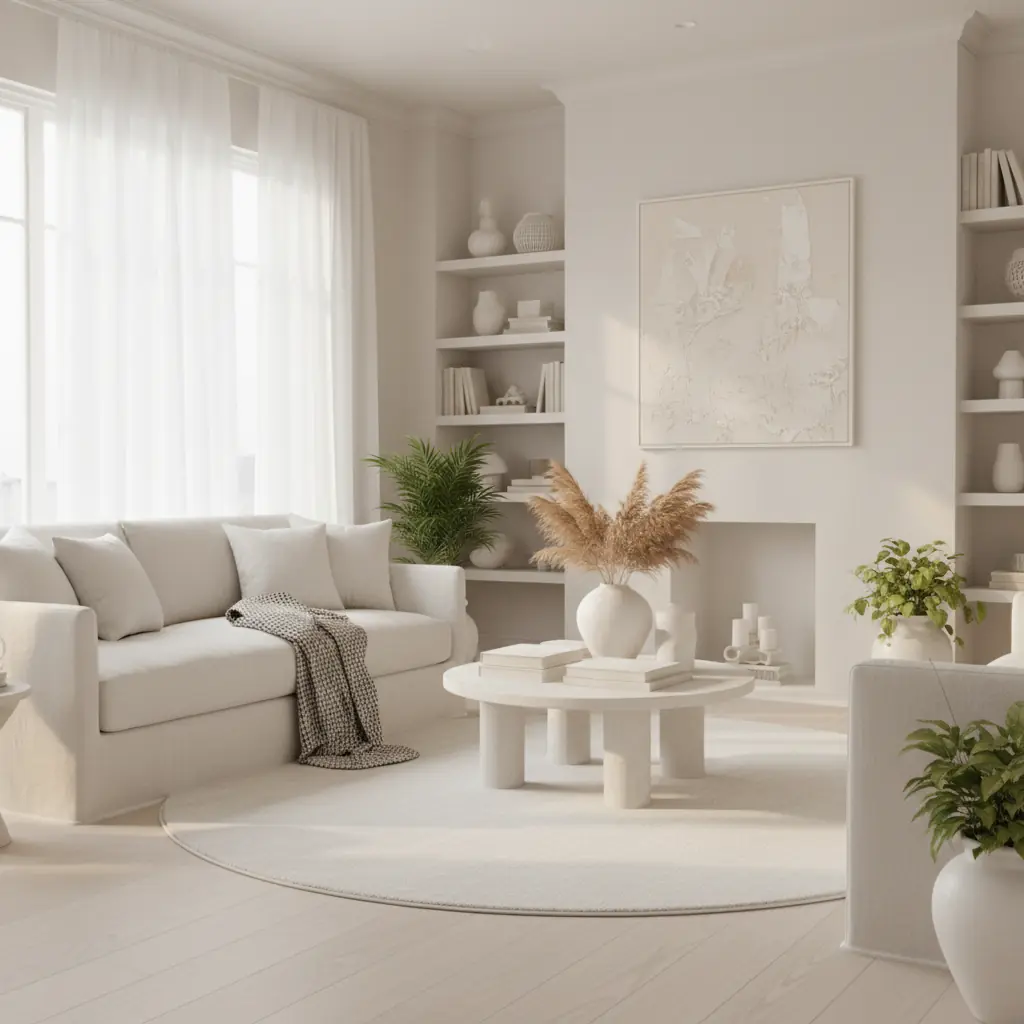
A armadilha do ambiente branco: por que os brancos de revista falham na vida real
Ambientes totalmente brancos parecem naturalmente bonitos em revistas de design — claros, arejados, sofisticados, serenos. Então você pinta suas paredes de branco, compra um sofá branco e descobre que seu cômodo parece uma sala de espera de hospital. Esta é a armadilha do ambiente branco, e ela pega milhares de proprietários todos os anos. A desconexão entre ambientes brancos fotografados e ambientes brancos vividos se resume a três fatores críticos que as revistas raramente explicam: o branco específico escolhido, a variedade de texturas meticulosamente em camadas dentro do cômodo e a qualidade e calor da iluminação.
Fotógrafos profissionais também "trapaceiam" da melhor maneira possível. Eles usam configurações de iluminação específicas, frequentemente empregando luzes de preenchimento quentes, que fazem os brancos brilharem calorosamente e criam sombras suaves. Eles estilizam ambientes com dezenas de sutis variações de textura que criam interesse visual sem a distração da cor. E crucialmente, o próprio branco foi cuidadosamente selecionado para ter o subtom certo para as condições de iluminação específicas da sessão, uma nuance muitas vezes perdida para o observador. Nada dessa encenação meticulosa é imediatamente visível na imagem final — você apenas vê "um ambiente branco que parece lindo" e assume que qualquer branco produzirá o mesmo resultado. A realidade é que criar essa ilusão de facilidade exige expertise significativa e escolhas deliberadas.
A boa notícia é que ambientes totalmente brancos PODEM funcionar lindamente na vida real. Mas eles exigem mais reflexão e escolhas mais deliberadas do que um ambiente colorido. Ironicamente, a estética de aparência mais simples é muitas vezes a mais difícil de executar bem. Cada imperfeição aparece, cada escolha errada é exposta, e não há uma cor de parede ousada para distrair de problemas espaciais ou de iluminação. Este guia irá equipá-lo com as estratégias avançadas que os designers Habitas usam para criar espaços totalmente brancos verdadeiramente convidativos.
Escolhendo o branco certo: por que os subtons importam enormemente
Não existe "apenas branco". Benjamin Moore sozinho oferece mais de 200 brancos, e as diferenças entre eles são sutis, mas enormemente significativas. A decisão mais importante é o subtom: entender se um branco tem uma base fria (azul, cinza ou verde) ou uma base quente (amarelo, rosa ou pêssego).
**Brancos frios** frequentemente parecem nítidos, limpos e modernos. Eles podem ser deslumbrantes em ambientes com abundante luz natural quente (como cômodos voltados para o sul), onde mantêm seu brilho sem parecerem austeros. No entanto, em cômodos voltados para o norte ou espaços com iluminação artificial mais fria, os brancos frios podem facilmente tender a parecer gelados, clínicos ou até monótonos. Um branco com um subtom azul pode parecer refrescante em um banheiro claro, mas frio em uma sala de estar mal iluminada.
**Brancos quentes** parecem mais suaves, mais convidativos e tradicionais. Eles neutralizam as condições de iluminação mais frias, trazendo um aconchego sutil a um espaço. O desafio com brancos quentes é encontrar um que ofereça calor suficiente sem parecer sujo, amarelado ou como um creme opaco, especialmente em ambientes com menos luz natural. Muito calor, e seu ambiente "branco" pode começar a parecer off-white ou bege.
### O teste do papel e considerações ambientais
O melhor teste inicial para escolher o branco certo é o teste do papel. Segure sua amostra de tinta branca contra um pedaço de papel de impressora branco brilhante. O papel da impressora atua como um branco neutro e verdadeiro. Contra ele, você perceberá imediatamente o subtom de sua amostra — é rosado? Amarelado? Acinzentado? Esverdeado? Isso lhe diz exatamente com o que você está trabalhando.
No entanto, o teste do papel é apenas o começo. A qualidade da luz em seu ambiente real é primordial.
- **Ambientes voltados para o norte:** Recebem luz mais fria e azulada durante o dia. Opte por um branco quente com um subtom amarelo ou rosa para equilibrar essa frieza. - **Ambientes voltados para o sul:** Banhados em luz abundante e quente. Você tem mais flexibilidade aqui; um branco nítido, ligeiramente frio pode manter sua vivacidade, ou um branco quente parecerá extra aconchegante. - **Ambientes voltados para o leste:** Recebem luz matinal brilhante e quente, depois luz mais fria à tarde. Um branco quente equilibrado geralmente funciona bem. - **Ambientes voltados para o oeste:** Recebem luz intensa e quente à tarde. Os brancos aqui podem look muito quentes, às vezes até amarelos. Considere um branco mais neutro ou um com um leve subtom cinza para temperar o sol da tarde.
Para a maioria dos ambientes em 2026, um branco quente com calor suficiente para ser visível no teste do papel — mas não tanto que pareça creme — é o ponto ideal para alcançar uma atmosfera suave e convidativa. Embora escolher a tinta possa parecer esmagador com o grande número de opções, _mais de 80% dos designers de interiores concordam que selecionar a tinta branca correta é uma das decisões mais sutis e desafiadoras em um projeto_. Não apresse esta etapa.
### Dicas Profissionais Habitas para Seleção de Tinta Branca:
Os brancos quentes mais seguros que consistentemente têm bom desempenho incluem Benjamin Moore White Dove (OC-17), Sherwin-Williams Alabaster (SW 7008) e Farrow & Ball Pointing (No.2003). São brancos versáteis que carregam calor suficiente para evitar a rigidez.
Para um branco ligeiramente mais frio que ainda evita a armadilha clínica, Benjamin Moore Simply White (OC-117) ou Sherwin-Williams Extra White (SW 7006) funcionam lindamente em ambientes com abundante luz natural quente. Eles oferecem uma sensação limpa e brilhante sem serem excessivamente frios.
Evite brancos puros e austeros como Sherwin-Williams High Reflective White (SW 7757) para grandes superfícies de parede – eles pertencem a acabamentos, tetos ou como um destaque nítido, e não como cor principal da parede, pois lhes falta a profundidade necessária para um ambiente todo branco habitável. Se você estiver com dificuldades para escolher, considere usar um [gerador de paleta de cores com IA](/blog/ai-color-palette-generator) para obter sugestões com base nas fotos do seu ambiente e no humor desejado.
A textura como salvação dos ambientes brancos
Em um ambiente sem variação de cor, a textura se torna sua principal ferramenta de design. A variedade de textura cria interesse visual, profundidade e calor de uma forma que impede que um ambiente branco pareça plano ou vazio. A regra é simples: quanto menos cores em um ambiente, mais texturas você precisa. Um ambiente totalmente branco deve ter um mínimo de cinco a seis texturas diferentes para parecer vivo e com camadas. Pense nisso como pintar com materiais em vez de pigmentos.
Comece com as grandes superfícies. Uma parede branca lisa e fosca combinada com um teto branco sutilmente texturizado (mesmo um acabamento sutil ou de gesso) cria uma variação inicial, muitas vezes negligenciada. Um tapete de lã branco felpudo contra pisos de madeira ou concreto claro pintados de branco liso adiciona outra camada significativa.
Em seguida, construa através de móveis e têxteis:
- **Estofamento:** Um sofá de boucle (com nós, dimensional, macio ao toque), poltronas de linho (ligeiramente ásperas, que captam a luz, caimento orgânico) ou um pufe de shearling sintético (luxuosamente macio). - **Tratamentos de Janela:** Cortinas de linho transparentes (filtrando a luz suavemente), cortinas de seda crua grossas (brilho sutil, caimento mais pesado) ou persianas de bambu tecidas (textura natural, linear). - **Mantas e Almofadas:** Uma manta de tricô grosso (tridimensional, aconchegante), almofadas de lona de algodão (lisas mas foscas), uma almofada de veludo (brilho suave, convidativa). - **Superfícies Rígidas:** Um vaso de cerâmica (brilhante contra têxteis foscos), um cachepot de concreto escovado (industrial, poroso), uma mesa lateral de mármore polido (fria, reflexiva).
### Aproveitando Materiais Naturais
Materiais naturais são essenciais em ambientes brancos porque trazem uma variação orgânica que os materiais sintéticos não podem replicar totalmente. Eles introduzem sutis imperfeições, padrões naturais e calor inerente.
- **Madeira:** Tons de madeira clara – carvalho branco, bétula, bordo ou freixo – adicionam calor sem introduzir cor evidente. Considere uma mesa de centro de carvalho branco, um piso de madeira clara ou prateleiras de bétula. Até mesmo madeira lavada branca envelhecida pode adicionar textura rústica. - **Fibras:** Rattan, palha, juta e palha tecida trazem textura dimensional e uma sensação terrosa e orgânica. Pense em uma luminária pendente de rattan, uma poltrona de palha ou um tapete de juta. Lã, linho, algodão e seda oferecem diferentes experiências táteis e reflexão da luz. - **Pedra e Cerâmica:** Pedra natural em tons claros (mármore branco, travertino, calcário, alabastro) adiciona padrões sutis e variação de cor dentro da paleta branca. Peças de cerâmica, sejam foscas ou brilhantes, introduzem um elemento artesanal. - **Vidro e Metal:** Vidro fosco, vidro canelado ou vidro transparente podem adicionar transparência e reflexão. Metais foscos como aço escovado ou ferro oferecem contraste industrial, enquanto latão polido ou ouro introduzem calor e brilho.
Um ambiente branco que depende inteiramente de materiais lisos e sintéticos e superfícies pintadas sempre parecerá mais estéril do que um rico em materiais naturais. A incorporação de texturas variadas também contribui para a percepção psicológica de um espaço; estudos mostram que _ambientes ricos em texturas diversas e elementos naturais são percebidos como 15-20% mais confortáveis e convidativos_.
Iluminação: o fator decisivo em ambientes brancos
Ambientes brancos são mais sensíveis à iluminação do que qualquer outro esquema de cores. Um ambiente branco iluminado principalmente com lâmpadas LED frias de 5000K parece um escritório ou um hospital. O mesmo ambiente iluminado predominantemente com lâmpadas quentes de 2700K parece um retiro Scandinavian aconchegante. Esta não é uma diferença sutil — é a profunda diferença entre um ambiente em que você quer passar tempo e um ambiente que você instintivamente quer deixar.
### Compreendendo a Temperatura Kelvin
Kelvin (K) é a unidade usada para medir a temperatura da cor da luz.
- **2200K-2700K (Branco Quente):** Emite um brilho suave e amarelado, semelhante a lâmpadas incandescentes ou luz de velas. Ideal para salas de estar, quartos e áreas de jantar onde o aconchego é desejado. Este é o seu ideal para ambientes totalmente brancos. - **3000K-3500K (Branco Suave/Branco Neutro):** Um equilíbrio entre quente e frio, frequentemente usado em cozinhas e banheiros onde uma luz mais brilhante e natural é preferida, mas ainda retém algum calor. Pode funcionar em ambientes brancos, mas requer camadas cuidadosas. - **4000K-5000K (Branco Frio/Luz do Dia):** Emite uma luz branca nítida e azulada. Melhor para iluminação de tarefas em oficinas, escritórios ou espaços comerciais. Geralmente deve ser evitado em um ambiente residencial totalmente branco, pois destacará a austeridade.
### Camada Sua Iluminação Estrategicamente
Camada sua iluminação com pelo menos três tipos de fonte de luz em cada ambiente branco. Em um ambiente branco, as sombras criadas pela iluminação em camadas SÃO o interesse visual — elas fornecem o contraste que a cor forneceria de outra forma.
1. **Luz Ambiente:** Fornece iluminação geral. Isso pode vir de luminárias de teto como luzes embutidas com capacidade de dimerização quente, um pendente difuso ou um lustre. Crucialmente, a luz ambiente nunca deve ser a única fonte. 2. **Luz de Tarefa:** Cria focos de luz quente para atividades específicas, adicionando profundidade e sombra. Pense em luminárias de mesa ao lado de um sofá, luzes de leitura perto de uma poltrona ou iluminação sob armários em uma cozinha. Dimmers em todas as luminárias são inegociáveis em um ambiente branco, permitindo que você ajuste o humor. 3. **Luz de Destaque:** Adiciona drama, realça características arquitetônicas ou chama a atenção para arte e objetos. Luzes de quadro, arandelas, velas e uplights atrás de plantas ou móveis criam um jogo de luz intrigante. _Investir em iluminação de qualidade e em camadas pode aumentar o valor percebido e o conforto de um lar em até 30%_, tornando-o um investimento inteligente para qualquer design.
### Luz Natural: A Aliada Suprema
A luz natural é a aliada suprema dos ambientes brancos. Ambientes voltados para o sul e para o oeste com janelas generosas são os ambientes que melhor aproveitam o branco total — a luz do sol fluindo sobre superfícies brancas cria o visual brilhante, quente e com qualidade de revista que inspirou o esquema em primeiro lugar. Janelas grandes, claraboias e até espelhos estrategicamente colocados para refletir a luz são inestimáveis.
Ambientes voltados para o norte com janelas limitadas são os mais difíceis de executar o branco total com sucesso, pois recebem luz indireta mais fria e consistente. Nesses espaços, você pode ser melhor servido adicionando pelo menos uma cor de destaque quente ou incorporando neutros quentes mais saturados para evitar que o ambiente pareça plano ou frio. Mesmo em ambientes naturalmente brilhantes, lembre-se que a luz muda ao longo do dia, então observe o branco escolhido em vários momentos antes de se comprometer.
Adicionando profundidade sem cor: técnicas avançadas
Alcançar um ambiente branco sofisticado e não estéril exige uma abordagem matizada para profundidade e contraste, mesmo sem introduzir cores tradicionais.
### Neutros em Camadas: O Segredo Profissional
Neutros em camadas são o segredo profissional para ambientes brancos que parecem ricos em vez de esparsos. Em vez de um branco uniforme, use três ou quatro brancos e quase-brancos, cada um com um subtom ou profundidade ligeiramente diferente: um branco quente nas paredes, um branco ligeiramente mais cremoso nos acabamentos, um tecido de estofamento em tom de marfim e um linho branco nítido nas cortinas. Estas não são dramaticamente diferentes; todas devem parecer "brancas" à primeira vista, mas as variações sutis criam profundidade, interesse visual e uma sensação de luxo que um único branco não consegue alcançar. Esta técnica adiciona uma riqueza quase imperceptível ao espaço.
### Acentos Metálicos e Foscos
Acentos metálicos trazem vida e brilho a ambientes brancos sem introduzir cor evidente.
- **Metais Quentes:** Latão, ouro e cobre adicionam calor, sofisticação e captam a luz lindamente, criando pontos de interesse dinâmicos. Um abajur de latão, um espelho com moldura dourada, objetos decorativos de cobre ou uma sutil trama dourada em uma manta criam pontos focais sofisticados que guiam o olhar pelo ambiente. - **Metais Frios:** Cromo, níquel polido ou aço inoxidável podem adicionar uma borda elegante e moderna. Use-os com moderação para manter o calor, talvez para uma base de lâmpada ou uma peça sutil de ferragem. - **Preto Fosco:** O preto fosco é outra opção poderosa para um contraste gráfico moderno. Uma luminária de ferro preto, puxadores de armário pretos foscos ou uma moldura preta fina em uma peça de arte cria uma definição nítida contra superfícies brancas, ancorando o espaço e evitando que ele pareça etéreo.
### Incorporando Padrões e Formas Sutis
Não tenha medo de usar padrões em um ambiente totalmente branco. A chave é mantê-lo sutil e impulsionado pela textura. Padrões tom sobre tom em papéis de parede (por exemplo, um damasco branco com uma textura elevada, um relevo geométrico sutil), tecidos listrados branco sobre branco ou até padrões abstratos em um tapete podem adicionar intriga visual. Considere também elementos esculturais: um vaso branco com formato único, um móvel curvo ou uma peça de arte abstrata branca podem adicionar peso visual e interesse significativos.
### O Poder do Espaço Negativo
Em um ambiente totalmente branco, o espaço negativo (as áreas vazias ao redor e entre os objetos) torna-se um elemento de design poderoso. Abrace o minimalismo quando apropriado, permitindo que as peças-chave respirem e se destaquem. O posicionamento estratégico de móveis e objetos cria caminhos para o olho e a mente, contribuindo para a sensação serena e organizada frequentemente buscada em interiores brancos. Para ideias sobre arranjo de móveis, explorar uma [ferramenta de arranjo de móveis com IA](/blog/ai-furniture-arrangement-tool) pode fornecer novas perspectivas para otimizar seu espaço branco.
### Habitas: Visualizando seu Ambiente Branco Antes de Se Comprometer
Se você está em dúvida se seu ambiente pode suportar um esquema totalmente branco, ou quais brancos e texturas específicas combinar, teste antes de se comprometer. Habitas permite que você aplique várias paletas de branco sobre branco e combinações de textura em fotos do seu ambiente real. Você pode avaliar instantaneamente como a luz natural, as proporções e os elementos existentes interagem com um esquema branco. Esta poderosa ferramenta de visualização de IA ajuda você a refinar suas escolhas, identificando onde uma parede de destaque quente pode ser necessária ou, inversamente, confirmando que seu ambiente é perfeitamente adequado para a abordagem totalmente branca com as escolhas certas de textura e iluminação. _A visualização de IA leva apenas segundos em comparação com as 2-4 semanas que um designer tradicional poderia levar para produzir renderizações realistas_, economizando tempo e possíveis erros caros. Explore as possibilidades com [designs de ambientes gerados por IA](/blog/ai-generated-room-designs-realistic) para dar vida à sua visão.
Trazendo o Exterior: A Conexão Biofílica em Espaços Brancos
Integrar elementos da natureza, um princípio conhecido como design biofílico, é particularmente eficaz em ambientes totalmente brancos. Espaços brancos frequentemente se beneficiam das formas orgânicas, verdes variados e texturas naturais que plantas e materiais brutos proporcionam. Essa conexão com o mundo natural evita a esterilidade e injeta vida em uma paleta de outra forma monocromática.
### Folhagem Exuberante
Um toque de verde vibrante de plantas atua como um acento natural e sem cor que prospera em um ambiente branco. Plantas de chão grandes, como uma Fiddle Leaf Fig, uma Monstera ou uma Snake Plant, trazem forma escultural e um contraste refrescante sem sobrecarregar o delicado esquema branco. Plantas menores, como suculentas ou samambaias em vasos de cerâmica branca, adicionam vida sutil a prateleiras e mesas. O verde profundo da folhagem contra paredes brancas é uma combinação clássica e sofisticada que ancora o ambiente e, literalmente, limpa o ar. Para mais inspiração, confira nosso [guia de design biofílico](/blog/biophilic-design-guide).
### Formas e Materiais Orgânicos
Além das plantas, pense em outros elementos naturais. Um galho artisticamente arranjado em um vaso alto, uma coleção de pedras de rio lisas em uma tigela ou uma mesa de centro de madeira com borda natural contribuem com formas e texturas orgânicas. Esses elementos introduzem uma autenticidade e uma sensação de calma que os sintéticos não podem replicar. Eles ecoam as variações naturais encontradas no ambiente, o que é especialmente importante em um esquema onde a precisão manufaturada poderia, de outra forma, parecer fria.
A inclusão deliberada de elementos naturais garante que seu ambiente branco não seja apenas um pano de fundo austero, mas um espaço dinâmico e respirável que se conecta com o mundo exterior. Esta abordagem se alinha perfeitamente com a filosofia Habitas de criar espaços de convívio que são ao mesmo tempo belos e profundamente ressonantes.
Perguntas Frequentes
### Quais são as melhores cores de tinta branca quente que não são muito amareladas?
Para brancos quentes que evitam o amarelamento excessivo, recomendamos Benjamin Moore White Dove (OC-17), Sherwin-Williams Alabaster (SW 7008) e Farrow & Ball Pointing (No.2003). Esses brancos carregam calor sutil suficiente (muitas vezes um toque de creme ou greige) para parecerem convidativos e suaves sem parecerem sujos ou abertamente amarelados, especialmente quando observados em várias condições de iluminação ao longo do dia. Sempre teste grandes amostras em seu ambiente real antes de se comprometer.
### Como adiciono textura a um ambiente branco sem adicionar cor?
Para adicionar textura sem cor, concentre-se em camadas de materiais diversos. Comece com elementos arquitetônicos como paredes ou tetos texturizados. Em seguida, incorpore uma variedade de têxteis como boucle, linho, tricôs grossos, veludo e pele de carneiro. Introduza materiais naturais como madeiras de tom claro (carvalho branco, bordo), rattan, juta, pedra natural (mármore, travertino) e cerâmica. Misture acabamentos – fosco, brilhante, escovado, poroso – para criar profundidade visual e interesse tátil em todo o espaço.
### Que tipo de iluminação funciona melhor em um ambiente totalmente branco para evitar um visual estéril?
Iluminação quente e em camadas é crucial. Priorize lâmpadas com temperatura Kelvin entre 2200K-2700K (branco quente) para iluminação geral. Implemente pelo menos três camadas de iluminação: ambiente (teto com dimmers), tarefa (luminárias de mesa, luzes de leitura) e destaque (arandelas, luzes de quadro, velas). Isso cria sombras e destaques, adicionando profundidade e aconchego, evitando que o ambiente pareça plano e estéril. Maximize a luz natural sempre que possível, pois é a aliada suprema para espaços brancos.
### Um ambiente totalmente branco pode ser aconchegante e convidativo?
Com certeza! Um ambiente totalmente branco pode ser incrivelmente aconchegante e convidativo quando executado corretamente. A chave é priorizar o calor através dos subtons da tinta branca (tendendo a ser ligeiramente quentes), abundante camadas de texturas diversas (especialmente materiais naturais como madeira, lã e linho) e iluminação pensada, quente e em camadas. Esses elementos se combinam para criar uma atmosfera suave e envolvente que parece serena e confortável, em vez de austera.
### Como evito que meu ambiente branco pareça estéril ou frio?
Para evitar um visual estéril ou frio, concentre-se em três estratégias principais. Primeiro, escolha uma tinta branca com um subtom quente (amarelo, rosa, pêssego) que complemente a luz natural do seu ambiente. Segundo, introduza uma rica variedade de texturas através de têxteis, materiais naturais (madeira, rattan, pedra) e acabamentos (fosco, brilhante, áspero, liso). Terceiro, implemente iluminação quente e em camadas, favorecendo lâmpadas na faixa de 2200K-2700K e utilizando múltiplas fontes de luz para criar profundidade e sombra.