Custos de Reforma de Banheiro 2026: O Guia Definitivo para Proprietários
Detalhamento completo dos custos de reforma de banheiro — de atualizações cosméticas a reformas completas, com divisão de mão de obra, dados de ROI e dicas de especialistas.
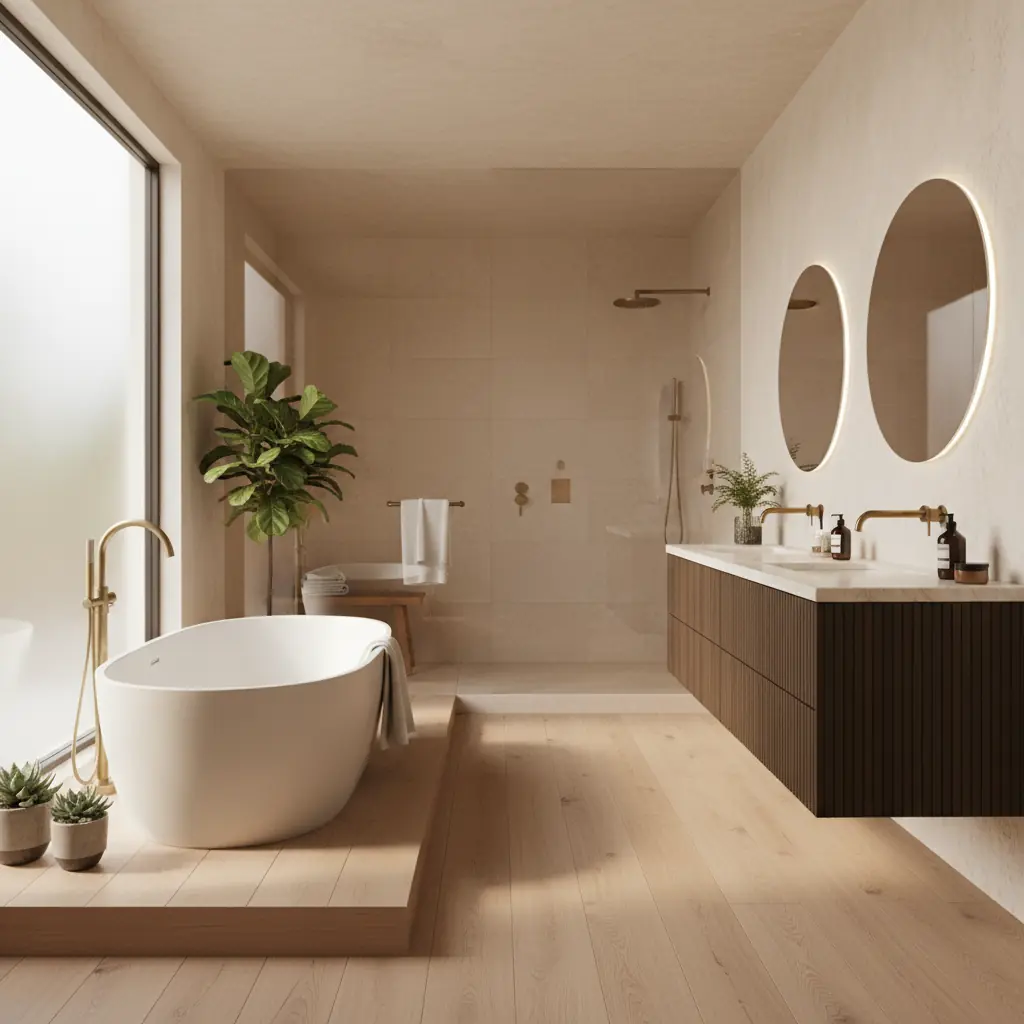
Por Que Reformas de Banheiro São Tão Caras?
Banheiros consistentemente figuram como um dos cômodos mais caros para reformar por metro quadrado, muitas vezes superando até mesmo as cozinhas em complexidade e eficiência de custo. Embora um banheiro típico possa ter apenas 4 a 6 metros quadrados, uma reforma de médio porte pode facilmente custar de $10.000 a $20.000. A razão principal para este investimento significativo reside na infraestrutura complexa compactada em um espaço tão pequeno.
Ao contrário de uma sala de estar que requer principalmente atualizações cosméticas, um banheiro é um labirinto de sistemas interconectados: encanamento para abastecimento de água e drenagem, impermeabilização sofisticada para prevenir vazamentos catastróficos, trabalho elétrico preciso para iluminação e ventilação, instalação intrincada de azulejos e ventilação especializada para controlar a umidade. Cada um desses componentes exige profissionais licenciados na maioria das jurisdições, o que significa que você está pagando por mão de obra altamente especializada e adesão a códigos de construção rigorosos. Uma reforma completa de banheiro envolve tipicamente pelo menos 5 a 7 diferentes ofícios, incluindo demolição, encanamento, elétrica, carpintaria, assentamento de azulejos e pintura, aumentando significativamente a complexidade da coordenação e os custos de mão de obra. Essa densidade de ofícios técnicos, combinada com a necessidade de materiais duráveis e resistentes à umidade, torna os banheiros um investimento substancial.
A média nacional para uma reforma completa de banheiro principal em 2026 é estimada entre $15.000 e $25.000, enquanto um banheiro secundário ou de hóspedes menor pode variar de $8.000 a $15.000. No entanto, esses valores são apenas pontos de partida. As variações regionais são dramáticas; por exemplo, reformas em áreas com alto custo de vida como a Baía de São Francisco ou a área metropolitana de Nova York podem facilmente custar de 40 a 60 por cento a mais do que as médias nacionais, às vezes ultrapassando os $50.000+ para uma reforma abrangente. Compreender esses custos fundamentais é o primeiro passo para definir um orçamento realista para o banheiro dos seus sonhos.
Opção 1: A Atualização Cosmética – Modernizando com Orçamento Limitado ($1.000 a $3.000)
Uma atualização cosmética é sua arma secreta para fazer um banheiro datado parecer atual sem o incômodo ou a despesa de uma demolição. Essa abordagem mantém meticulosamente todo o encanamento existente e o layout geral intactos, focando puramente em transformações visíveis e superficiais. É ideal para banheiros onde a estrutura central é sólida, e você geralmente está satisfeito com o layout, mas deseja uma estética mais contemporânea.
**O que está tipicamente incluído em uma atualização cosmética:**
- **Repintura:** ($150 a $300) Uma nova demão de tinta resistente à umidade é talvez a mudança mais impactante pelo menor custo. Opte por tons claros e neutros para fazer o espaço parecer maior e mais claro, ou considere uma parede de destaque ousada para adicionar personalidade. - **Substituição do Espelho da Bancada:** ($100 a $400) Trocar um espelho padrão por uma opção elegante, emoldurada ou com luz de fundo pode elevar instantaneamente a área da bancada. Considere um espelho grande e redondo para um toque moderno. - **Upgrade da Luminária:** ($100 a $300) Luzes "boob" desatualizadas ou tiras de iluminação amareladas podem ser substituídas por luminárias LED contemporâneas que oferecem melhor iluminação e eficiência energética. Opções de iluminação inteligente podem adicionar conveniência. - **Nova Instalação de Torneira:** ($150 a $400) Uma nova torneira elegante em um acabamento moderno (preto fosco, níquel escovado ou cromado polido) pode atualizar drasticamente a área da sua pia. Certifique-se de que seja compatível com a configuração existente da sua pia. - **Troca de Ferragens e Barras de Toalha:** ($50 a $150) Substituir puxadores de gaveta, maçanetas de armário, barras de toalha e suportes de papel higiênico por ferragens modernas e combinando cria um visual coeso e atualizado. - **Atualização de Acessórios:** ($100 a $300) Investir em uma nova cortina de chuveiro, um tapete de banho macio, toalhas frescas e acessórios decorativos pode unir todo o visual renovado. - **Revestimento ou Pintura de Azulejos:** ($300 a $800) Se seus azulejos existentes forem estruturalmente sólidos, mas visualmente pouco atraentes, o revestimento profissional ou a tinta especializada para azulejos podem transformar sua aparência sem a bagunça e o custo da remoção. Isso é particularmente eficaz para paredes de chuveiro ou azulejos de piso que são de uma única cor uniforme.
Essa estratégia brilha quando o layout do seu banheiro é totalmente funcional, e seus azulejos e bancada existentes estão em condições aceitáveis. O objetivo não é uma transformação estrutural dramática, mas sim uma modernização sofisticada dos acabamentos para criar um espaço coeso e convidativo. Uma atualização cosmética bem executada pode facilmente fazer um banheiro datado parecer dez anos mais novo, estendendo sua vida útil e aumentando seu apelo, especialmente se você estiver preparando uma casa para venda em um prazo apertado. Antes de se comprometer com um esquema de cores ou novas luminárias, você pode até utilizar plataformas como Habitas para visualizar diferentes cores de tinta, estilos de espelho e posicionamentos de acessórios em uma foto do seu banheiro real, garantindo que suas escolhas estejam alinhadas com sua visão.
Opção 2: A Reforma de Médio Porte – Impacto Significativo, Investimento Calculado ($10.000 a $20.000)
Uma reforma de médio porte equilibra uma atualização superficial e uma reforma completa. Este nível foca na substituição de todas as superfícies e acessórios visíveis, proporcionando um impacto visual dramático, mas, crucialmente, mantém os principais componentes de encanamento (vaso sanitário, chuveiro, ralos de pia) em suas localizações existentes. Evitar o custo e a complexidade de mover as linhas de encanamento é o principal diferencial e fator de economia neste nível. A mão de obra geralmente responde por 40 a 50 por cento do custo total aqui, refletindo o trabalho de demolição, instalação e acabamento envolvidos.
**Componentes chave de uma reforma de médio porte:**
- **Nova Bancada com Pia:** ($800 a $2.500) Isso geralmente inclui um gabinete semi-personalizado com uma pia integrada ou uma bancada separada (quartzo, mármore cultivado ou superfície sólida são escolhas populares) e uma nova torneira. - **Novos Azulejos de Piso e Paredes do Chuveiro:** ($2.000 a $5.000 instalados) É aqui que seu orçamento pode escalar rapidamente. Optar por porcelanatos de grande formato (por exemplo, 24x24 ou 12x24) em um tom neutro pode criar uma sensação moderna e espaçosa e são mais rápidos de instalar do que azulejos de mosaico pequenos, potencialmente economizando 15-20% nos custos de mão de obra de assentamento. Para o chuveiro, considere azulejo tipo "subway" ou cerâmicas de formato maior. - **Novo Vaso Sanitário:** ($300 a $700) Atualizar para um modelo mais eficiente em água, com altura confortável ou duplo acionamento pode melhorar a funcionalidade e a estética. - **Novos Acessórios de Chuveiro:** ($400 a $1.000) Isso inclui o chuveiro, a válvula e o acabamento. Considere uma ducha de teto ou um chuveiro de mão para um luxo adicional. - **Iluminação e Exaustor Atualizados:** ($300 a $800) Além da iluminação básica, considere iluminação de tarefa ao redor da bancada e um exaustor de alta qualidade e silencioso (com ou sem sensor de umidade) para prevenir problemas de mofo e umidade. - **Novo Espelho e Armário de Remédios:** ($200 a $600) Um espelho estiloso e um armário de remédios funcional (embutido ou de superfície) proporcionam apelo estético e armazenamento. - **Pintura Nova:** ($150 a $300) Uma camada final de tinta conecta todos os novos elementos.
A restrição estratégica de manter o encanamento onde está torna este nível custo-benefício. Mover um vaso sanitário, chuveiro ou pia para um novo local pode adicionar de $2.000 a $5.000 apenas em trabalho de encanamento devido à quebra de concreto, redirecionamento de tubos e garantia de declives de drenagem adequados. Se o seu layout atual é funcional, uma atualização de superfícies e acessórios proporciona um impacto visual dramático sem incorrer nos custos substanciais associados à reconfiguração da infraestrutura. De acordo com uma pesquisa recente, 78% dos compradores de imóveis em 2026 priorizam um banheiro moderno e funcional, tornando as atualizações de médio porte um investimento inteligente.
Para inspiração em layouts e combinações de materiais para uma reforma de médio porte, explore várias [ideias de reforma de banheiro](/blog/bathroom-remodel-ideas) para ver o que se alinha ao seu gosto e orçamento.
Opção 3: A Reforma Completa – Banheiro dos Sonhos, Investimento Significativo ($25.000 a $40.000+)
Uma reforma completa de banheiro é a transformação definitiva, envolvendo a remoção total do espaço até os pilares e a reconstrução do zero. Essa abordagem abrangente permite mudanças completas de layout, melhorias estruturais e a instalação de acabamentos premium e personalizados. É ideal para proprietários que desejam criar um verdadeiro refúgio tipo spa, resolver problemas subjacentes significativos ou reconfigurar completamente um espaço desatualizado ou disfuncional.
**O que uma reforma completa implica:**
- **Demolição e Trabalho Estrutural:** Remoção completa de todos os acessórios, acabamentos existentes e potencialmente paredes não estruturais. Isso pode incluir a instalação de um novo contrapiso e o reforço de vigas de piso. - **Nova Impermeabilização:** Crucial para a longevidade, especialmente em chuveiros. Isso envolve membranas impermeabilizantes modernas atrás do azulejo. - **Instalação do Encanamento Bruto:** Potencialmente movendo linhas de abastecimento e drenagem para novos locais para um layout completamente redesenhado (por exemplo, movendo um vaso sanitário, adicionando uma banheira independente ou criando um chuveiro maior). - **Religação Elétrica:** Atualização da fiação para atender aos códigos atuais, adicionando novas tomadas, dimmers e circuitos dedicados para pisos aquecidos ou toalheiros elétricos. - **Extenso Trabalho de Azulejamento:** Azulejo por todo o espaço, incluindo pisos, paredes do chuveiro e, potencialmente, lambris ou paredes de destaque. Isso geralmente envolve padrões mais complexos ou materiais de alta qualidade, como pedra natural. - **Bancada Personalizada ou Semi-Personalizada:** Armários de alta qualidade feitos sob medida para o seu espaço, muitas vezes com bancadas premium e soluções de armazenamento integradas. - **Acessórios Premium:** Torneiras de alta qualidade, sistemas de chuveiro de design (por exemplo, vários chuveiros, jatos corporais) e vasos sanitários inteligentes. - **Pisos Aquecidos:** ($500 a $1.500) Um sistema elétrico de aquecimento radiante sob o azulejo proporciona calor luxuoso, especialmente em climas mais frios. - **Box de Chuveiro de Vidro sem Moldura:** ($1.200 a $3.000) Um box elegante e moderno que cria uma sensação de abertura e espaço. - **Expansão de Espaço:** Potencialmente pegando espaço de um armário ou corredor adjacente para aumentar a área do banheiro, exigindo pequenas alterações estruturais. - **Licenças e Empreiteiro Geral:** Reformas completas quase sempre exigem múltiplas licenças (encanamento, elétrica, construção) e a experiência de um empreiteiro geral para coordenar os vários ofícios especializados de forma eficiente.
O cronograma para uma reforma completa é tipicamente de 4 a 8 semanas, durante as quais o banheiro fica completamente inutilizável. Isso requer um planejamento cuidadoso para arranjos alternativos. Também é imperativo orçar um fundo de contingência adicional de 10 a 20 por cento para problemas inesperados, como a descoberta de danos significativos por água atrás das paredes, fiação antiga tipo "knob-and-tube" ou encanamento de ferro fundido corroído que precisa de substituição.
Enquanto um designer tradicional pode levar semanas para finalizar um plano de reforma completo, plataformas de design com inteligência artificial como Habitas podem otimizar significativamente a fase de idealização, permitindo que você visualize múltiplos layouts, combinações de materiais e acabamentos premium em minutos, em vez de semanas. Isso pode ajudar a evitar mudanças custosas no meio do projeto. Para um aprofundamento sobre como isso se compara, considere explorar o tópico de [design de interiores com IA vs. custo de contratação](/blog/ai-interior-design-vs-hiring-cost).
Planejamento Estratégico: A Base de Uma Reforma Bem-Sucedida
Independentemente do escopo, um planejamento minucioso é primordial para uma reforma de banheiro bem-sucedida e dentro do orçamento. Isso envolve mais do que apenas escolher azulejos bonitos; trata-se de definir suas necessidades, entender as regulamentações e criar um roteiro detalhado.
**Definindo Sua Visão e Necessidades:** Comece avaliando o que realmente funciona e o que não funciona em seu banheiro atual.
- **Funcionalidade:** Você precisa de mais armazenamento? Um chuveiro maior? Melhor iluminação? - **Estética:** Que estilo você idealiza (moderno, tradicional, minimalista, spa-like)? Colete inspirações de revistas, Pinterest e sites de design. - **Experiência do Usuário:** Quem usa este banheiro? Quais são suas necessidades específicas (por exemplo, recursos de acessibilidade, elementos adequados para crianças)?
**Pesquisa e Inspiração:** Antes mesmo de pensar em derrubar paredes, mergulhe na inspiração de design. Explore diferentes estilos, paletas de materiais e opções de acessórios. Ferramentas como Habitas podem ser inestimáveis aqui, permitindo que você gere e visualize vários designs de cômodos em seu espaço real, ajudando a refinar suas preferências estéticas e requisitos práticos. Essa visualização precoce pode reduzir significativamente a fadiga de decisão e as mudanças custosas posteriormente.
**Alocação Orçamentária e Contingência:** Depois de ter uma visão mais clara, crie um orçamento detalhado. Não considere apenas materiais e mão de obra; inclua itens para licenças, demolição, remoção de resíduos e aquele crucial fundo de contingência de 10-20%. De acordo com uma pesquisa recente, mais de 60% dos proprietários admitem exceder o orçamento em sua reforma de banheiro, sendo problemas inesperados e upgrades de materiais os principais culpados. Um fundo de contingência robusto é sua melhor defesa contra o estresse financeiro.
Armadilhas Orçamentárias Comuns a Serem Evitadas
Mesmo com um planejamento cuidadoso, reformas de banheiro são notórias por custos inesperados. Estar ciente das armadilhas orçamentárias comuns pode ajudá-lo a navegar pelo processo de forma mais tranquila.
- **Mudar de Ideia no Meio do Projeto:** Este é, sem dúvida, o maior vilão do orçamento. Uma vez que o azulejo é encomendado e o encanamento está em fase bruta, mudar o layout ou alterar as escolhas de materiais pode adicionar de $3.000 a $8.000 em materiais desperdiçados, taxas de reabastecimento e mão de obra adicional. Finalize cada decisão — desde padrões de azulejos até acabamentos de torneiras — _antes_ do início da demolição. Utilize extensivamente ferramentas de visualização e amostras para evitar dúvidas de última hora. - **Subestimar os Custos de Azulejamento:** O preço do azulejo em si é frequentemente apenas o começo. Um belo porcelanato pode custar $5 por metro quadrado, mas a instalação — que inclui materiais caros como placa de cimento, membranas impermeabilizantes, argamassa de assentamento, rejunte e mão de obra especializada — tipicamente adiciona outros $8 a $15 por metro quadrado. Uma parede de chuveiro que inicialmente parece custar $500 em azulejo pode facilmente subir para $2.500 ou mais após a instalação. - **Pular a Atualização do Exaustor:** Esta é uma falsa economia que pode levar a problemas muito mais caros no futuro. Um exaustor de qualidade, silencioso, com classificação de pés cúbicos por minuto (CFM) adequada e sensor de umidade ($150 a $300 pela unidade, mais instalação) é crítico para prevenir mofo, bolor e danos por umidade em drywall, pintura e elementos estruturais. Remediar o mofo pode custar milhares, tornando um bom exaustor um investimento inegociável. - **Danos Ocultos por Água:** Atrás de azulejos antigos ou sob o contrapiso, você pode descobrir podridão, mofo ou danos estruturais de vazamentos anteriores. Esses problemas são quase impossíveis de prever e podem adicionar custos de reparo significativos e atrasos no projeto. - **Surpresas com Licenças:** Não obter as licenças necessárias ou subestimar seu custo e o tempo exigido para as inspeções pode levar a multas, atrasos ou até mesmo a exigência de refazer o trabalho novo. Sempre consulte sua municipalidade local. - **Superestimação do DIY:** Embora algumas tarefas como pintar ou instalar acessórios possam ser amigáveis ao DIY, enfrentar trabalhos complexos de encanamento, elétrica ou azulejamento sem a experiência e licença adequadas pode levar a erros caros, violações de código ou até mesmo riscos de segurança. Conheça seus limites e contrate profissionais para ofícios técnicos.
ROI em Reformas de Banheiro: O Que Esperar na Revenda
Além do prazer pessoal, muitos proprietários consideram o retorno do investimento (ROI) ao realizar uma grande reforma. De acordo com o Relatório Custo vs. Valor da Remodeling Magazine de 2026, uma reforma de banheiro de médio porte nos EUA tipicamente recupera aproximadamente 60 a 65 por cento de seu custo na revenda. Isso significa que se você gastar $15.000, poderá ver um aumento de $9.000 a $9.750 no valor de revenda de sua casa.
Uma reforma de alto padrão, embora ofereça mais luxo e características personalizadas, tende a recuperar um pouco menos — cerca de 55 por cento. Isso ocorre porque os acabamentos de alta qualidade são mais pessoais e podem não se alinhar perfeitamente com as preferências de todos os compradores ou com as expectativas para o bairro.
**Considerações chave para maximizar o ROI:**
- **Corresponda ao Seu Bairro:** O ROI mais alto geralmente vem da atualização de um banheiro visivelmente datado para os padrões atuais que se alinham aos valores dos imóveis de seu bairro. Se o preço médio de uma casa em seu bairro é de $400.000, gastar $40.000 em um único banheiro provavelmente não aumentará seu preço de venda em um valor equivalente. Melhorar demais para o seu mercado pode levar a retornos decrescentes. - **Foco no Apelo Amplo:** Para revenda, priorize designs atemporais e neutros em vez de escolhas altamente personalizadas ou da moda. Linhas limpas, paletas de cores neutras e materiais duráveis e de baixa manutenção têm um apelo mais amplo. - **Funcionalidade Primeiro:** Os compradores priorizam banheiros funcionais e bem conservados. Resolver problemas como ventilação deficiente, acessórios desatualizados ou armazenamento limitado oferecerá um retorno melhor do que atualizações puramente estéticas, se existirem problemas subjacentes. - **Prazer a Longo Prazo vs. Venda Rápida:** Se você planeja morar em sua casa por dez anos ou mais, o prazer pessoal e a funcionalidade aprimorada que você obtém de uma reforma de alto padrão podem superar um ROI financeiro ligeiramente menor no momento da venda. Invista no que você desfrutará diariamente. - **O Poder do Antes e Depois:** Reformas de alta qualidade, mesmo que não totalmente recuperadas dólar por dólar, podem aprimorar significativamente a comercialização de uma casa. Um banheiro fresco e moderno pode ser um grande diferencial, fazendo com que uma propriedade se destaque. Para mais insights sobre o impacto das transformações, confira nosso [guia de transformação de cômodos antes e depois](/blog/before-after-room-transformation-guide).
Maximizando o Valor e o Prazer
Em última análise, a reforma de um banheiro é um investimento em sua casa e em sua qualidade de vida. Ao entender os fatores de custo, planejar meticulosamente e ser realista sobre seu orçamento e expectativas, você pode criar um espaço que não apenas aprimora sua rotina diária, mas também agrega valor duradouro à sua propriedade. Seja optando por uma simples atualização cosmética ou uma luxuosa reforma completa, escolhas inteligentes e orientação especializada são suas melhores ferramentas para o sucesso.
Perguntas Frequentes
### Quanto tempo leva uma reforma típica de banheiro?
A duração de uma reforma de banheiro varia significativamente de acordo com o escopo. Uma atualização cosmética, que não envolve demolição ou mudanças de layout, pode ser concluída em 2 a 5 dias. Uma reforma de médio porte, que envolve novos acessórios e superfícies, mas mantém o encanamento no lugar, geralmente leva de 2 a 3 semanas. Uma reforma completa, que inclui demolição, mudanças estruturais e movimentação de encanamento, pode levar de 4 a 8 semanas, às vezes mais, dependendo dos processos de licença, prazos de entrega de materiais e disponibilidade do empreiteiro.
### Preciso de licenças para uma reforma de banheiro?
Para uma atualização cosmética, geralmente não são necessárias licenças. No entanto, para reformas de médio porte e completas, as licenças são quase sempre necessárias. Qualquer trabalho que envolva mudanças estruturais, movimentação ou alteração de linhas de encanamento, ou trabalho elétrico significativo (como adição de novos circuitos) exigirá licenças de sua municipalidade local. A não obtenção das licenças necessárias pode levar a multas, dificuldades na venda de sua casa ou até mesmo a ser forçado a refazer o trabalho novo. Sempre consulte seu departamento de construção local antes de iniciar.
### Quais são as atualizações mais impactantes para um banheiro pequeno?
Para banheiros pequenos, maximizar o espaço e a luz é fundamental. Atualizações de alto impacto incluem uma bancada suspensa ou pia de pedestal para liberar espaço no chão, um box de chuveiro de vidro sem moldura (ou uma cortina de chuveiro simples) para abrir a área do chuveiro, azulejos de grande formato para minimizar as linhas de rejunte e criar uma sensação de amplitude, e iluminação abundante (incluindo uma luz de bancada e luzes de teto embutidas). Usar cores de tinta claras e neutras e um espelho grande também ajuda um banheiro pequeno a parecer muito maior.
### Quanto devo orçar para mão de obra versus materiais?
Geralmente, a mão de obra responde por uma parte significativa dos custos de reforma de banheiro. Para uma reforma de médio porte, a mão de obra pode representar 40-50% do orçamento total, enquanto para uma reforma completa, pode subir para 50-60% ou até mais. Essa divisão varia por região, taxas de empreiteiros e complexidade do trabalho. Tarefas altamente especializadas, como trabalhos intrincados de azulejamento ou redirecionamento complexo de encanamento, inclinarão fortemente a balança para os custos de mão de obra. Sempre obtenha orçamentos detalhados que discriminem as despesas de material e mão de obra.
### Quais são os recursos de casa inteligente que podem ser integrados a um banheiro moderno?
Banheiros modernos podem incorporar uma variedade de recursos de casa inteligente para maior conforto e conveniência. Opções populares incluem espelhos inteligentes com telas integradas e tecnologia antiembaçante, sistemas de iluminação inteligentes (como LEDs ajustáveis ou luzes com sensor de movimento), exaustores com Wi-Fi e sensores de umidade, chuveiros inteligentes que permitem controle preciso de temperatura e fluxo, e até vasos sanitários inteligentes com funções de bidê, assentos aquecidos e capacidades de descarga automática. Esses recursos podem elevar significativamente a experiência do usuário.