Ideias de Sala de Estar Costeira Moderna Além do Azul e Branco
Vá além da decoração costeira clichê — sem âncoras, sem placas de "beach house". design costeiro moderno construído com materiais naturais, textura e formas orgânicas.
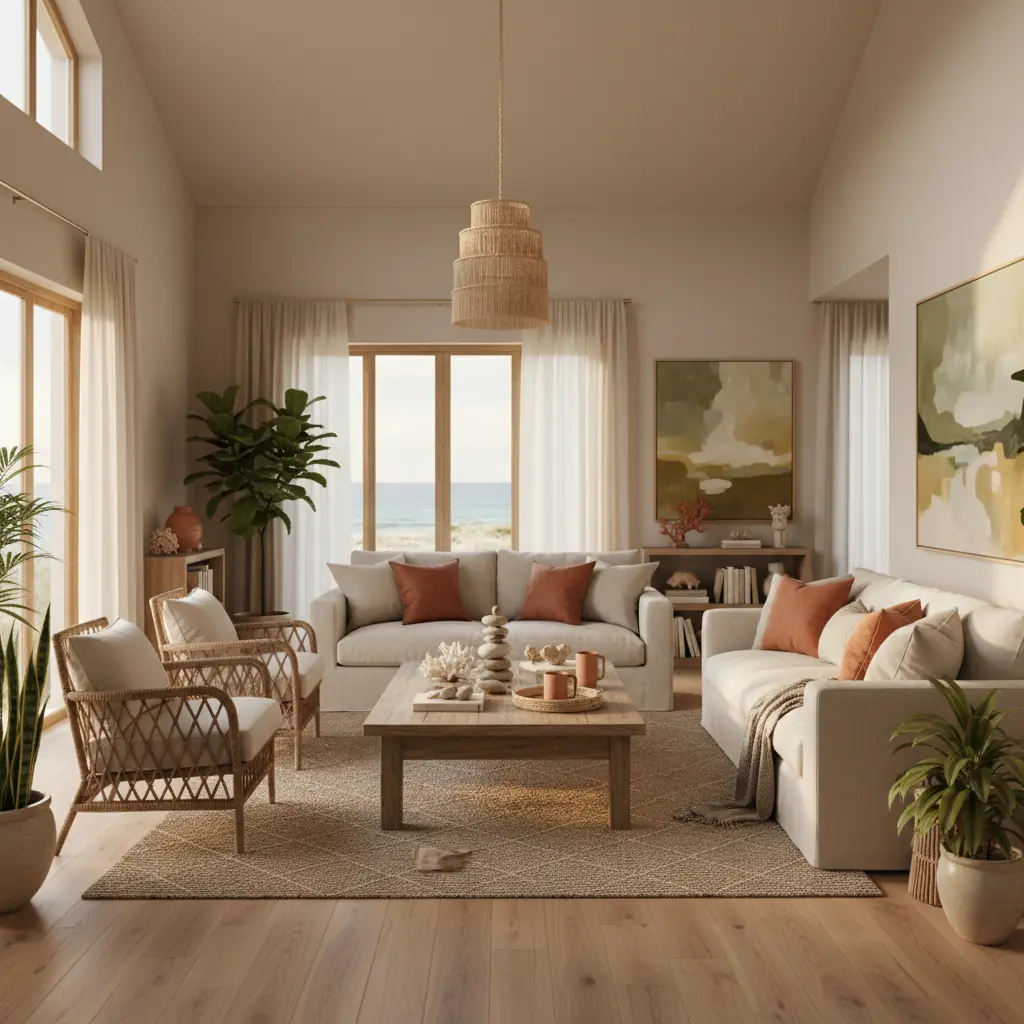
Indo Além do Clichê: Redefinindo o Estilo Costeiro Moderno
Em algum momento, o design de interiores costeiro foi sequestrado por lojas de presentes. Almofadas com estampas de âncora, placas de madeira flutuante dizendo "A Vida é Melhor na Praia", tudo envolto em corda e paredes pintadas na cor de uma piscina tornaram-se sinônimo de costeiro. O resultado são espaços que parecem lobbies de hotéis temáticos em vez de casas genuínas e convidativas. A verdadeira vida costeira — a forma como as pessoas que vivem perto do oceano projetam suas casas — não se parece em nada com isso. É hora de resgatar a autenticidade do design à beira-mar.
O design costeiro moderno se inspira no ambiente em vez de literalmente ilustrá-lo. Ele não retrata o oceano; ele evoca a sensação de estar perto dele. Essa abordagem se traduz em uma filosofia de design enraizada na experiência sensorial: o calor da madeira descolorida pelo sol, a textura áspera da areia sob os pés, os tons suaves do vidro do mar e a sensação expansiva de um horizonte aberto. A paleta vem da areia, pedra, madeira envelhecida e da luz suave e difusa de uma manhã costeira, em vez de um modelo listrado de azul-marinho e branco. As texturas imitam o que você encontra em uma caminhada na praia — ásperas, tecidas, descoloridas, orgânicas. O resultado é uma sala de estar que se sente calma, aberta e conectada à natureza sem uma única concha em exibição. De fato, pesquisas mostram que espaços de convivência projetados com elementos naturais podem reduzir significativamente o estresse e melhorar o bem-estar, com os princípios do design biofílico levando a um aumento de 15% na produtividade e criatividade dos ocupantes.
Essa abordagem refinada também significa que o estilo costeiro funciona em qualquer lugar — não apenas em casas à beira-mar. Uma sala de estar em Denver ou Detroit pode parecer inerentemente costeira por meio de escolhas cuidadosas de materiais e uma paleta de cores específica, sem parecer que está tentando se passar por um lugar que não é. Trata-se de criar uma atmosfera, um clima, em vez de um tema.
Qual é a Paleta de Cores Costeira Moderna?
Esqueça a fórmula azul-marinho e branco. O estilo costeiro moderno começa com neutros arenosos: paredes brancas quentes (Benjamin Moore Simply White ou Swiss Coffee são excelentes escolhas por seus subtons suaves e acolhedores), pisos em um tom pálido de madeira flutuante e grandes peças de mobiliário em linho natural ou creme suave. Esses são os tons base — eles criam a base arejada e banhada pelo sol sobre a qual o resto do cômodo se constrói. Pense neles como a tela que reflete a luz natural, expandindo o espaço percebido e oferecendo um pano de fundo sereno. Para mais ideias sobre como aproveitar neutros claros, explore nosso guia sobre [dicas de design para cômodos totalmente brancos](/blog/all-white-room-design-tips).
A partir dessa base neutra, adicione cor em camadas contidas. O cinza de madeira flutuante (em um console de mídia, uma poltrona de destaque ou uma prateleira embutida) introduz profundidade sem peso visual. O verde-água — o azul-esverdeado suave do vidro do mar real, não o azul-petróleo brilhante de um cartão-postal do Caribe — aparece com moderação em uma ou duas almofadas de destaque, um vaso de cerâmica ou uma peça de arte abstrata. O azul-marinho entra como um acento nítido, nunca uma cor dominante: uma única almofada azul-marinho, uma pilha de livros com lombadas azuis-marinho ou uma peça marcante de arte abstrata azul-escuro. A proporção deve ser de aproximadamente 70% de neutros arenosos, 20% de tons de madeira flutuante e pedra, e 10% de azul-esverdeado ou azul-escuro como acentos. Essa sutil estratificação evita que o espaço pareça austero, mantendo sua elegância discreta.
As cores que você deve evitar ativamente: turquesa brilhante, azul primário, coral doce e branco clínico e austero. Esses são os tons da decoração costeira temática que gritam "casa de praia". Espaços costeiros reais são suaves porque o sol intenso e os elementos naturalmente descoloram e suavizam tudo — a paleta reflete esse processo de intemperismo orgânico, criando uma sensação de atemporalidade e autenticidade. Se você está com dificuldades para encontrar a mistura perfeita, um [gerador de paleta de cores com IA](/blog/ai-color-palette-generator) pode oferecer sugestões personalizadas com base nos seus elementos existentes.
Materiais Naturais: A Pedra Angular do design Costeiro
Os materiais fazem o trabalho pesado no design costeiro moderno porque a paleta é intencionalmente discreta. Eles trazem a história do ambiente para dentro de casa.
- **Tapetes de Juta e Sisal:** Estes fornecem a base textural sob os pés. Sua trama áspera e orgânica (US$ 150-400 para 8x10, Safavieh e NuLoom oferecem boas opções) imediatamente remete ao estilo costeiro. São duráveis, sustentáveis e aterram o ambiente. Sobreponha um tapete menor de trama plana com um padrão desbotado se quiser introduzir uma sutileza visual e maciez sob os pés. - **Rattan e Palha Trançada:** Estes aparecem em móveis e acessórios, introduzindo calor e artesanato sem peso visual. Considere uma poltrona de destaque de rattan (US$ 200-450), uma luminária pendente trançada (US$ 60-150), um console de mídia com portas de palha (US$ 400-800) ou até mesmo apenas um conjunto de cestos trançados para armazenamento (US$ 30-60 por um conjunto de três). Rattan de tom claro e palha natural são os ideais — evite rattan tingido de escuro, que remete mais ao tropical ou colonial do que ao costeiro moderno. - **Linho:** Este é o tecido costeiro por excelência. Cortinas de linho em tom natural ou branco (US$ 40-80 por painel) filtram a luz lindamente e se movem com qualquer brisa, reforçando a sensação arejada e aberta. Capas de linho para sofás e cadeiras (US$ 200-500 para capas personalizadas) são práticas (laváveis, perfeitas para um estilo de vida descontraído) e bonitas — suas rugas naturais são uma característica, não um defeito, nesta estética. - **Madeira Branqueada ou Caiada:** Em uma mesa de centro, prateleira ou moldura de quadro, isso adiciona o elemento da madeira flutuante sem ser a madeira flutuante real. Transmite idade, intemperismo e uma conexão com a natureza. - **Concreto e Pedra:** Embora menos comuns, aplicações sutis de concreto em um tom claro e arenoso (talvez uma mesa lateral ou vaso) ou detalhes em pedra de rio polida podem introduzir um elemento de rusticidade orgânica e terrosa. O uso de [concreto no design de interiores](/blog/concrete-in-interior-design) é uma tendência emergente que complementa perfeitamente a sensação terrosa do estilo costeiro moderno. Esses materiais também são incrivelmente duráveis, com pedra natural e concreto tendo uma vida útil média de mais de 50 anos, tornando-os uma escolha sustentável.
Por Que a Textura é a Estrela do Ambiente
Como a paleta costeira usa uma gama estreita de cores, a textura se torna a principal fonte de interesse visual e profundidade. Um cômodo com seis texturas diferentes na mesma gama tonal é muito mais envolvente e sofisticado do que um cômodo com seis cores e uma textura. Pense em cada superfície como uma oportunidade de textura:
- Um sofá de linho texturizado convida ao toque. - Um vaso de cerâmica liso oferece contraste. - Um tapete de juta áspero aterra o espaço. - Uma mesa lateral de rattan trançado adiciona artesanato. - Uma mesa de centro de madeira branqueada conta uma história. - Uma manta de algodão macio ou tricô grosso oferece conforto.
A hierarquia textural importa. A maior superfície — o sofá — deve ter uma textura média e convidativa (linho, bouclé ou um tecido de desempenho com trama visível). A camada do piso adiciona uma textura áspera e de aterramento através do tapete de juta ou sisal. Acessórios e detalhes introduzem elementos tanto lisos (cerâmica, vidro, pedra polida) quanto altamente texturizados (cestos trançados, macramê de parede, mantas de tricô grosso). Essa variação cuidadosa cria a profundidade que a cor proporcionaria em outros estilos de design, fazendo com que o ambiente pareça rico e em camadas sem ser visualmente sobrecarregado.
Uma das abordagens de textura costeira mais eficazes é uma parede de destaque texturizada. Painéis de shiplap (US$ 3-6 por pé quadrado para painéis de MDF shiplap) pintados no mesmo branco quente das paredes circundantes adicionam dimensão e sombra sem introduzir cor. Alternativamente, um papel de parede de fibra natural ($40-80 por rolo) em um tom arenoso ou branco quente oferece uma textura orgânica sutil que fica linda em fotos e é inconfundivelmente costeira. Para uma abordagem mais sutil, considere um acabamento de gesso veneziano ou uma aplicação de tinta limewash, ambos oferecendo texturas suaves e foscas que imitam superfícies desgastadas.
Escolhas de Mobiliário e Formas Orgânicas: Abraçando o Conforto
O mobiliário costeiro moderno prioriza conforto, leveza e formas orgânicas em detrimento de linhas geométricas nítidas. O objetivo é uma atmosfera convidativa e relaxada que incentive a permanência.
O sofá deve ser de assento profundo, idealmente com capa de linho ou um tecido de desempenho, com perfil baixo e braços suavemente arredondados. Marcas como Sixpenny, Pottery Barn e Maiden Home oferecem sofás com capas na faixa de US$ 1.500-3.000 que definem perfeitamente o estilo costeiro moderno. Um sofá com capa transmite instantaneamente elegância casual, habitabilidade e um clima despretensioso — exatamente o espírito costeiro.
Mesas laterais e mesas de centro tendem a formas orgânicas: ovais, irregulares ou suavemente arredondadas, em vez de retângulos nítidos. Uma mesa de centro redonda em madeira branqueada ou natural (US$ 200-500) é um item essencial. Mesas laterais de pedestal em concreto branco ou em tons de areia (US$ 80-150) adicionam interesse escultural. Evite mesas com tampo de vidro — elas tendem a parecer contemporâneas ou glamurosas em vez de costeiras. A tendência para o [design de móveis curvos](/blog/curved-furniture-design-trend) alinha-se perfeitamente com esta estética, introduzindo suavidade e fluidez ao ambiente.
Poltronas de destaque em fibra natural — rattan, vime ou assentos de corda trançada — fornecem o elemento artesanal que diferencia o estilo costeiro do neutro genérico. Uma cadeira de jantar ou poltrona de destaque de corda trançada (US$ 150-300 cada) é uma das peças mais versáteis em uma sala de estar costeira. Combine duas flanqueando uma mesa lateral perto de uma janela para um canto de leitura que parece pertencer a uma casa à beira-mar. Ferramentas como a Habitas permitem visualizar esses diferentes arranjos de móveis e combinações de materiais na foto real do seu cômodo antes de se comprometer com um estilo, garantindo o equilíbrio certo de conforto e caráter costeiro para o seu ambiente específico. Isso pode economizar muito tempo, considerando que o design de interiores tradicional geralmente leva de 2 a 4 semanas para mood boards e renderizações 3D, enquanto a visualização por IA pode fornecer opções em minutos.
Iluminação e Acessórios: Iluminando Seu Refúgio Costeiro
Além das principais peças de mobiliário e materiais, uma iluminação cuidadosamente planejada e acessórios bem escolhidos completam verdadeiramente a sala de estar costeira moderna.
### Maximizando a Luz Natural
A essência da vida costeira é a luz e a abertura. Priorize maximizar a luz natural. Cortinas de linho ou algodão transparentes permitem que a luz do dia filtre suavemente, criando um brilho difuso e arejado que imita a luz solar refletindo na água. Posicione espelhos estrategicamente em frente às janelas para refletir a luz mais profundamente no ambiente. Mantenha os tratamentos de janela simples e desobstruídos, evitando cortinas pesadas que bloqueiam a preciosa luz.
### Iluminação Artificial em Camadas
Para as noites, a iluminação em camadas é fundamental para criar uma atmosfera acolhedora e convidativa.
- **Iluminação Ambiente:** Uma grande luminária pendente trançada (US$ 100-300) ou uma luminária de teto embutida em material natural como madeira ou madrepérola (capiz shell) fornece iluminação geral sem agressividade. - **Iluminação de Tarefas:** Abajures de chão com cúpulas de linho ou abajures de mesa com bases de cerâmica (em tons de areia ou verde-água) oferecem luz focada para leitura ou conversação. Procure luminárias com formas orgânicas ou materiais naturais. - **Iluminação de Destaque:** Arandelas de parede ou pequenas lâmpadas que realçam obras de arte podem adicionar calor e profundidade.
### Acessórios Pensados, Não Bagunça
É aqui que a regra do "sem clichê" é mais crucial. Os acessórios costeiros modernos são sobre textura, forma e referências sutis à natureza, não interpretações literais.
- **Arte:** Arte abstrata em tons suaves de azul, verde e areia, ou fotografia de paisagem em grande escala que evoque espaços abertos, funciona lindamente. Evite paisagens marinhas muito detalhadas, a menos que sejam interpretações abstratas. - **Vasos e Cerâmica:** Escolha vasos de cerâmica com formas orgânicas e acabamentos foscos, variando de bege arenoso a verde-água suave ou índigo profundo. Estes podem conter gramíneas secas, flores brancas simples ou servir como elementos esculturais independentes. - **Livros:** Uma pilha cuidadosamente selecionada de livros de mesa sobre viagens, arte ou arquitetura (especialmente aqueles com lombadas neutras ou azuis) adiciona uma sensação sofisticada e vivida. - **Objetos Encontrados:** Uma única peça de madeira flutuante lindamente moldada (se genuinamente encontrada e artística), uma grande concha de molusco (novamente, se artística e não parte de uma coleção) ou pedras lisas podem servir como detalhes esculturais. A chave é a moderação – uma ou duas peças bem escolhidas, não uma exposição. - **Detalhes Têxteis:** Além da manta do sofá, considere almofadas decorativas em diversas texturas como linho, tricô grosso ou até mesmo padrões sutis que remetam a corais ou ondas, tudo dentro da sua paleta neutra e de destaque estabelecida.
Lembre-se, cada acessório deve parecer intencionalmente escolhido por sua forma, textura ou cor, contribuindo para a sensação geral serena e orgânica. O excesso de acessórios pode rapidamente mudar a estética de costeiro moderno para um acúmulo temático.
O design Costeiro Funciona Longe da Costa?
A pergunta que as pessoas sempre fazem: posso ter um estilo costeiro em uma cidade sem litoral sem que pareça absurdo? Sim — enfaticamente sim. Isso porque o estilo costeiro moderno é sobre materiais e humor, não geografia explícita. Uma sala de estar com cortinas de linho, um tapete de juta, móveis de madeira branqueada e uma paleta de neutros arenosos transmite calma e organicidade onde quer que exista. Não referencia o oceano diretamente; em vez disso, capta as qualidades sensoriais — luz, ar, calor, textura — que as pessoas associam à vida costeira.
Os ajustes para locais não costeiros são sutis, mas importantes. Evite quaisquer referências literais — sem corais, sem coleções de conchas, sem nada náutico. Incline-se para uma paleta ligeiramente mais quente (mais areia, menos verde-água) para que o ambiente não pareça estar a fingir ter vista para o mar. Incorpore materiais orgânicos locais ao lado dos elementos essenciais costeiros: uma tigela de pedra de um artesão local, gramíneas secas ou botânicos preservados da sua região, ou cerâmica em tons terrosos que se conectem à sua paisagem real. Isso fundamenta o design em seu ambiente imediato, mantendo a essência costeira.
Plantas de interior desempenham um papel maior em ambientes costeiros sem litoral porque fornecem a conexão com a natureza que uma vista para o mar normalmente ofereceria. Uma grande ave-do-paraíso ou uma palmeira alta em um cesto trançado, um colar de pérolas pendente em uma prateleira e algumas pequenas suculentas na mesa de centro criam a qualidade viva e verde que completa a atmosfera costeira, independentemente do seu código postal. Selecionar as [melhores plantas para design de interiores](/blog/best-plants-for-interior-design) é crucial para aprimorar essa conexão biofílica. Com ferramentas de IA como a Habitas, você pode facilmente visualizar como esses elementos, do posicionamento das plantas aos arranjos de móveis, transformarão seu cômodo específico antes de fazer qualquer compra, garantindo que seu espaço reflita verdadeiramente a beleza serena e natural da vida costeira moderna.
Perguntas Frequentes
### O que define o design de interiores costeiro moderno?
O design de interiores costeiro moderno vai além dos temas náuticos tradicionais para focar em evocar a sensação de estar à beira-mar através de materiais naturais, uma paleta de cores suaves inspirada na areia e no mar, e formas orgânicas. Ele prioriza textura, conforto e uma atmosfera arejada e cheia de luz, evitando clichês como âncoras ou conchas do mar.
### Quais cores são melhores para uma sala de estar costeira moderna?
A base de uma sala de estar costeira moderna são os neutros arenosos, incluindo brancos quentes, cremes e tons pálidos de madeira flutuante. Cores de destaque são introduzidas com moderação, com verde-água suave, cinzas delicados e azul-marinho profundo usados em pequenas doses. Cores primárias brilhantes como turquesa ou coral doce são geralmente evitadas para manter uma estética natural e desbotada pelo sol.
### Como posso fazer minha sala de estar parecer costeira sem morar na praia?
Para alcançar uma sensação costeira moderna em uma área sem litoral, concentre-se em materiais naturais (juta, linho, rattan, madeira branqueada), uma paleta de cores neutras e texturas orgânicas. Evite a decoração náutica literal. Em vez disso, incorpore elementos que evoquem a natureza, como grandes plantas de interior, objetos naturais esculturais e arte que sugira paisagens abertas ou cenas aquáticas abstratas.
### Que tipo de mobiliário é melhor para o estilo costeiro moderno?
O mobiliário costeiro moderno enfatiza conforto, perfis baixos e formas orgânicas. Sofás de assento profundo frequentemente apresentam capas de linho, e poltronas de destaque são feitas de fibras naturais como rattan ou corda trançada. Mesas de centro e laterais geralmente têm formas arredondadas ou irregulares e são trabalhadas em madeira branqueada ou concreto natural, promovendo uma atmosfera relaxada e convidativa.
### Tapetes de juta são bons para uma sala de estar?
Sim, tapetes de juta são excelentes para uma sala de estar costeira moderna. Eles fornecem uma textura natural fundamental que é durável e esteticamente agradável. Sua trama orgânica conecta imediatamente o espaço à natureza, e eles são versáteis o suficiente para serem sobrepostos com outros tapetes mais macios para maior conforto e interesse visual.