Design de Interiores Verde Escuro: O Novo Neutro para 2026 e Além
Explore por que o verde escuro se tornou a cor mais versátil no design de interiores, com sugestões de tintas específicas, ideias para cômodos e estratégias de combinação.
Por Que o Verde Escuro Parece Tão Certo: A Vantagem Biofílica no Design de Interiores
O verde ocupa um lugar único na experiência humana. É a única cor no espectro visível que nossos olhos processam sem qualquer ajuste focal, repousando confortavelmente no meio das ondas de comprimento. Essa facilidade inerente não é apenas uma experiência visual agradável; é uma resposta biológica profundamente enraizada. Nossos sistemas visuais evoluíram ao longo de milênios em ambientes predominantemente verdes, desde florestas exuberantes até campos ondulantes. Consequentemente, estar cercado por verde tem um impacto profundo e mensurável em nossa fisiologia. Estudos demonstram consistentemente que a exposição a espaços verdes ou mesmo a tons de verde em ambientes interiores pode reduzir os níveis de estresse em até 15%, diminuir a frequência cardíaca, reduzir a produção de hormônios do estresse como o cortisol e melhorar significativamente o conforto e o bem-estar percebidos. Essa poderosa conexão com a natureza é a pedra angular do [design biofílico](/blog/biophilic-design-guide), um conceito que integra elementos naturais em espaços construídos para melhorar a saúde e a produtividade.
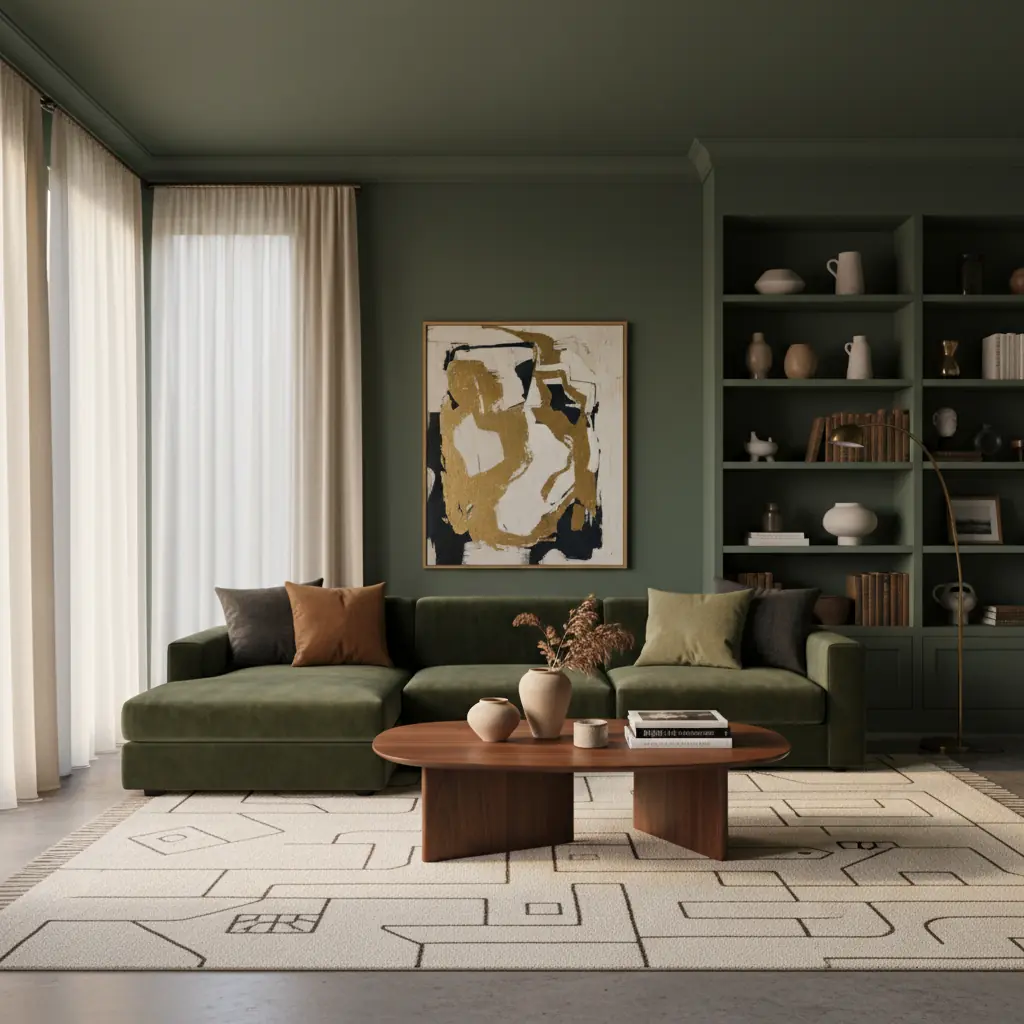
Essa conexão biofílica profunda é precisamente por que o verde escuro, apesar de ser uma cor distinta, funciona como um neutro prático no design de interiores. Ao contrário de tons vibrantes e estimulantes que exigem atenção, um verde floresta profundo ou musgo se retrai, criando uma sensação de calma e profundidade expansiva. Ele não grita; ele apoia, permitindo que móveis, arte e têxteis se destaquem. Essa "neutralidade na prática" levou os principais designers a batizarem o verde escuro como o novo azul-marinho ou até mesmo o novo preto — uma cor âncora profundamente versátil que aterra um espaço, proporciona sofisticação e funciona perfeitamente em quase qualquer cômodo e estética de design.
A adaptabilidade do verde escuro é realmente notável. Ele conecta sem esforço estilos de design, parecendo igualmente em casa em uma imponente biblioteca tradicional, completa com móveis de couro ricos e detalhes em latão brilhante, quanto em uma cozinha minimalista e moderna Scandinavian com armários de carvalho claro e mármore branco nítido. Ele concilia elegantemente o charme rústico com a sofisticação urbana, injeta tanto uma gravidade masculina quanto uma suavidade feminina, e parece tão relevante em revivals clássicos quanto em inovações contemporâneas. Muito poucas cores podem ostentar um apelo tão amplo e duradouro, consolidando o status do verde escuro como uma escolha atemporal e ao mesmo tempo em tendência para 2026 e além.
Quais São as Melhores Cores de Tinta Verde Escuro? Nossas Melhores Escolhas por Marca
Selecionar o verde escuro perfeito é crucial, pois os subtons e a exposição à luz podem alterar drasticamente a forma como uma tonalidade se apresenta em sua casa. Aqui estão alguns dos verdes escuros mais aclamados dos principais fabricantes de tintas:
**Benjamin Moore Hunter Green (2041-10)** é frequentemente considerado o verde escuro arquetípico. É um verde floresta verdadeiro e profundo, notavelmente equilibrado, sem fortes tendências azuis ou amarelas. Essa tonalidade oferece uma riqueza profunda, fazendo uma declaração distinta enquanto possui uma atemporalidade inerente que garante a habitabilidade a longo prazo. É particularmente impactante em cômodos com bastante luz natural, onde sua profundidade pode realmente brilhar sem parecer opressiva. Para uma opção um pouco mais suave e sofisticada, **Benjamin Moore Tarrytown Green (HC-134)** é um queridinho dos designers. Ele incorpora um toque de cinza, conferindo-lhe uma elegância mais suave e discreta. Isso o torna uma excelente escolha para quartos ou salas de jantar onde se deseja saturação profunda e calor sem intensidade avassaladora.
**Sherwin-Williams Evergreen Fog (SW 9130)** ganhou popularidade generalizada como a Cor do Ano de 2022 e continua sendo um best-seller consistente. É um lindo cinza-esverdeado-sálvia, notavelmente mais claro e suave do que um Hunter Green tradicional. Essa tonalidade versátil se destaca em cozinhas, salas de estar e até corredores, proporcionando uma sutil influência verde e um toque de serenidade orgânica sem saturação total de cor. Para aqueles que procuram um verde escuro Sherwin-Williams verdadeiramente dramático, **Ripe Olive (SW 6209)** entrega. Este verde rico, quase oliva-preto, é absolutamente deslumbrante em armários, adicionando uma profundidade melancólica e luxuosa que combina lindamente com metais quentes e tons de madeira natural.
**Farrow & Ball Studio Green (No.93)** é frequentemente elogiado como um dos verdes escuros mais requintados disponíveis. O que o diferencia é sua profundidade extraordinária e qualidade camaleônica – ele parece mudar entre verde profundo, um carvão quase preto e um tom clássico de floresta, dependendo das condições de luz ao longo do dia. Essa complexidade se deve à fórmula de alta pigmentação característica da Farrow & Ball, que oferece uma riqueza de cores incomparável na parede. Para uma versão mais acessível com uma forte base cinza, seu **Smoke Green (No.47)** proporciona um charme sofisticado. Ambos os verdes da Farrow & Ball se beneficiam imensamente de sua formulação única, oferecendo uma experiência sensorial inigualável.
_Dica de Especialista para Escolher:_ Antes de se comprometer com um galão (ou vários!), sempre experimente os verdes escuros escolhidos em suas paredes. Pinte grandes amostras em várias áreas do cômodo, observando-as em diferentes horários do dia sob diversas condições de luz. Lembre-se, apenas 30% dos proprietários de imóveis ficam totalmente satisfeitos com sua escolha inicial de cor de tinta sem amostrar, tornando este um passo crucial. Considere usar um [gerador de paleta de cores com IA](/blog/ai-color-palette-generator) para explorar diferentes tons de verde e ver como eles interagem com outros elementos em seu cômodo virtual antes mesmo de pegar um pincel. Isso pode economizar tempo e evitar erros caros ao selecionar as [melhores cores de tinta para 2026](/blog/best-paint-colors-2026).
Quais Cômodos Mais Se Beneficiam do Verde Escuro?
Embora a versatilidade do verde escuro signifique que ele pode realmente prosperar em qualquer lugar, alguns cômodos brilham particularmente quando imbuídos de sua presença profunda e calmante.
### Cozinhas: O Charme Duradouro dos Armários Verdes
As cozinhas continuam sendo o cômodo número um para o verde escuro em 2026, com os armários geralmente sendo a estrela, e não as paredes completas. A combinação quintessencial vista nas revistas de design apresenta armários inferiores verdes escuros combinados com armários superiores brancos quentes ou carvalho claro, acentuados com puxadores de latão ou ferragens pretas foscas, e com uma bancada de mármore, quartzo ou madeira. Essa fórmula funciona porque o verde aterra firmemente o espaço, os armários superiores mais claros mantêm uma sensação arejada e brilhante, e os detalhes metálicos injetam calor e sofisticação. A tonalidade específica de verde escuro é menos crítica do que a paleta de suporte cuidadosamente escolhida; quase qualquer verde profundo funciona harmoniosamente dentro dessa linguagem de design estabelecida. Oferece uma alternativa fresca às onipresentes cozinhas brancas ou cinzas, proporcionando personalidade sem sacrificar o apelo atemporal. Embora uma reforma completa de cozinha possa variar de US$ 20.000 a US$ 60.000, simplesmente pintar os armários existentes em um tom verde escuro pode renovar um espaço por apenas US$ 500 a US$ 2.000, oferecendo um ROI significativo no apelo estético.
### Quartos: Um Casulo de Calma
Os quartos são o segundo melhor cômodo para o verde escuro, mas aqui, a abordagem geralmente muda. A "técnica de imersão" (drenching technique) é altamente eficaz: pintar todas as quatro paredes, e muitas vezes o teto, em um único verde profundo. Isso cria um efeito imersivo e aconchegante que é dramaticamente impactante e profundamente calmante, perfeito para um sono reparador. O segredo para um quarto verde bem-sucedido reside na iluminação; lâmpadas LED de tom frio farão as paredes verdes escuras parecerem doentias ou opacas, enquanto lâmpadas LED quentes de 2700K ativarão o pigmento, fazendo as paredes brilharem com uma profundidade convidativa. Complemente isso com mesinhas de cabeceira de madeira quente, roupa de cama de linho creme, um tapete texturizado e alguns acessórios em terracota ou rosa empoeirado, e você terá alcançado uma das fórmulas de quarto mais fotografadas e amadas da década. Considere explorar todo o potencial desse estilo imersivo com nosso guia sobre a [técnica de imersão de cores](/blog/color-drenching-technique).
### Bibliotecas, Escritórios e Home Offices: Cultivando Foco e Seriedade
A biblioteca, o escritório ou o home office são o domínio clássico do verde escuro, uma tradição rica em história. Há uma razão pela qual os clubes de cavalheiros britânicos e as bibliotecas da Ivy League abraçaram os verdes profundos por séculos: a cor apoia inerentemente a concentração e fomenta uma atmosfera de seriedade intelectual sem parecer opressiva. Se o seu espaço possui estantes embutidas, pintar tanto as estantes quanto as paredes circundantes no mesmo verde escuro cria um efeito contínuo e envolvente. Essa técnica não apenas faz com que o cômodo pareça maior e mais integrado, mas também oferece um cenário deslumbrante que faz com que livros e objetos cuidadosamente selecionados se destaquem com beleza aprimorada.
### Banheiros: Criando um Santuário Semelhante a um Spa
O verde escuro está cada vez mais presente nos banheiros, transformando espaços utilitários em retiros luxuosos, semelhantes a um spa. Seja em uma única parede de destaque atrás da bancada, em painéis de parede completos ou na forma de um toucador verde escuro personalizado, a cor adiciona sofisticação instantânea. Combinado com torneiras de níquel polido ou dourado escovado, louça sanitária branca nítida e detalhes de madeira natural, os banheiros em verde escuro parecem incrivelmente chiques e serenos. As qualidades reflexivas dos azulejos e espelhos do banheiro também podem realçar a profundidade e o jogo de luz no verde, evitando que ele pareça muito pesado em espaços menores. Considere um verde floresta profundo para um lavabo verdadeiramente decadente ou um verde oliva mais suave para um banheiro principal que evoca tranquilidade.
Quais Cores e Materiais Combinam Melhor com Verde Escuro?
A verdadeira magia do verde escuro reside em sua capacidade de harmonizar com uma ampla gama de cores e materiais complementares, elevando qualquer espaço que ele habita.
### O Apelo Duradouro do Latão e Metais Quentes
Latão e verde escuro formam uma das combinações mais consistentemente confiáveis e visualmente marcantes no design de interiores. O tom quente e dourado do latão — seja em ferragens, luminárias, molduras de quadros ou objetos decorativos — realça lindamente os subtons quentes presentes em muitos verdes escuros, evitando que a cor pareça fria ou excessivamente clínica. Acabamentos em latão envelhecido, sem verniz ou escovado são geralmente preferíveis ao latão polido brilhante, pois sua pátina sutil adiciona caráter e um senso de história que complementa perfeitamente a qualidade orgânica do verde. Além do latão, outros metais quentes como bronze envelhecido, cobre e até mesmo preto fosco podem criar contrastes igualmente atraentes, adicionando um toque industrial ou calor rústico dependendo do acabamento e da aplicação.
### A Harmonia Natural dos Tons de Madeira Quentes
A madeira quente é a parceira natural e intuitiva do verde escuro. Materiais como carvalho claro, nogueira rica e cerejeira elegante funcionam de forma requintada, criando uma sensação de harmonia sem esforço enraizada na natureza. A qualidade orgânica compartilhada da madeira e do verde cria uma paleta fundamental que parece tanto aterrada quanto sofisticada. Madeiras de tons frios, como pinho lavado ou madeira flutuante cinza, podem certamente funcionar, mas geralmente exigem um equilíbrio mais cuidadoso com outros elementos quentes para evitar que o cômodo pareça austero. Para pisos, um piso de madeira de tonalidade média atinge o equilíbrio ideal; pisos muito escuros combinados com paredes verdes escuras podem às vezes parecer excessivamente pesados, enquanto pisos muito claros podem criar muito contraste visual. Integrar móveis de madeira, vigas de teto ou até mesmo tigelas decorativas aprimorará a conexão biofílica.
### Suavizando o Visual com Têxteis em Creme, Marfim e Branco Quente
Para evitar que o verde escuro sobrecarregue um cômodo, especialmente quando usado extensivamente, introduza têxteis em creme, marfim e branco quente. Esses tons oferecem um respiro crucial e suavidade. Pense em cortinas de linho em um branco natural, um sofá de boucle creme macio ou almofadas de marfim que proporcionam um contraste suave contra o fundo verde profundo. A chave aqui são os brancos e cremes _quentes_; evite o branco puro e brilhante, pois seu alto contraste pode parecer áspero e frio ao lado do verde escuro, diminuindo o efeito sereno desejado. Para um contraste sofisticado e matizado enraizado na natureza, considere introduzir rosa blush ou rosa empoeirado — pense em rosas selvagens contra folhas escuras. Uma almofada de veludo blush ou uma manta rosa empoeirado jogada sobre um sofá verde escuro cria uma paleta surpreendentemente chique e convidativa.
### Abraçando Texturas e Acentos Terrosos
Além da cor, a textura desempenha um papel vital no enriquecimento de um espaço verde escuro. Pense em incorporar materiais táteis como cerâmica rústica, pedra bruta, vime trançado e veludo rico. Uma manta de malha grossa, um tapete de sisal ou até mesmo tijolos expostos podem adicionar camadas de interesse. Acentos terrosos em terracota, ferrugem profunda ou amarelo mostarda podem proporcionar toques vibrantes de cor que parecem orgânicos e convidativos. Enquanto isso, acabamentos em pedra natural como ardósia ou um mármore sutilmente veado podem introduzir uma textura visual sofisticada e uma conexão com o mundo geológico. Para garantir que suas combinações funcionem perfeitamente, considere usar uma ferramenta como Habitas para visualizar essas combinações em seu cômodo real antes de fazer qualquer compra. Você pode experimentar diferentes texturas e cores de destaque para encontrar a harmonia perfeita.
Armários Verdes Escuros: Fosco vs. Acetinado e o Debate da Parede de Destaque
O verde escuro continua sua ascensão, dominando os designs de cozinhas e banheiros, e estendendo seu alcance a móveis planejados em áreas de serviço e guarda-roupas de quarto. Compreender as praticidades de acabamento e aplicação é fundamental para uma implementação bem-sucedida.
### As Praticidades dos Armários Verdes Escuros: Fosco ou Acetinado?
A tendência dos armários verdes escuros não mostra sinais de diminuição em 2026, tornando-se um item essencial em casas modernas e de transição. Ao selecionar um acabamento, a decisão principal geralmente se resume a fosco versus acetinado. Armários verdes foscos, com sua aparência aveludada e de baixo brilho, transmitem uma estética de design moderno e sofisticado. Eles absorvem a luz lindamente, proporcionando uma profundidade sofisticada que os designers adoram. No entanto, essa estética vem com uma desvantagem prática: acabamentos foscos são mais propensos a mostrar impressões digitais, manchas e exigem uma limpeza mais frequente e suave. Para áreas de alto tráfego como cozinhas, um acabamento acetinado ou semi-brilho geralmente se mostra mais prático. Esses acabamentos oferecem melhor durabilidade, são mais fáceis de limpar e ainda proporcionam um brilho bonito e sutil que reflete luz suficiente para realçar a riqueza da cor sem ser excessivamente brilhante. Marcas premium como Farrow & Ball e a linha Advance da Benjamin Moore oferecem excelente durabilidade em suas opções de acetinado ou brilho sutil, tornando-as ideais para armários de uso intenso. Especialistas em design de interiores preveem que o reinado do verde escuro como um neutro popular continuará por pelo menos nos próximos 5 a 7 anos, tornando-o um investimento seguro e de longo prazo para elementos de design importantes como a marcenaria.
### Parede de Destaque vs. Quarto Completo: Como Escolher Sua Declaração Verde
O debate entre uma parede de destaque verde escura e a imersão de um cômodo inteiro na cor geralmente se resume ao seu nível de comprometimento, ao tamanho do cômodo e à sua exposição à luz natural.
Em cômodos de tamanho generoso com abundante luz natural, abraçar a "imersão de cor" completa — pintar todas as quatro paredes e até o teto no mesmo verde escuro — cria uma experiência verdadeiramente deslumbrante, imersiva e luxuosa. Essa técnica envolve o espaço, fazendo-o parecer expansivo e profundamente reconfortante, quase como uma caixa de joias.
Para cômodos menores, espaços com luz natural limitada, ou para aqueles que são novos em cores ousadas, uma única parede de destaque oferece um impacto poderoso sem o risco de o cômodo parecer muito escuro ou fechado. Esta parede focal é tipicamente escolhida estrategicamente: muitas vezes a parede atrás da cama em um quarto, atrás do sofá em uma sala de estar, ou a primeira parede visível ao entrar no espaço. Essa abordagem permite introduzir o drama e a sofisticação do verde escuro, mantendo uma sensação mais leve e aberta no resto do cômodo.
Tomar essa decisão muitas vezes envolve um salto de fé, mas ferramentas como Habitas podem eliminar completamente as suposições. Você pode carregar uma foto do seu cômodo real e visualizar instantaneamente como uma aplicação em todo o cômodo de Benjamin Moore Hunter Green ficaria em sua sala de estar específica com sua exposição única à luz, versus uma única parede de destaque. A diferença entre a inspiração teórica e a aplicação no mundo real pode ser surpreendente — cômodos voltados para o norte podem se beneficiar de um verde ligeiramente mais claro e quente do que o previsto, enquanto cômodos voltados para o sul geralmente podem lidar lindamente até com os tons mais profundos e ricos. Ferramentas de visualização de IA como Habitas podem gerar renders de cômodos realistas em menos de 60 segundos, um contraste marcante com as 2-4 semanas necessárias para mockups de design de interiores tradicionais, ajudando você a fazer escolhas de design confiantes e informadas mais rapidamente. Para saber mais sobre como essa tecnologia funciona, explore nosso guia sobre [design de interiores com IA: como funciona](/blog/ai-interior-design-how-it-works).
Perguntas Frequentes Sobre o Verde Escuro no Design de Interiores
### O verde escuro é uma cor neutra?
Embora a teoria das cores tradicionalmente classifique o verde escuro como uma cor e não como um neutro, na prática, ele funciona muito como tal. Seus tons profundos e terrosos são incrivelmente versáteis, recuando para o fundo e permitindo que outros elementos brilhem, de forma semelhante ao azul-marinho, carvão ou marrom escuro. Nossos olhos consideram o verde inerentemente repousante devido à nossa conexão evolutiva com a natureza, fazendo com que o verde escuro seja calmante e fundamental, em vez de estimulante, ganhando assim sua reputação como o "novo neutro".
### Quais cores combinam bem com verde escuro?
O verde escuro combina lindamente com uma ampla gama de cores e materiais. Para calor e sofisticação, combinações clássicas incluem latão, ouro envelhecido e tons de madeira quentes como carvalho, nogueira e cerejeira. Para suavizar o visual, cremes, marfins e brancos quentes são ideais para têxteis e detalhes. Combinações inesperadas, mas chiques, incluem rosa blush, rosa empoeirado, amarelo mostarda e terracota profundo, que adicionam profundidade e interesse naturais. Preto fosco e bronze envelhecido também proporcionam contrastes elegantes.
### Como usar verde escuro sem deixar um cômodo muito escuro?
Para usar verde escuro sem deixar um cômodo muito escuro, considere estas estratégias: combine-o com bastante luz natural, use iluminação artificial quente (lâmpadas de 2700K) e incorpore superfícies reflexivas como espelhos e detalhes metálicos (latão, ouro). Introduza elementos mais claros, como estofados creme, tapetes de cores claras e móveis de madeira clara. Você também pode optar por uma parede de destaque em vez de pintar o cômodo inteiro, ou usar verde escuro apenas na marcenaria, permitindo que as paredes circundantes permaneçam claras.
### O verde escuro é uma cor atemporal para interiores?
Sim, o verde escuro é considerado uma cor atemporal. Sua profunda conexão com a natureza confere-lhe um apelo duradouro que transcende tendências passageiras. Historicamente, tem sido um elemento básico em espaços elegantes e tradicionais, e seu ressurgimento atual como um neutro moderno confirma sua longevidade. Especialistas em design de interiores preveem que sua popularidade como uma escolha versátil e sofisticada continuará por muitos anos, tornando-o um investimento seguro e elegante para escolhas de design de longo prazo, como marcenaria ou pintura de parede.
### Em quais estilos de design de interiores o verde escuro se encaixa?
O verde escuro é incrivelmente adaptável e pode se integrar perfeitamente a uma infinidade de estilos de design de interiores. É a pedra angular da estética tradicional e clássica, frequentemente vista em bibliotecas e escritórios. Sente-se igualmente em casa em ambientes modernos e minimalistas, proporcionando um pano de fundo sofisticado. O verde escuro também complementa perfeitamente estilos rústicos, farmhouse, art déco e até mesmo boêmios, oferecendo uma base versátil que pode ser vestida de forma mais formal ou casual, dependendo dos móveis e da decoração que o acompanham.
### Posso usar verde escuro em um cômodo pequeno?
Com certeza! Embora pareça contraintuitivo, o verde escuro pode, na verdade, fazer um cômodo pequeno parecer mais expansivo e íntimo. Quando usado na técnica de "imersão de cor" (pintando todas as paredes e o teto), ele borra os limites do cômodo, criando um efeito de caixa de joias que se sente aconchegante e sofisticado, em vez de apertado. Para uma abordagem menos imersiva, usar verde escuro em uma parede de destaque ou em armários embutidos em um cômodo pequeno pode adicionar profundidade e caráter sem sobrecarregar o espaço, especialmente quando equilibrado com elementos mais claros e boa iluminação.