Fazenda Moderna Refinada: Aconchego Atemporal para Sua Casa em 2026
Além do shiplap: Descubra o estilo fazenda moderna refinada de 2026. Aprenda a criar um interior atemporal e elegante com materiais naturais, tons quentes e estratégias de design de especialistas.
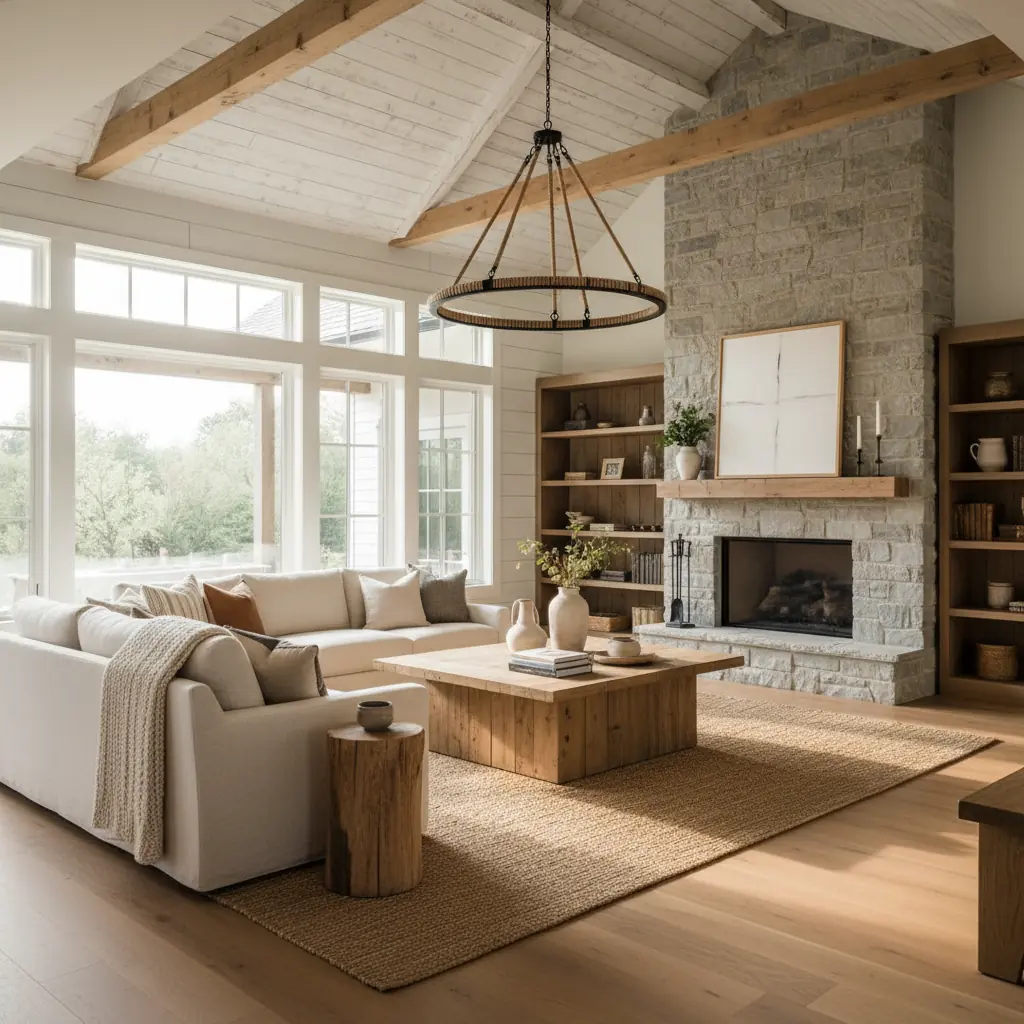
A evolução de Chip & Joanna para a fazenda refinada
A tendência de fazenda moderna que tomou conta das casas americanas em meados dos anos 2010 deveu muito de sua popularidade a Fixer Upper e à estética rústica-com-branco que Chip e Joanna Gaines aperfeiçoaram. Paredes de shiplap, portas de celeiro deslizantes e placas de madeira desgastada com a palavra "Gather" (Reunir) tornaram-se onipresentes da noite para o dia. Embora charmoso em sua iteração inicial, essa adoção generalizada frequentemente levou a uma aplicação homogênea, quase caricata, que rapidamente corria o risco de parecer datada.
Uma década depois, o estilo amadureceu significativamente, abandonando seus elementos mais literais e superficiais em favor de profundidade, autenticidade e influências globais. A fazenda moderna em 2026 mantém o calor inerente, o conforto e a acessibilidade que tornaram a tendência original tão atraente, mas evoluiu para algo muito mais sofisticado. A nova fazenda é mais discreta, mais focada em materiais e arquitetonicamente mais honesta. Ela se inspira tanto nas casas de campo europeias – com sua pátina centenária e elegância discreta – quanto nos celeiros americanos, e prioriza textura, artesanato e um senso de permanência em detrimento de tendências passageiras.
Essa evolução reflete uma mudança mais ampla nas preferências de design em direção à longevidade e sustentabilidade. Os proprietários de casas buscam cada vez mais interiores que pareçam coletados e cuidadosamente curados ao longo do tempo, em vez de decorados instantaneamente. Eles desejam espaços que contem uma história, se conectem com a natureza e ofereçam um refúgio tranquilo do mundo digital. Pense nisso como uma fazenda que cresceu — ainda confortável, ainda enraizada, mas com uma sofisticação que parece atemporal em vez de moderna. Trata-se de criar um santuário pessoal que ressoa com caráter genuíno.
Quais materiais definem a estética da fazenda moderna refinada?
O design de fazenda refinada é construído sobre uma base de materiais autênticos e táteis que contam uma história. É menos sobre imitar uma fazenda e mais sobre abraçar a beleza e a força inerentes da natureza. A paleta principal consiste em madeira de demolição, ferro preto, pedra natural e linho, mas isso é expandido com outras texturas orgânicas para camadas ricas.
- **Madeira de Demolição:** Este é, sem dúvida, o material principal. Aparece em vigas de teto substanciais, lareiras rústicas, prateleiras abertas ou uma grande mesa de jantar. O segredo é a pátina genuína, não madeira desgastada de fábrica de uma grande loja. Tábuas de carvalho, pinho ou madeira de celeiro de demolição carregam as marcas do tempo – furos de pregos, marcas de serra, intemperismo natural – que adicionam um caráter insubstituível e uma conexão com a história. É uma escolha sustentável também, reaproveitando materiais que poderiam ser descartados. - **Ferro Preto:** Proporcionando o contraste gráfico essencial, o ferro preto aparece em inúmeras formas: luminárias elegantes, puxadores de armário discretos, corrimãos de escada elegantes ou até mesmo nas molduras de espelhos e móveis. Sua presença forte e escura fundamenta os elementos mais suaves da paleta, evitando que o espaço pareça muito etéreo ou açucarado. Acabamentos foscos são preferidos por seu toque contemporâneo e capacidade de absorver a luz, realçando as texturas ao seu redor. - **Pedra Natural:** Mármore polido, esteatito (soapstone), calcário ou travertino ancoram cozinhas e banheiros com peso, permanência e uma sensação luxuosa, porém discreta. Essas pedras oferecem veios sutis e imperfeições orgânicas que contrastam lindamente com os elementos mais rústicos. Para lareiras ou paredes de destaque, pedra de rio natural ou até mesmo granito rústico pode introduzir uma poderosa conexão com a terra. Uma pesquisa recente indicou que 68% dos potenciais compradores de imóveis estão dispostos a pagar mais por propriedades que apresentem materiais naturais e sustentáveis, como pedra natural e madeira de demolição. - **Linho:** Esta fibra natural é essencial para introduzir textura relaxada. Seja em sofás generosamente proporcionados com capas, tratamentos de janela fluidos ou camadas luxuosas de roupa de cama, o linho introduz uma qualidade sem esforço e vivida. Suas rugas suaves e caimento macio evocam conforto e informalidade, equilibrando os elementos mais estruturados. Além do linho, outros têxteis naturais como lã, juta e algodão contribuem para a riqueza tátil geral. - **Reboco e Cal:** Indo além do gesso pintado simples, paredes tratadas com reboco ou cal criam um pano de fundo orgânico e textural. Esses acabamentos oferecem uma profundidade e suavidade sutis, imitando as paredes antigas das casas de fazenda europeias. Eles absorvem e refletem a luz de forma única, adicionando uma qualidade dinâmica ao ambiente sem depender de padrões ou cores ousadas. - **Tijolo e Concreto:** Onde apropriado, paredes ou elementos de tijolo exposto podem instantaneamente infundir um espaço com charme histórico e aconchego. Para um toque mais industrial-encontra-fazenda, pisos de concreto polido ou bancadas de concreto sutis podem introduzir uma base contemporânea e robusta que ainda parece autêntica.
A chave é a autenticidade: cada material deve parecer que tem uma razão para estar ali, não como se tivesse sido selecionado de um filtro genérico de "fazenda".
Qual paleta de cores cria uma sensação autêntica de fazenda moderna?
A fase de tudo branco brilhante do design de fazenda definitivamente deu lugar a uma paleta mais quente e matizada, que parece coletada e orgânica, como se a casa tivesse evoluído naturalmente em vez de ser decorada de uma só vez. Dados de marcas líderes de tintas mostram que tons de branco quente têm consistentemente classificado entre as 3 cores de tinta interior mais populares nos últimos cinco anos, ressaltando seu apelo atemporal em estilos como a fazenda moderna.
A base ainda é clara, mas os brancos se inclinam inequivocamente para o quente – pense em Benjamin Moore White Dove, Swiss Coffee ou Sherwin-Williams Alabaster, em vez de um branco ótico puro. Essas bases cremosas e esbranquiçadas permitem que os materiais naturais respirem e brilhem sem a sensação clínica que brancos frios e duros podem transmitir. Eles criam um envoltório suave e convidativo que se sente reconfortante e permite que as texturas de madeira, pedra e linho realmente se destaquem. A sobreposição de vários tons de branco quente em um espaço também pode criar profundidade sutil, como explorado em nosso guia sobre [dicas de design para ambientes totalmente brancos](/blog/all-white-room-design-tips).
As cores de destaque se inspiram profundamente na natureza, proporcionando momentos de enraizamento e interesse visual:
- **Verdes Suaves:** Verde-sálvia em um armário embutido na lavanderia, um oliva profundo em uma parede de lavabo, ou até mesmo um verde musgo suave em têxteis traz o exterior para dentro, evocando campos e florestas. - **Carvão e Tons de Cinza Profundos:** Esses neutros sofisticados são perfeitos para uma ilha de cozinha, uma parede de destaque na sala de estar ou móveis que servem de base. Eles fornecem um contraste crucial com os brancos quentes e madeiras sem parecerem pesados. - **Terracotas Terrosas e Ferrugens:** Infunda calor através de pequenos detalhes como cerâmicas, mantas ou tapetes com padrões sutis. Essas cores conectam-se à argila natural e ao solo, adicionando uma sensação antiga e de enraizamento. - **Azuis Empoeirados e Cinzas Ardósia:** Para um toque de calma serena, azuis suaves podem aparecer em quartos ou banheiros, oferecendo uma suavidade delicada que ainda parece orgânica e reconfortante.
Tons de madeira quentes – carvalho branco, nogueira ou pinho de demolição com tom de mel – aparecem por toda parte, criando calor visual sem depender apenas da pintura. Considere incorporar vários tons e acabamentos de madeira para criar um visual dinâmico e em camadas. Ferramentas como um [gerador de paleta de cores AI](/blog/ai-color-palette-generator) podem ajudá-lo a visualizar como esses tons naturais interagem em seu espaço específico. O efeito geral é uma paleta que parece autêntica, vivida e profundamente conectada ao mundo natural.
Como aplicar os princípios da fazenda moderna cômodo por cômodo?
Alcançar o visual da fazenda moderna refinada requer escolhas intencionais em cada espaço, focando na função, conforto e uma estética elevada.
### A Cozinha: Coração do Lar, Redefinido
Na cozinha, ancore o design com uma pia de cerâmica com avental frontal – o único elemento de fazenda que ainda merece seu lugar com sua utilidade clássica e charme duradouro. No entanto, combine-a com torneiras modernas de latão não laqueado ou preto fosco e perfis de armário elegantes para evitar que pareça datado. Evite as portas de armário ornamentadas; armários de frente plana ou estilo shaker simples em branco quente, verde-sálvia suave ou até mesmo um acabamento de madeira natural clara criam aquele espírito de fazenda sem a sensação de parque temático.
Cubra-os com bancadas de pedra natural polida como esteatito, calcário ou um mármore sutilmente veiado para uma superfície sofisticada e durável. Para um backsplash, considere azulejos zellige feitos à mão por sua textura irregular, azulejos de metrô foscos ou até mesmo um acabamento simples de reboco. Prateleiras abertas em madeira natural para uma seção adicionam caráter e uma chance de exibir coleções de cerâmica ou livros de receitas selecionados. Pendentes de inspiração industrial sobre uma ilha e arandelas simples fornecem iluminação funcional e ambiente. Uma renovação típica de cozinha estilo fazenda moderna, equilibrando materiais de qualidade com refinamento estético, pode variar de US$ 25.000 a US$ 60.000, dependendo do escopo e das escolhas de materiais.
### A Sala de Estar: Conforto e Conexão Convidativos
A sala de estar deve parecer um refúgio de relaxamento e conforto genuíno. Combine uma clássica poltrona de clube de couro com um sofá espaçoso com capa de linho e uma mesa de centro de madeira de demolição. A mistura de couro e linho é a marca registrada dos assentos da fazenda moderna – um polido e duradouro, outro relaxado e convidativo, ambos naturais e táteis. Adicione um grande tapete de juta ou lã para textura e aconchego sob os pés.
Para iluminação, combine várias fontes: um lustre substancial com estrutura de ferro, luminárias de chão simples e talvez um par de arandelas de parede para criar um brilho convidativo e em camadas. Incorpore espelhos com moldura de ferro, vasos de cerâmica simples e arte abstrata ou gravuras botânicas. Evite decorações excessivamente literais com tema de fazenda; em vez disso, opte por peças com artesanato genuíno e um apelo atemporal. Um arranjo cuidadoso dos móveis é fundamental para criar tanto intimidade quanto amplitude; uma [ferramenta de arranjo de móveis com IA](/blog/ai-furniture-arrangement-tool) pode ajudá-lo a otimizar seu layout.
### O Quarto: Um Santuário Sereno
No quarto, o foco se desloca para a criação de um ambiente verdadeiramente sereno e repousante. Comece com uma estrutura de cama simples de madeira maciça – talvez uma cama plataforma de carvalho branco ou uma estrutura de ferro vintage. Cubra a cama com uma abundância de roupa de cama de linho em tons de aveia, branco suave e tons terrosos. A ênfase aqui é na textura e no conforto, então inclua mantas de tricô grosso e cobertores de algodão macios.
Em vez de abajures tradicionais, considere arandelas de parede de ferro ou latão ao lado da cama para liberar espaço na mesa de cabeceira e criar um visual mais sofisticado. Mesas de cabeceira de madeira simples e descombinadas ou pequenas cômodas antigas adicionam caráter. Considere adicionar um pequeno banco estofado aos pés da cama ou uma poltrona aconchegante em um canto tranquilo. Lembre-se, uma [análise de custos de redesenho de quarto](/blog/bedroom-redesign-cost-breakdown) pode ajudá-lo a planejar seu orçamento de forma eficaz.
### A Sala de Jantar: Reuniões com Autenticidade
A sala de jantar em uma casa estilo fazenda moderna serve como um espaço central de reunião, combinando funcionalidade com uma estética convidativa. Uma mesa de jantar substancial de madeira de demolição é frequentemente a peça central, proporcionando uma âncora de autenticidade e aconchego. Combine-a com uma mistura de assentos: talvez cadeiras Windsor clássicas ao lado de cadeiras de cabeceira estofadas em linho, ou até mesmo um banco simples para uma sensação mais casual. A abordagem de misturar e combinar evita que o espaço pareça muito formal ou artificial.
Acima da mesa, uma luminária pendente de destaque, feita de ferro, fibras naturais tecidas ou vidro simples, proporciona tanto luz ambiente quanto um ponto focal. Um tapete grande de fibra natural pode definir a área de jantar e adicionar suavidade. Considere um buffet ou cristaleira simples e elegante para armazenamento e exibição, mantendo as superfícies desobstruídas para realçar os materiais naturais.
### O Banheiro: Simplicidade de Spa
Para o banheiro de fazenda moderna, o objetivo é um equilíbrio entre o charme rústico e a limpeza digna de um spa. Uma simples bancada de madeira, talvez um baú antigo reaproveitado ou uma peça feita sob medida em carvalho branco, fundamenta o espaço. Combine-a com uma pia de apoio em pedra natural ou uma pia de cerâmica clássica de embutir. Louças e metais em latão não laqueado ou preto fosco adicionam um toque de sofisticação e contraste contra superfícies mais claras.
Para os azulejos de parede e piso, opte por materiais naturais: azulejos zellige para um visual artesanal, azulejos de metrô clássicos com acabamento fosco ou calcário de grande formato para uma sensação contínua e terrosa. Considere um espelho simples com moldura de ferro ou madeira. A iluminação deve ser funcional, mas atmosférica – arandelas simples ladeando o espelho e uma luz de teto discreta. Confira mais [ideias de reforma de banheiro](/blog/bathroom-remodel-ideas) para inspiração e planeje seu orçamento com uma estimativa detalhada de [custo de reforma de banheiro](/blog/bathroom-renovation-cost-2026).
Quais armadilhas comuns você deve evitar no design de fazenda moderna?
Embora a estética da fazenda moderna seja incrivelmente atraente, é fácil cair em armadilhas que podem rapidamente datar seu interior ou fazê-lo parecer menos autêntico. A maneira mais rápida de fazer isso é inclinar-se para os elementos literais e kitsch que definiram a tendência anterior, menos refinada.
- **Excesso de Placas de "Fazenda":** Placas com as palavras "Gather" (Reunir), "Farmhouse" (Fazenda), "Eat" (Comer), "Blessed" (Abençoado) ou outras frases excessivamente sentimentais e produzidas em massa. Estas carecem de originalidade e rotulam instantaneamente sua casa como genérica. - **Madeira Excessivamente Desgastada:** Móveis e decorações desgastados de fábrica frequentemente parecem artificiais e carecem da pátina genuína de peças verdadeiramente de demolição ou antigas. Parece que se está tentando demais alcançar um visual rústico, em vez de permitir que ele evolua naturalmente. - **Jarra Mason para Tudo:** Embora as jarras Mason tenham seu lugar para armazenamento prático, usá-las indiscriminadamente para luminárias, dispensadores de sabonete ou vasos de flores pode parecer infantil e sem inspiração. - **Arte de Parede com Estrela de Celeiro:** Esta é uma referência direta e literal a fazenda que carece da sutileza e sofisticação do estilo refinado. É decorativa sem ser artística. - **Acabamentos Monocromáticos:** Evite a tentação de combinar tudo com um único acabamento – tudo níquel escovado, tudo preto fosco, tudo bronze oleado. Isso cria uma sensação de showroom que contradiz a estética de "coletado ao longo do tempo". Uma mistura de dois a três acabamentos complementares adiciona profundidade e personalidade. - **A Armadilha do Todo Branco:** Embora os brancos quentes sejam fundamentais, um interior onde cada parede, cada armário e cada peça de acabamento é o mesmo branco puro perde profundidade, calor e interesse visual. A fazenda moderna prospera no contraste e nas camadas – escuro contra claro, áspero contra liso, antigo contra novo. Sem esses elementos, um espaço pode parecer clínico e frio, em vez de convidativo.
Se você está planejando um redesenho inspirado em fazenda, lembre-se que a verdadeira autenticidade vem de uma curadoria cuidadosa e de uma mistura de antigo e novo, bruto e refinado. Usar plataformas como Habitas pode ajudá-lo a visualizar como essas combinações de materiais e cores funcionam em seu espaço específico antes de se comprometer com as compras, economizando tempo e potenciais erros de design. Usando ferramentas como Habitas, você pode visualizar mudanças complexas de design na foto real do seu cômodo em poucos minutos, um contraste marcante com as 2 a 4 semanas que um designer tradicional levaria para as renderizações iniciais.
Ao focar em materiais genuínos, uma paleta de cores quente e matizada, e detalhes cuidadosamente selecionados, você pode criar um interior de fazenda moderna que é não apenas bonito e confortável, mas também duradouro e verdadeiramente reflexo do seu estilo pessoal.
Perguntas Frequentes
### O estilo fazenda moderna ainda está em alta em 2026?
Sim, o estilo fazenda moderna continua muito em alta em 2026, mas evoluiu significativamente. A tendência se afastou dos elementos excessivamente literais e produzidos em massa de meados dos anos 2010 (como shiplap excessivo e portas de celeiro) em direção a uma estética mais refinada, sofisticada e autêntica. A fazenda moderna de hoje enfatiza materiais naturais, paletas de cores mais quentes, artesanato de qualidade e uma influência global, criando uma sensação atemporal e elegante em vez de uma moda passageira.
### Qual a diferença entre fazenda clássica e fazenda moderna?
O estilo fazenda clássica é tipicamente mais rústico, literal e nostálgico, frequentemente apresentando acabamentos desgastados, decoração com tema explicitamente de fazenda e uma dependência maior da tinta branca com contrastes fortes. A fazenda moderna, em contraste, é mais refinada e sutil. Ela prioriza materiais naturais de alta qualidade (madeira de demolição, pedra, linho), uma paleta de cores mais quente e matizada, linhas mais limpas e uma abordagem minimalista à decoração. Ela mistura o conforto tradicional com a elegância contemporânea, focando na autenticidade em vez do clichê.
### Como posso conseguir um visual de fazenda moderna com um orçamento limitado?
Conseguir um visual de fazenda moderna com um orçamento limitado é totalmente possível focando em elementos-chave. Priorize cores de tinta brancas quentes, incorpore têxteis naturais acessíveis como algodão e juta, e procure por detalhes de madeira de demolição em depósitos de salvados locais ou em projetos DIY. Procure por peças de mobiliário vintage ou de segunda mão que possam ganhar nova vida com uma simples camada de tinta ou novos puxadores. Concentre-se em algumas peças impactantes e de alta qualidade (como uma mesa de jantar de demolição) e equilibre-as com decorações mais econômicas.
### Quais são as melhores cores de tinta para um interior de fazenda moderna?
As melhores cores de tinta para um interior de fazenda moderna tendem a tons quentes e convidativos. Comece com brancos quentes como Benjamin Moore White Dove, Swiss Coffee ou Sherwin-Williams Alabaster para suas paredes principais. Para as cores de destaque, inspire-se na natureza: verde-sálvia, oliva profundo, cinza carvão, azuis empoeirados suaves ou terracota terrosa. Essas cores adicionam profundidade e sofisticação sem sobrecarregar a paleta de materiais naturais.
### Posso misturar fazenda moderna com outros estilos de design?
Com certeza! O estilo fazenda moderna é altamente adaptável e combina lindamente com vários outros estilos de design, enriquecendo seu apelo e evitando que pareça monótono. Ele combina particularmente bem com o design escandinavo para uma sensação mais leve e minimalista, o design industrial (usando elementos como concreto e metal), e até mesmo estéticas tradicionais ou minimalistas. A chave é selecionar elementos de cada estilo que compartilhem um fio condutor comum de materiais naturais, linhas limpas ou uma elegância confortável e discreta.
### Quais são os elementos essenciais para uma cozinha de fazenda moderna?
Uma cozinha de fazenda moderna essencial apresenta uma combinação de utilidade clássica e refinamento moderno. Elementos chave incluem uma pia de cerâmica com avental frontal, armários estilo shaker simples ou de frente plana em brancos quentes ou verdes suaves, bancadas de pedra natural polida (como esteatito ou mármore), e prateleiras abertas feitas de madeira de demolição. Louças e metais em latão não laqueado ou preto fosco adicionam um toque sofisticado, enquanto a iluminação pendente de inspiração industrial completa o visual.