Domine o Layout de Móveis: Regras de Designers, Disposições Inteligentes e Ferramentas de IA
Desvende os segredos dos designers de interiores profissionais para um layout de móveis perfeito. Aprenda regras essenciais para o fluxo de tráfego, zonas de conversação e a técnica de flutuação para fazer qualquer cômodo parecer maior e mais funcional.
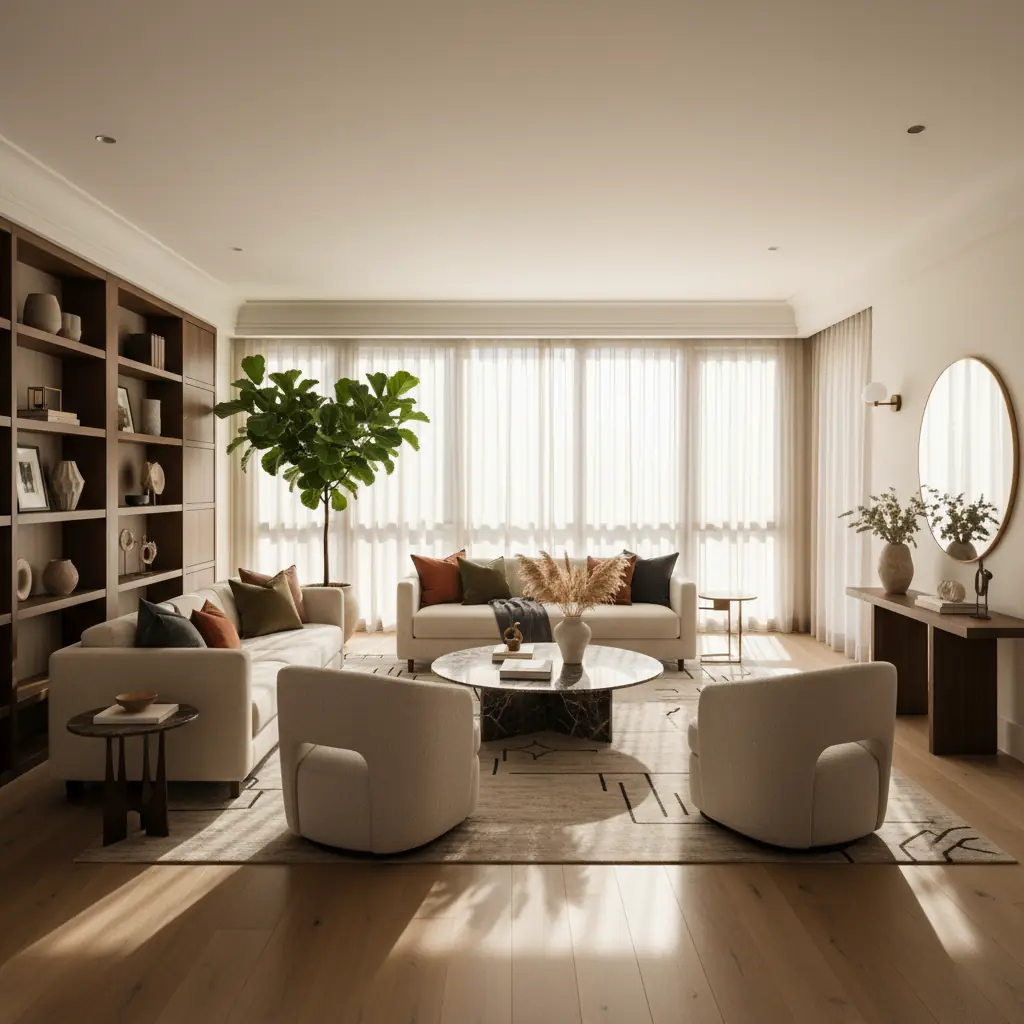
As Regras Cardeais Que Todo Designer Segue Para Um Fluxo Impecável
Já se perguntou por que alguns cômodos simplesmente parecem "certos" enquanto outros parecem estranhos ou apertados, mesmo que tenham o mesmo tamanho? O segredo reside em um conjunto de regras espaciais fundamentais que os designers de interiores profissionais aplicam rigorosamente. Estas não são apenas sugestões; elas são a base de espaços confortáveis, funcionais e esteticamente agradáveis.
### O Que é a Regra dos 90 Centímetros Para o Fluxo de Tráfego?
A primeira e mais crítica regra é o fluxo de tráfego: cada passagem principal em um cômodo precisa de pelo menos 90 cm (aproximadamente 36 polegadas) de espaço livre desobstruído. Este não é um número arbitrário; é a largura mínima necessária para uma pessoa caminhar confortavelmente sem se virar de lado ou esbarrar nos móveis. Imagine tentar navegar por um caminho mais estreito enquanto carrega uma bandeja de bebidas ou com convidados circulando – isso instantaneamente faz com que um cômodo pareça congestionado, independentemente de sua metragem quadrada real. Em áreas de alto tráfego, como o caminho principal de uma entrada para uma sala de estar, folgas ainda maiores (até 120 cm) podem aumentar a sensação de amplitude e luxo. Estudos mostram que cômodos com fluxo de tráfego adequado podem parecer até 20% maiores e mais convidativos, impactando significativamente o valor percebido geral de uma casa.
### Como Criar Zonas de Conversação Acolhedoras
A segunda regra rege as áreas de conversação. Os assentos devem ser dispostos de forma que as pessoas não estejam a mais de 2,4 a 3 metros (8 a 10 pés) de distância umas das outras. Além dessa distância, a conversação torna-se forçada, as vozes tendem a se elevar e a intimidade da interação é perdida. As pessoas inconscientemente se inclinam para frente ou esticam o pescoço, o que leva ao desconforto.
Se sua sala de estar ou espaço em plano aberto for maior do que este alcance de conversação ideal, a solução não é gritar de um lado para o outro do cômodo. Em vez disso, crie várias zonas de conversação menores. Por exemplo, uma sala de estar grande pode ter um grupo de assentos principal em torno de uma lareira, e um grupo secundário com duas poltronas e uma pequena mesa lateral perto de uma janela, perfeito para conversas mais íntimas ou leitura. Essa segmentação estratégica faz com que um cômodo grande pareça espaçoso e aconchegante, atendendo a diferentes dinâmicas sociais.
### Por Que Ancorar o Tapete é Crucial Para a Coesão?
A terceira regra, frequentemente negligenciada pelos proprietários, é a ancoragem: todo grupo de assentos precisa de um tapete grande o suficiente para que pelo menos as pernas dianteiras de todas as peças principais (sofá, cadeiras, bancos de apoio) repousem sobre ele. Um tapete que flutua como um selo no meio de uma disposição de móveis faz com que todo o cômodo pareça desconectado, inacabado e menor do que é.
Um tapete do tamanho correto "ancora" visualmente os móveis, unindo peças individuais em uma unidade coesa. Ele define a área de conversação, proporcionando um apoio macio para os pés e adicionando textura e cor ao espaço. Para uma sensação ainda mais luxuosa, procure um tapete grande o suficiente para que todas as quatro pernas do seu sofá e cadeiras fiquem totalmente sobre ele, deixando apenas alguns centímetros do piso visíveis ao redor do perímetro.
Três Layouts Comprovados de Sala de Estar Para Cada Espaço
Escolher o layout certo é fundamental para um bom design. Essas três disposições são soluções recorrentes para designers, adaptáveis a várias formas e tamanhos de cômodos.
### A Versatilidade do Layout Simétrico
O layout simétrico é a disposição mais segura e universalmente agradável. Geralmente, ele posiciona um sofá de frente para duas cadeiras combinando, com uma mesa de centro ou pufe centralizado entre eles. Frequentemente, mesas laterais e luminárias idênticas flanqueiam o sofá. Este layout cria uma sensação de equilíbrio, formalidade e calma. É incrivelmente versátil, funcionando lindamente em cômodos de quase qualquer tamanho e acomodando diversos estilos de design, do tradicional ao contemporâneo. Para cômodos maiores, dois sofás podem ficar de frente um para o outro, flanqueados por duas cadeiras, mantendo a simetria enquanto maximiza os assentos.
### Maximizando Assentos com o Layout em L
O layout em L utiliza um sofá seccional ou uma combinação de um sofá e uma chaise lounge (ou uma poltrona adicional) posicionados ao longo de duas paredes adjacentes. Essa configuração cria um canto natural e aconchegante que maximiza a capacidade de assentos e é particularmente eficaz em espaços de plano aberto. Ele atua como um limite suave, definindo a área de estar sem a necessidade de paredes físicas, tornando-o ideal para criar zonas distintas dentro de um espaço maior e indefinido. Um formato em L estimula a interação relaxada e é perfeito para reuniões familiares ou noites de cinema.
### O Gênio Contraintuitivo do Layout Flutuante
O layout flutuante é uma abordagem sofisticada e contraintuitiva que afasta todos os móveis das paredes e os agrupa no centro do cômodo. Embora possa parecer que isso reduziria o espaço, na verdade, faz com que os cômodos pareçam significativamente maiores. O espaço visível do piso ao redor do perímetro cria uma ilusão de abertura e leveza, evitando o efeito de "pista de boliche" de móveis alinhados contra as paredes. Uma disposição flutuante com um sofá, duas cadeiras e uma mesa de centro funciona lindamente em cômodos com 4,2 metros (14 pés) de largura ou maiores, permitindo um amplo espaço de circulação ao redor do agrupamento. O layout flutuante pode expandir visualmente o tamanho percebido de um cômodo em até 15%. Esta técnica cria uma área de conversação mais íntima enquanto, simultaneamente, faz com que o espaço geral pareça mais amplo.
### Adaptando Layouts às Formas dos Cômodos
Não deixe que o tamanho do cômodo seja seu único guia; a forma do cômodo é frequentemente mais crítica.
- **Cômodos Longos e Estreitos:** Beneficiam imensamente de um layout em L ou da divisão do cômodo em múltiplas zonas. Colocar móveis perpendicularmente às paredes longas pode quebrar o efeito de túnel. - **Cômodos Quadrados:** Funcionam melhor com arranjos simétricos ou flutuantes, enfatizando o eixo central e criando equilíbrio. - **Cômodos com Formas Irregulares, Nichos ou Ângulos:** Frequentemente exigem uma abordagem combinada. Use a maior e mais direta parede para o seu arranjo principal de assentos e deixe um nicho ou canto incomum se tornar um cantinho de leitura, um pequeno espaço de trabalho ou uma área de exibição para arte ou plantas. Pensar criativamente sobre esses espaços "desajeitados" pode transformá-los em características encantadoras. Para mais dicas sobre espaços desafiadores, confira nosso guia sobre [soluções para formatos de cômodos difíceis](/blog/awkward-room-shape-solutions).
Detalhes Para Dispor Quartos, Salas de Jantar e Entradas
Além da sala de estar, regras específicas se aplicam a outras áreas-chave da sua casa para garantir funcionalidade e conforto.
### Como Dispor um Quarto Para Conforto Ótimo
Nos quartos, a cama deve quase sempre ser centralizada na maior parede, proporcionando um ponto focal e uma sensação de calma. Espaço igual em ambos os lados para criados-mudos é crucial. Você precisa de um mínimo de 60 cm (24 polegadas) de cada lado para acesso confortável – o suficiente para passar sem esbarrar nos móveis e para acomodar um criado-mudo padrão com um abajur. Se seu quarto não puder acomodar confortavelmente 60 cm de cada lado, é melhor empurrar a cama contra uma parede e abraçar a assimetria, em vez de criar duas passagens inutilmente estreitas. Considere adicionar um banco ou pufe com armazenamento aos pés da cama, se o espaço permitir. Isso proporciona um local conveniente para se vestir e adiciona outra camada de design. Um quarto bem arrumado pode melhorar a qualidade do sono, reduzindo a desordem visual e promovendo o relaxamento, com 68% das pessoas relatando um descanso melhor em espaços organizados.
### Dimensões e Fluxo da Sala de Jantar
Salas de jantar exigem pelo menos 90 cm (36 polegadas) entre a borda da mesa e a parede ou móvel mais próximo (como um aparador ou cristaleira). Essa folga crítica permite que as cadeiras sejam facilmente puxadas e que as pessoas passem confortavelmente por trás dos que estão sentados. Um erro comum é comprar uma mesa de jantar que visualmente preenche o cômodo; embora a mesa em si possa parecer proporcional, uma vez que as cadeiras são adicionadas e as pessoas estão sentadas, o cômodo se torna um pesadelo de tráfego. Para calcular a largura máxima ideal da sua mesa, meça a largura do seu cômodo, subtraia 180 cm (90 cm de cada lado), e esse é o seu máximo seguro. Por exemplo, um cômodo com 3,65 metros (12 pés ou 144 polegadas) de largura pode acomodar confortavelmente uma mesa de até 1,80 metros (6 pés ou 72 polegadas) de largura.
### Projetando uma Entrada Acolhedora
A entrada define o tom para toda a sua casa. Mesmo entradas pequenas se beneficiam de uma disposição cuidadosa. Uma mesa console estreita (30-45 cm de profundidade) é frequentemente ideal, fornecendo uma superfície para chaves, correspondências e um ou dois objetos decorativos. Acima dela, um espelho ou uma peça de arte pode criar um ponto focal. Garanta pelo menos 90 cm de passagem livre da porta da frente para as principais áreas de estar. Se o espaço permitir, um pequeno banco ou pufe oferece um local conveniente para sentar e tirar os sapatos. Armazenamento prático, como ganchos para casacos ou um armário de sapatos estreito, ajuda a manter uma primeira impressão organizada e acolhedora.
A Técnica de Flutuação: Por Que as Paredes Não São Suas Amigas
A mudança mais impactante que a maioria das pessoas pode fazer para elevar o design de sua casa é afastar os móveis das paredes. É um impulso instintivo empurrar tudo contra o perímetro – parece que maximiza o espaço – mas na verdade cria um efeito de "pista de boliche" estéril e muitas vezes desajeitado, com uma zona morta no meio do cômodo.
Tente puxar seu sofá para frente apenas 15 a 30 cm (6 a 12 polegadas). A sutil lacuna cria um espaço para respirar e permite um espaço negativo visualmente interessante. Você pode até colocar uma mesa console estreita atrás de um sofá flutuante, adicionando um abajur para luz ambiente, uma exibição de arte ou um lugar para plantas. Incline suas cadeiras de apoio ligeiramente para dentro em direção à área de conversação, em vez de as alinhar contra a parede. Esses pequenos movimentos deliberados criam intimidade, melhoram significativamente o fluxo da conversa e fazem com que o cômodo pareça intencionalmente projetado, em vez de apressadamente arranjado. A profundidade visual adicionada e as zonas definidas evitam a sensação de "sala de espera" e introduzem uma sensação de fluxo dinâmico.
Dominando Escala, Proporção e Evitando Erros Comuns
Além das peças individuais, a harmonia geral de um cômodo depende da escala e da proporção. Ignorar esses princípios leva a um cômodo que parece perpetuamente "desajustado".
### Qual é o Erro Mais Comum na Disposição de Móveis?
O erro mais comum na disposição de móveis é a incompatibilidade de escala. Imagine um delicado loveseat engolido por uma vasta sala de estar – parece mobília de casa de bonecas. Por outro lado, um sofá seccional superdimensionado apertado em um cômodo minúsculo faz com que tudo pareça claustrofóbico e desequilibrado. Uma boa regra geral é que sua peça de assento principal (por exemplo, sofá) deve ter aproximadamente dois terços a três quartos do comprimento da parede que ela enfrenta, permitindo espaço para respirar em ambos os lados. Além disso, considere a altura dos seus móveis em relação à altura do teto. Peças altas em um cômodo com tetos baixos podem parecer opressivas, enquanto móveis baixos em um cômodo grandioso podem parecer perdidos.
### Alcançando a Distribuição de Peso Visual
Igualmente importante é a distribuição do peso visual. Se você tiver uma peça de mobiliário pesada, escura ou substancial em um lado do cômodo e nada visualmente equivalente do outro, o cômodo parecerá desequilibrado e inclinado. Equilíbrio não significa necessariamente simetria; significa distribuir o "peso" visual de forma uniforme. Por exemplo, uma estante alta e aberta de um lado pode equilibrar visualmente um sofá robusto e sólido do outro lado do cômodo. Um par de poltronas finas com encosto aberto pode equilibrar uma única poltrona pesada. Treine seu olho para _sentir_ o peso visual dos objetos, não apenas medir suas dimensões físicas. Considere cor, massa, textura e altura ao avaliar o peso visual. Cores mais escuras, formas sólidas e itens maiores geralmente carregam mais peso visual.
### A Arte de Camadas e Iluminação
Uma vez que os móveis principais estejam dispostos, a sobreposição com têxteis, acessórios e iluminação cuidadosa transforma um espaço funcional em um santuário pessoal.
- **Têxteis:** Introduza mantas, almofadas decorativas e cortinas para adicionar calor, cor e textura. Esses elementos suaves amaciam linhas duras e aumentam o conforto. - **Acessórios:** Arte, esculturas, plantas e objetos decorativos dão vida a um cômodo. Organize-os em números ímpares (grupos de três ou cinco geralmente ficam melhores) e varie suas alturas e texturas. Pense em criar vinhetas em mesas de centro, mesas laterais ou prateleiras. Para inspiração, explore diferentes estilos de design como [ideias de quarto boêmio](/blog/bohemian-bedroom-ideas) ou [ideias de sala de estar costeira](/blog/coastal-living-room-ideas). - **Iluminação:** A iluminação em camadas é primordial. Não dependa apenas de luzes de teto. Combine iluminação ambiente (iluminação geral), iluminação de tarefa (para leitura ou trabalho) e iluminação de destaque (para realçar arte ou características arquitetônicas). Abajures, luminárias de chão e arandelas em diferentes alturas adicionam profundidade, criam atmosfera e podem fazer um cômodo parecer maior e mais convidativo.
Ferramentas Gratuitas e Impulsionadas por IA Para Planejar Seu Layout
Antes de embarcar na árdua tarefa de mover móveis pesados fisicamente, planeje seu layout no papel ou na tela. Este passo crucial economiza horas de dor nas costas e indecisão.
### Planejamento Tradicional com Papel Quadriculado
O papel quadriculado continua sendo uma das melhores e mais simples ferramentas. Use uma escala de um quarto de polegada para um pé (aproximadamente 1:48), desenhe o contorno do seu cômodo com medidas precisas, marcando janelas, portas e quaisquer recursos embutidos. Em seguida, recorte formas em escala representando suas peças de mobiliário e deslize-as. Este método tátil leva cerca de 20 minutos e pode economizar horas de rearranjo físico e possíveis danos aos seus pisos ou móveis.
### Ferramentas de Planejamento Digital Para Todos os Orçamentos
Várias opções digitais oferecem capacidades de planejamento mais sofisticadas, muitas com versões básicas gratuitas:
- **RoomSketcher:** Fácil de usar para criar plantas baixas e visualizações 3D. - **Floorplanner:** Ótimo para desenhar layouts e experimentar com móveis. - **IKEA Room Planner:** Perfeito se você estiver trabalhando com móveis da IKEA, permitindo arrastar e soltar peças em seu cômodo. - **Pottery Barn & Crate & Barrel Room Planners:** Muitos varejistas de móveis oferecem suas próprias ferramentas gratuitas para visualizar seus produtos específicos em um ambiente de cômodo.
### O Poder da IA na Disposição de Móveis
Para uma abordagem verdadeiramente avançada e visualmente atraente, ferramentas como a Habitas revolucionam o processo de planejamento. Em vez de plantas baixas genéricas, você pode carregar uma foto do seu cômodo real e visualizar como diferentes arranjos de móveis, estilos e até paletas de cores ficariam em seu espaço usando renders gerados por IA. Ver uma prévia fotorrealista do seu cômodo com móveis rearranjados, nova decoração ou até uma cor de parede diferente é muito mais convincente e informativo do que uma planta baixa de cima para baixo ou uma simples renderização 3D. Ferramentas de visualização de IA como a Habitas podem reduzir o tempo de planejamento de design em mais de 90%, oferecendo renders fotorrealistas em minutos, em vez de semanas. Isso permite que você experimente inúmeras possibilidades, desde uma estética de [guia de design biofílico](/blog/biophilic-design-guide) até [looks minimalistas modernos](/blog/all-white-room-design-tips), antes de fazer quaisquer compromissos caros. Saiba mais sobre como a IA pode transformar seu processo de design com nossa [ferramenta de arranjo de móveis por IA](/blog/ai-furniture-arrangement-tool).
Perguntas Frequentes
### Quais são os erros mais comuns na disposição de móveis?
Os erros mais comuns incluem empurrar todos os móveis contra as paredes (criando um efeito de "pista de boliche"), usar tapetes muito pequenos, posicionar os assentos muito distantes para uma conversação confortável e a incompatibilidade da escala dos móveis com o tamanho do cômodo. Outro erro frequente é negligenciar o fluxo de tráfego, levando a passagens apertadas.
### Como dispor móveis em uma sala de estar pequena?
Em uma sala de estar pequena, priorize peças essenciais. Opte por móveis de escala menor com perfis finos e pernas expostas para criar uma sensação de leveza. Considere móveis multifuncionais como pufes com armazenamento. Use a "técnica de flutuação" com moderação; em cômodos muito pequenos, um sofá seccional ou um sofá contra uma parede pode ser mais prático. Maximize o espaço vertical com prateleiras altas e estreitas. Garanta passagens livres de pelo menos 75 cm, mesmo que o padrão de 90 cm não seja possível.
### A que distância um sofá deve ficar da TV?
A distância ideal entre seu sofá e a TV depende do tamanho da tela. Uma regra geral é de 1,5 a 2,5 vezes o tamanho diagonal da tela. Por exemplo, para uma TV de 55 polegadas, procure uma distância de 2,10 a 3,50 metros (aproximadamente 7 a 11,5 pés). Essa faixa garante uma experiência de visualização confortável sem esforço visual ou necessidade de esticar o pescoço.
### Todos os móveis devem encostar na parede?
Não, nem todos os móveis devem encostar na parede. Empurrar todos os móveis contra as paredes é um erro comum que pode fazer um cômodo parecer menos convidativo e menor. Afastar os móveis alguns centímetros da parede, ou usar um "layout flutuante" onde os móveis são agrupados no centro, cria profundidade, intimidade e melhores áreas de conversação, fazendo com que o cômodo pareça mais intencionalmente projetado e, muitas vezes, maior.
### O que é a regra dos 90 cm no design de interiores?
A regra dos 90 cm (36 polegadas) no design de interiores refere-se à largura mínima livre necessária para as principais passagens de tráfego em um cômodo. Isso garante que as pessoas possam se mover confortavelmente sem esbarrar nos móveis ou se sentir apertadas. Para passagens secundárias ou áreas menos movimentadas, um mínimo de 60-75 cm pode ser aceitável, mas 90 cm é o ideal para rotas principais.
### Como faço para que minha sala de estar pareça aconchegante e convidativa?
Para tornar sua sala de estar aconchegante, concentre-se em criar áreas de conversação íntimas, adicionando texturas suaves através de tapetes, mantas e almofadas, e sobrepondo a iluminação (usando luzes ambiente, de tarefa e de destaque). Incorpore cores quentes, toques pessoais como arte e fotos, e talvez uma lareira ou velas. Uma boa disposição de móveis que define zonas e estimula a interação é fundamental.