Guia do Designer: Estilizando Prateleiras e Estantes para um Visual Curado
Descubra a fórmula profissional para estilizar prateleiras e estantes. Domine a organização de livros, objetos, plantas e espaço negativo com a técnica do triângulo para um interior sofisticado e curado.
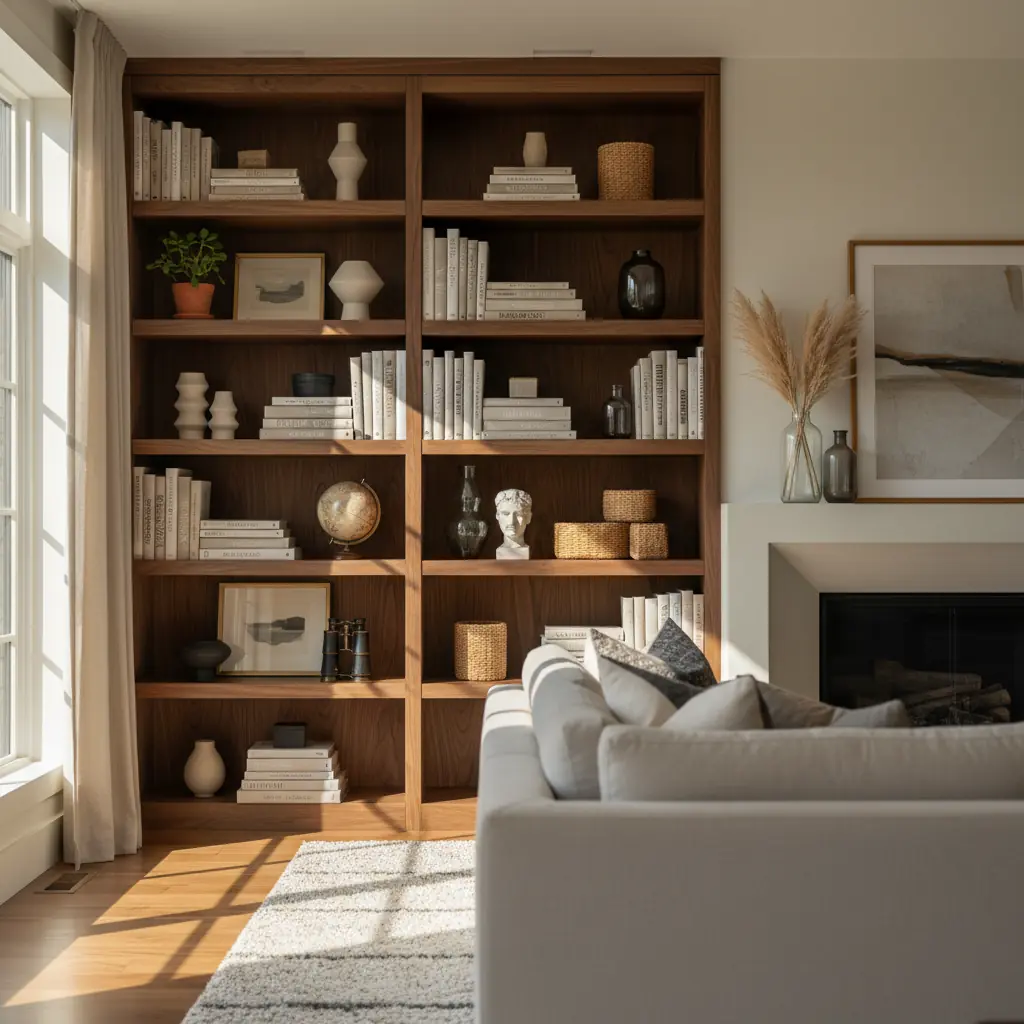
Por Que a Estilização de Prateleiras Importa: O Impacto de um Espaço Cuidadosamente Curado
Uma prateleira ou estante lindamente estilizada não é apenas uma questão de estética; é sobre contar uma história, refletir personalidade e elevar toda a ambientação de um cômodo. No **design** de interiores, essas superfícies oferecem uma oportunidade crucial para infundir calor, caráter e interesse visual em sua casa. Prateleiras negligenciadas ou abarrotadas, por outro lado, podem fazer um espaço parecer desorganizado, caótico e até menor. Pense em suas prateleiras como mini-galerias, cada vinheta um momento curado, projetado para atrair o olhar e evocar uma sensação de calma sofisticação.
Embora o conceito possa parecer intimidante, especialmente se você estiver lidando com livros transbordando ou uma coleção de bibelôs díspares, a verdade é que a estilização de prateleiras de nível profissional segue uma fórmula clara e repetível. É uma mistura de arte e ciência, alavancando princípios de equilíbrio, escala e ritmo para criar exposições que parecem naturalmente chiques. E com ferramentas inovadoras como Habitas, você pode até visualizar diferentes abordagens de estilo na foto real do seu cômodo antes de mover um único item, garantindo que sua visão ganhe vida perfeitamente.
A Fórmula Essencial do Designer: Livros, Objetos, Plantas e Espaço
Toda estante ou conjunto de prateleiras abertas lindamente estilizado, do moderno minimalista ao boêmio eclético, adere à mesma receita fundamental: livros para substância intelectual e calor, objetos para personalidade e textura visual, plantas para um toque de energia viva e espaço negativo para o essencial respiro. Esses quatro elementos, quando combinados nas proporções certas e cuidadosamente organizados, transformam o armazenamento comum em uma exposição extraordinária que parece intencionalmente curada e profundamente pessoal.
O erro mais comum que as pessoas cometem é ver as prateleiras apenas como soluções de armazenamento, em vez de oportunidades privilegiadas de exibição. Uma estante abarrotada de livros, embora funcional, tende a evocar um arquivo de biblioteca em vez de um espaço de convivência acolhedor. Por outro lado, uma prateleira com apenas objetos decorativos pode parecer impessoal, semelhante a uma vitrine de varejo. A verdadeira magia reside na mistura sutil – e, talvez ainda mais importante, nos elementos estratégicos que você escolhe _omitir_. Esse equilíbrio é crucial; estudos mostram que casas bem preparadas, que inerentemente incluem prateleiras cuidadosamente estilizadas, vendem em média 25% mais rápido do que propriedades não preparadas, sublinhando o impacto tangível da apresentação visual.
Passo 1: Desorganizar e Reiniciar – Começando Sua Jornada de Estilização de Prateleiras do Zero
Antes de começar a parte emocionante da organização, o primeiro passo mais crucial é limpar completamente sua tela. Remova cada item de suas prateleiras. Isso pode parecer radical, mas é essencial para um verdadeiro reset. Uma vez vazias, limpe as prateleiras completamente. Poeira e sujeira se acumulam de maneiras que passam despercebidas quando obscurecidas por objetos, e uma base impecável prepara o terreno para um visual final polido.
Com suas prateleiras brilhando, a próxima fase é crítica: curadoria honesta. Coloque cada item que você está _considerando_ retornar às prateleiras no chão, em frente à estante. Essa vista panorâmica ajuda você a avaliar sua coleção objetivamente. Seja honesto consigo mesmo:
- **O Sentimental vs. O Estético:** Aquela lembrança de uma viagem que você mal se lembra está realmente adicionando valor estético, ou está apenas ocupando espaço? - **Elogios Ultrapassados:** Aqueles prêmios de um emprego que você deixou há cinco anos podem guardar memórias, mas eles se encaixam na estética atual da sua casa? - **Livros Não Lidos:** Livros que você nunca mais lerá podem ser doados, liberando um valioso espaço visual para leituras preciosas ou elementos decorativos.
Agrupe itens semelhantes: livros em uma pilha, objetos decorativos em outra, fotos e molduras em uma terceira. Ver tudo de uma vez ajuda você a identificar com o que você realmente tem para trabalhar, reconhecer quaisquer lacunas que você possa querer preencher e, o mais importante, praticar a arte da edição cuidadosa. Este passo de desorganização sozinho pode reduzir o estresse visual e fazer seu espaço parecer significativamente mais calmo. Na verdade, pesquisas sugerem que desorganizar pode reduzir a desordem doméstica em até 40%, contribuindo diretamente para uma maior sensação de bem-estar e harmonia visual em seu ambiente de vida.
Passo 2: Posicionando Seus Livros com Intenção – Além de Apenas Empilhar
Os livros são inegavelmente a espinha dorsal de qualquer estante, proporcionando estrutura, personalidade e um senso de história. No entanto, _como_ você os organiza é tão impactante quanto _quais_ livros você escolhe exibir. O objetivo é criar ritmo e interesse visual, evitando uma parede monolítica de lombadas.
**Variando a Orientação:** Uma técnica chave é misturar seções verticais com pilhas horizontais. Pilhas horizontais, geralmente compostas de três a cinco livros, servem a múltiplos propósitos:
- Elas criam plataformas naturais para pequenos objetos decorativos, funcionando como mini-pedestais. - Elas quebram eficazmente a monotonia de um arranjo totalmente vertical, guiando o olhar pelas prateleiras. - Elas introduzem tensão e movimento visual dinâmicos.
**Agrupamento Estratégico:** Ao organizar seções verticais, vá além da organização estrita por ordem alfabética ou por gênero. Para uma estética mais polida, considere estas abordagens:
- **Por Tamanho:** Agrupe livros de alturas semelhantes. Uma fileira de livros de arte ou romances de tamanho similar cria um visual coeso e organizado. Você também pode criar um arco suave colocando os livros mais altos nas extremidades de uma seção, diminuindo gradualmente para livros mais curtos no meio. - **Por Faixa de Cores:** Isso não significa um bloqueio de cores extremo, a menos que essa seja sua estética específica. Em vez disso, pense em _faixas_ de cores coesas. Por exemplo, uma seção de livros com azuis, verdes e cinzas suaves pode parecer muito mais polida do que uma variedade aleatória de cores de lombadas conflitantes. Se você encontrar alguns livros com lombadas particularmente vibrantes ou conflitantes, você pode virá-los para que as páginas fiquem para fora, para um visual mais suave e textural – apenas certifique-se de que ainda pode identificá-los facilmente se planeja lê-los! Para mais orientações sobre como integrar cores de forma eficaz, explore nossa publicação sobre [esquemas de cores para salas de estar](/blog/color-schemes-for-living-rooms). - **Por Textura ou Material:** Agrupar livros com capas de linho ou qualidades de papel semelhantes pode adicionar uma dimensão tátil.
Lembre-se, nem toda prateleira precisa estar completamente cheia. Na verdade, algumas das exibições mais impactantes apresentam espaço negativo. Uma única pilha horizontal de três livros bonitos em uma prateleira de outra forma vazia pode criar um poderoso "momento de calma", fazendo com que as prateleiras mais cheias próximas pareçam mais intencionais e curadas, em vez de apenas abarrotadas.
Passo 3: Integrando Objetos e Elementos Orgânicos – Adicionando Personalidade e Vida
Depois que seus livros estiverem cuidadosamente posicionados, é hora de infundir personalidade e interesse visual com objetos decorativos e o toque vibrante da natureza.
**A Arte do Posicionamento de Objetos:** Coloque objetos decorativos ao lado e em cima de suas arrumações de livros, usando as pilhas horizontais como pedestais naturais. A regra cardeal aqui é a **variação de altura**. Objetos em alturas diferentes criam ritmo visual e evitam que o olhar fique estagnado.
- Um vaso de cerâmica alto em destaque ao lado de uma pilha curta de livros. - Uma escultura de altura média ou objeto de arte em uma prateleira diferente. - Uma pequena foto emoldurada apoiada na lombada de um livro, adicionando um toque pessoal. - Considere a "regra de três" para objetos: grupos de três (ou qualquer número ímpar) são inerentemente mais atraentes visualmente e equilibrados do que números pares. Agrupe itens menores em uma bandeja decorativa ou em uma tigela para criar uma única vinheta mais impactante.
**Adicionando Vida Orgânica:** Para realmente dar vida às suas prateleiras, incorpore pelo menos uma planta ou elemento orgânico para cada duas a três prateleiras. Isso não é apenas sobre estética; é sobre conectar-se com a natureza, um princípio central do [design biofílico](/blog/biophilic-design-guide).
- **Plantas Pendentes:** Um pothos ou filodendro caindo graciosamente de uma prateleira superior adiciona suavidade e movimento. - **Plantas Verticais:** Uma pequena espada-de-são-jorge ou planta ZZ em uma prateleira do meio proporciona interesse arquitetônico. - **Pequenas Suculentas:** Estas são perfeitas para condições de baixa luminosidade ou espaços menores. - **Botânicos Secos:** Se plantas reais não são práticas devido às condições de luz ou manutenção, botânicos secos de alta qualidade como caules de eucalipto, capim-dos-pampas ou flores secas oferecem textura e beleza natural sem a necessidade de cuidados. Saiba mais sobre como selecionar as [melhores plantas para design de interiores](/blog/best-plants-for-interior-design) para adequar ao seu espaço e iluminação.
Esses elementos vivos (ou preservados) introduzem uma suavidade e uma qualidade dinâmica que nenhuma quantidade de cerâmica e livros sozinhos podem replicar, criando um ambiente mais convidativo e harmonioso.
Passo 4: Dominando a Técnica do Triângulo e o Poder do Espaço Negativo
Essas duas técnicas avançadas são os segredos profissionais que realmente elevam a estilização de prateleiras de um simples arranjo para um **design** intencional, criando exibições coesas e visualmente atraentes.
**A Técnica do Triângulo:** Esta é a força invisível que faz suas prateleiras parecerem profissionalmente compostas em toda a sua altura. O conceito é simples: coloque três itens semelhantes – compartilhando uma cor, material, forma ou linha temática comum – em um arranjo triangular em diferentes prateleiras.
- **Triângulos de Cores:** Por exemplo, três objetos azuis: um vaso cobalto na prateleira superior esquerda, uma pequena pilha de livros azuis-marinho no centro de uma prateleira intermediária e uma tigela de cerâmica com detalhes azuis na parte inferior direita. - **Triângulos de Materiais:** Considere três itens de madeira ou latão, estrategicamente posicionados. - **Triângulos de Formas:** Três objetos redondos, ou três peças angulares, distribuídos para criar fluxo visual.
Seu olho conecta inconscientemente esses pontos, criando uma sensação de composição equilibrada e guiando o olhar do espectador sem esforço por toda a estante. Esta técnica cria harmonia e evita que qualquer prateleira pareça isolada do conjunto.
**O Papel Indispensável do Espaço Negativo:** Finalmente, e talvez o mais crucial, abrace o espaço negativo. Isso se refere às áreas vazias em suas prateleiras. Uma boa regra geral é deixar aproximadamente **30 por cento da superfície da sua prateleira vazia**. Isso não é espaço desperdiçado; é o que torna todo o resto visível, permitindo que cada item cuidadosamente escolhido brilhe.
- **Clareza e Calma:** Se cada centímetro está preenchido, nada se destaca, e o efeito geral é de desordem esmagadora. O espaço negativo atua como uma pausa visual, permitindo que o olho descanse e aprecie as peças individuais. - **Sofisticação:** Designers profissionais entendem que menos é frequentemente mais. O vazio estratégico transmite uma sensação de sofisticação e intencionalidade. - **O Teste da "Edição":** Depois de colocar cada item, afaste-se e pergunte-se: "Esta prateleira fica melhor com este item ou sem ele?" Em caso de dúvida, deixe de fora. Esta disciplina é essencial para alcançar um visual verdadeiramente curado.
Ao integrar a técnica do triângulo com uma abordagem consciente do espaço negativo, suas prateleiras se transformarão em pontos focais dinâmicos, equilibrados e esteticamente agradáveis que aprimoram todo o seu cômodo. E lembre-se, ferramentas como Habitas permitem que você experimente diferentes arranjos virtualmente, garantindo que suas prateleiras reflitam sua visão perfeita sem intermináveis reorganizações físicas.
Além do Básico: Técnicas Avançadas de Estilização para o Designer Astuto
Uma vez que você dominou a fórmula principal, considere estas técnicas avançadas para adicionar ainda mais profundidade e polimento profissional às suas exibições de prateleiras.
**1. Criando uma Narrativa ou Tema:** Em vez de apenas uma coleção de coisas bonitas, considere se suas prateleiras podem contar uma história. Talvez um tema de viagem com artefatos globais e guias de viagem, ou um tema monocromático utilizando várias texturas dentro de uma única paleta de cores. Uma narrativa coesa faz suas prateleiras parecerem profundamente pessoais e intencionais. Por exemplo, uma coleção de cerâmicas de diferentes regiões ao lado de livros sobre artesanato pode criar uma história envolvente sobre seus interesses.
**2. Camadas para Profundidade:** A profundidade é fundamental para fazer as prateleiras parecerem ricas e convidativas. Evite colocar todos os itens em uma única linha na frente da prateleira. Em vez disso, sobreponha objetos:
- Coloque uma obra de arte maior ou um prato decorativo na vertical na parte de trás da prateleira. - Apoie uma foto emoldurada ou uma pequena gravura contra ele. - Posicione um objeto menor (como uma vela ou uma pedra única) na frente. Isso cria uma sensação de descoberta e faz a exposição parecer mais dinâmica.
**3. Iluminação Integrada:** Considere como a iluminação pode aprimorar suas exibições. Fitas de LED integradas sob as prateleiras, pequenas luzes puck operadas a bateria ou até mesmo uma pequena luminária de tarefa estrategicamente posicionada podem destacar objetos preciosos, criar iluminação ambiente e adicionar uma camada inesperada de sofisticação, especialmente à noite. Isso é frequentemente negligenciado, mas pode mudar drasticamente o valor percebido de sua exibição.
**4. O Poder do Plano de Fundo:** A parte de trás de suas prateleiras oferece outra tela. Para prateleiras embutidas, considere pintar a parede do fundo com uma cor contrastante, aplicar um papel de parede interessante ou até mesmo instalar um espelho para profundidade adicional e reflexão de luz. Para unidades de prateleiras abertas, pense no que está por trás delas – uma parede de destaque ousada pode fazer seus itens se destacarem. Se você está considerando uma mudança sutil, mas impactante, explore ideias para um [design de quarto todo branco](/blog/all-white-room-design-tips) para um plano de fundo limpo, ou uma [técnica de color drenching](/blog/color-drenching-technique) mais dramática para uma sensação coesa e envolvente.
**5. Repetição com Variação:** Enquanto a uniformidade é um erro, a repetição estratégica de certos elementos (cor, material, forma) _com variação_ de tamanho ou forma pode criar uma coesão poderosa. Por exemplo, um toque metálico recorrente (castiçais de latão, uma foto com moldura dourada, uma pequena tigela de latão) distribuído pelas prateleiras pode unir toda a exposição sem ser monótono. Esta técnica reforça sutilmente sua estética escolhida.
Onde Encontrar Seus Tesouros: Curando Seu Estilo de Prateleira
Encontrar as peças certas para suas prateleiras faz parte da diversão e pode ser uma jornada contínua. Uma prateleira verdadeiramente curada mistura itens de várias fontes, refletindo seu gosto pessoal e suas aventuras.
- **Lojas de Antiguidades e Feiras de Pulgas:** Estes são tesouros para peças únicas e originais com história e caráter. Procure vasos interessantes, bustos, aparadores de livros ou cerâmicas vintage. A emoção da busca frequentemente rende os achados mais singulares. - **Artesãos Locais e Feiras de Artesanato:** Apoiar artistas locais não só traz peças distintas e feitas à mão para sua casa, mas também conta uma história. Procure cerâmicas, esculturas ou arte têxtil. - **Lembranças de Viagem:** Em vez de bugigangas genéricas, procure itens artesanais locais quando viajar. Uma bela peça de cerâmica da Itália ou um animal de madeira esculpido à mão da África guarda memórias e adiciona um toque global. - **Marketplaces Online:** Sites como Etsy para produtos artesanais, ou mesmo eBay e Facebook Marketplace para achados vintage, podem oferecer uma vasta seleção. - **Galerias de Arte e Lojas:** Investir em pequenas esculturas ou objetos de arte únicos pode elevar suas prateleiras a uma verdadeira exibição de arte. - **Mistura de Alto e Baixo Custo:** Não tenha medo de misturar peças de investimento de alto custo com achados acessíveis. Uma antiguidade inestimável ao lado de um livro elegante e econômico pode criar um visual sofisticado e acessível. A chave é a qualidade e o apelo estético, não o preço. - **Natureza:** Colete pedras interessantes, madeira flutuante ou folhas secas únicas para incorporar elementos orgânicos e gratuitos em sua exibição.
Adquirir seus itens ao longo do tempo, em vez de comprar tudo de uma vez, permite que suas prateleiras evoluam organicamente com seu estilo pessoal e experiências, tornando-as verdadeiramente um reflexo de você.
Erros Comuns e Soluções Rápidas na Estilização de Prateleiras
Mesmo com a fórmula em mãos, é fácil cair em armadilhas comuns. Reconhecer esses erros e conhecer as soluções rápidas pode melhorar significativamente seus resultados.
**1. Excesso de Objetos:**
- **Erro:** Este é o erro de estilização número um. Se você não consegue ver a parte de trás da prateleira entre os objetos, ou se os itens estão se tocando, você tem excesso de coisas. O princípio do "espaço para respirar" está sendo ignorado. - **Solução Rápida:** Remova itens, depois remova mais um. Sério. Tire tudo que não melhora imediatamente a exibição. Cada peça precisa de espaço para ser apreciada.
**2. Uniformidade e Simetria:**
- **Erro:** Tudo na mesma altura, espaçado uniformemente, perfeitamente simétrico nas prateleiras. Isso parece rígido, estático e previsível, em vez de dinâmico e curado. - **Solução Rápida:** Introduza ligeira assimetria e variação de altura. Grupos desalinhados, variando o número de itens em cada prateleira e criando intencionalmente tensão visual, tornarão a exibição mais envolvente. Equilíbrio não significa simetria perfeita; significa equilíbrio visual.
**3. Muitos Itens Pequenos:**
- **Erro:** Uma proliferação de pequenos objetos espalhados individualmente pelas prateleiras cria ruído visual e desordem, fazendo o olho saltar sem encontrar um ponto focal. - **Solução Rápida:** Agrupe pequenos objetos juntos em uma pequena bandeja, em uma tigela decorativa ou em cima de uma pilha horizontal de livros. Isso os consolida em uma única vinheta mais impactante.
**4. Posicionamento Centralizado:**
- **Erro:** Colocar cada objeto ou grupo perfeitamente centralizado em cada prateleira pode parecer estático e sem inspiração. - **Solução Rápida:** Experimente o posicionamento descentralizado. Ancore itens de um lado ou de outro, ou use a "regra dos terços" – imaginando cada prateleira dividida em três seções e colocando os itens nas interseções. Isso parece mais dinâmico e intencional.
**5. Ignorando Escala e Proporção:**
- **Erro:** Usar objetos que são muito pequenos (se perdem) ou muito grandes (sobrecarregam a prateleira e os itens ao redor) para as dimensões da prateleira. - **Solução Rápida:** Varie a escala de seus objetos, mas garanta que sejam apropriados para a prateleira. Misture peças âncora grandes com itens de destaque médios e pequenos. Garanta que nenhum item domine desproporcionalmente. É aqui que uma [ferramenta de organização de móveis com IA](/blog/ai-furniture-arrangement-tool) pode ser inestimável, ajudando você a visualizar a escala antes mesmo de trazer os itens para casa.
Ao abordar ativamente esses erros comuns, você pode refinar rapidamente a estilização de suas prateleiras e alcançar um visual profissional e curado que aprimora a estética da sua casa.
Perguntas Frequentes
### Como os designers de interiores geralmente estilizam estantes?
Designers de interiores abordam a estilização de estantes como uma forma de arte curada, não apenas armazenamento. Eles seguem uma fórmula que incorpora livros (pilhas verticais e horizontais), objetos decorativos (com alturas e texturas variadas), plantas (para vida e suavidade) e espaço negativo essencial (aproximadamente 30% vazio). As técnicas chave incluem usar a "técnica do triângulo" para criar fluxo visual entre as prateleiras, agrupar itens semelhantes e misturar intencionalmente escalas e texturas para evitar a uniformidade. O objetivo é criar vinhetas que contem uma história e reflitam a personalidade do proprietário, mantendo o equilíbrio visual e a sofisticação.
### O que colocar nas prateleiras além de livros?
Além dos livros, as prateleiras são ideais para exibir uma variedade de itens decorativos e pessoais que adicionam caráter e textura. Considere vasos de cerâmica únicos, objetos esculturais, fotografias emolduradas ou pequenas obras de arte, lembranças intrigantes de viagens, velas, caixas decorativas e pequenas coleções (por exemplo, cerâmicas ou vidros específicos). Elementos orgânicos como plantas pendentes, suculentas ou botânicos secos elegantes são cruciais para adicionar vida. O segredo é selecionar itens que variam em altura, material e peso visual para criar interesse e evitar um visual plano e desordenado.
### Como faço para minhas prateleiras parecerem caras ou sofisticadas?
Para fazer suas prateleiras parecerem sofisticadas, concentre-se na qualidade em vez da quantidade e em uma curadoria cuidadosa. Incorpore uma mistura de texturas (por exemplo, metal polido, madeira natural, cerâmica rústica), use uma paleta de cores coesa e introduza elementos luxuosos sutis como aparadores de livros de pedra polida ou peças artesanais únicas. Abrace o espaço negativo para dar a cada item espaço para respirar, evitando uma aparência desordenada. Use a técnica do triângulo para um equilíbrio visual sofisticado. Evite plásticos de aparência barata ou bibelôs produzidos em massa. Mesmo itens econômicos podem parecer sofisticados quando meticulosamente arranjados e combinados com algumas peças de destaque bem escolhidas.
### Todos os meus livros devem estar virados para a frente?
Embora tradicionalmente os livros sejam colocados com as lombadas viradas para a frente para fácil identificação, designers frequentemente variam isso para fins estéticos. Para um visual mais suave, texturizado e menos "poluído", alguns optam por virar uma parte dos livros para que as páginas fiquem para fora. Isso cria um pano de fundo neutro e uniforme, enfatizando a textura das páginas em vez das cores conflitantes das lombadas. É uma escolha estética que funciona particularmente bem em espaços minimalistas ou de tema neutro, mas torna a localização de títulos específicos mais desafiadora. Uma abordagem equilibrada pode envolver a maioria dos livros virados para a frente, com algumas pilhas ou seções cuidadosamente selecionadas viradas para trás para interesse visual.
### Com que frequência devo reestilizar minhas prateleiras?
Não há uma regra estrita sobre a frequência de reestilização das prateleiras, mas geralmente, uma renovação a cada 6-12 meses é uma boa prática. Isso permite que você rotacione a decoração sazonal, incorpore novas aquisições ou simplesmente ajuste o arranjo para refletir gostos e experiências em evolução. Você também pode considerar um pequeno ajuste sempre que sentir que seu espaço precisa de um 'up' ou se as prateleiras começarem a parecer desordenadas. Pense nisso como uma oportunidade para "comprar em sua própria casa" e redescobrir itens que você já possui, dando-lhes um novo destaque. Ferramentas como Habitas podem até ajudar você a visualizar rapidamente novos arranjos antes de se comprometer com a mudança física, tornando o processo mais rápido e divertido.