Design de Sala de Estar Industrial: Materiais Brutos, Resultados Aconchegantes e Habitáveis
Domine o design de sala de estar industrial. Equilibre tijolo exposto, metal, concreto e madeira de demolição com um calor convidativo. Dicas de especialistas para um espaço habitável e elegante em qualquer orçamento.
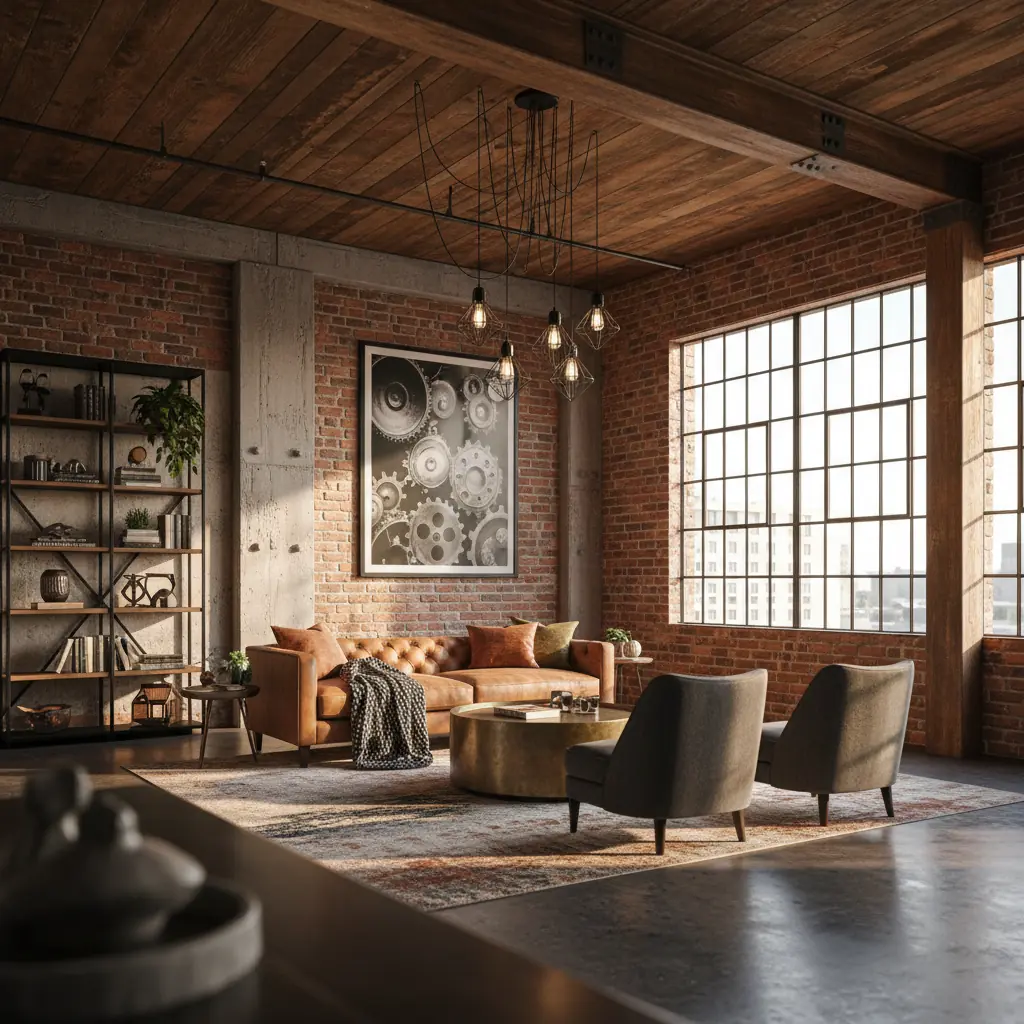
A evolução do estilo industrial: Da necessidade à aspiração
O design de interiores industrial começou como um acidente, nascido da necessidade econômica e não da escolha estética. Nas décadas de 1960 e 1970, artistas em centros culturais como Nova York e Londres procuravam estúdios espaçosos e acessíveis. Eles os encontraram em fábricas, armazéns e edifícios industriais antigos abandonados. Esses espaços cavernosos vinham com sua estrutura original – paredes de tijolo exposto, pisos de concreto bruto, tubulações visíveis e vigas estruturais de aço. Os artistas não removeram o reboco para revelar o tijolo; eles simplesmente não podiam se dar ao luxo de cobrir o que já estava lá. O que começou como uma solução prática logo se tornou o pano de fundo para um trabalho criativo inovador, imbuindo esses espaços brutos com um certo charme boêmio.
No início dos anos 2000, essa estética rústica e autêntica havia transcendido suas origens humildes para se tornar um dos estilos de design mais intencionalmente procurados globalmente. Construtoras começaram a construir novos espaços residenciais e comerciais com tijolos falsamente expostos, vigas decorativas de aço e pisos de concreto polido. A estética bruta que emergiu da restrição econômica tornou-se aspiracional, um símbolo de cool urbano e sofisticação discreta. Hoje, o design industrial existe em um amplo espectro – de lofts genuinamente convertidos com elementos arquitetônicos originais a salas de estar suburbanas que emprestam elementos-chave para criar um clima semelhante sem a ligação direta com um passado de armazém.
A distinção importante em 2026 é que as salas de estar industriais bem-sucedidas não são mais espaços frios, austeros ou proibitivos. A era inicial dos lofts, embora dramática em fotografias, muitas vezes parecia dura e pouco convidativa para se viver. O design industrial moderno amadureceu, aprendendo a combinar seus materiais brutos característicos com camadas deliberadas de calor e conforto. O resultado são espaços que parecem substanciais, com os pés no chão e autenticamente elegantes, em vez de meramente inacabados ou estéreis. Trata-se de criar uma sala de estar que honre suas raízes industriais, sendo ao mesmo tempo totalmente habitável e acolhedora.
Quais são os elementos centrais do design de sala de estar industrial?
Em sua essência, o design industrial celebra materiais que são frequentemente escondidos em outros estilos: tijolo, metal, concreto e madeira de demolição. Esses elementos, quando cuidadosamente integrados, formam a base da estética.
**Tijolo Exposto: A Textura Característica** O tijolo exposto é, sem dúvida, a marca mais reconhecível do estilo industrial. Se sua casa já possui paredes de tijolo originais, você ganhou na loteria do design. Limpe-os cuidadosamente, sele-os com um selante fosco ou com aparência natural para evitar poeira e aumentar a durabilidade, e deixe-os fazer o trabalho pesado de definir seu espaço. Para aqueles sem tijolo existente, painéis de revestimento de tijolo de alta qualidade (variando de US$ 5 a 12 por pé quadrado para materiais, sem incluir a instalação) aplicados em uma única parede de destaque podem oferecer 90% do impacto visual. Ao selecionar o revestimento, opte por tijolos com tons variados – uma mistura de vermelhos, marrons, carvões e cremes parece autêntica e envelhecida, evitando a aparência uniforme e plana do tijolo externo suburbano típico. Considere uma parede de destaque para efeito máximo, talvez atrás do seu sofá ou de uma unidade de prateleiras abertas.
**Metal: Integridade Estrutural e Acentos Decorativos** O metal aparece no design industrial em duas formas principais: estrutural e decorativa. O metal estrutural abrange unidades de prateleiras de aço exposto (US$ 200-500 para uma estante de qualidade), mesas de jantar com pés de tubulação e grandes espelhos com moldura de metal. Essas peças frequentemente apresentam soldas, parafusos ou rebites visíveis, enfatizando sua construção. O metal decorativo, por outro lado, aparece em elementos menores e funcionais, como puxadores de armário em preto fosco, varões de cortina de ferro robustos e luminárias de aço. O acabamento do metal é fundamental: aço bruto, ferro enegrecido, gunmetal escovado ou bronze oleado evocam a estética utilitária desejada. Cromo polido, latão ou ouro, embora bonitos em outros contextos, tendem a parecer muito refinados e fora de lugar em uma paleta industrial.
**Concreto: A Base Estruturante** Pisos de concreto são ideais para uma base industrial autêntica, mas são raros fora de lofts realmente convertidos. Felizmente, várias alternativas alcançam uma aparência semelhante. Porcelanato com efeito de concreto (US$ 4-8 por pé quadrado) ou um revestimento de concreto polido (US$ 6-12 por pé quadrado sobre o piso existente) podem replicar eficazmente a sensação contínua e durável. Além do piso, considere o concreto para elementos menores como vasos, bases de luminárias ou até mesmo um tampo de mesa de centro elegante. Esses elementos proporcionam uma sensação sólida e com os pés no chão. Para um aprofundamento neste material versátil, explore nosso guia sobre [concreto no design de interiores](/blog/concrete-in-interior-design).
**Madeira de Demolição: Calor Orgânico e Personalidade** A madeira de demolição é crucial para introduzir o calor orgânico que impede que um espaço industrial pareça frio ou como um estacionamento. Usada para mesas de centro, prateleiras flutuantes ou um tampo de mesa de jantar substancial, suas imperfeições e história contam uma narrativa. As fontes incluem tábuas de madeira de celeiro antigas (frequentemente US$ 8-15 por pé quadrado), pisos de fábrica recuperados ou até mesmo madeira de palete antiga, se tratada corretamente para uso interno. Uma única prateleira de madeira de demolição com borda natural de um ferro-velho local pode custar US$ 30-80 e adicionar imenso caráter. Os veios visíveis, nós e textura envelhecida fornecem um belo contraponto às linhas rígidas do metal e à austeridade do concreto.
Como infundir aconchego em uma sala de estar industrial?
O "problema do aconchego" é o maior ponto de falha em salas de estar industriais. Sem um contrapeso deliberado, a temperatura visual inerentemente fria do metal, concreto e tijolo pode fazer um ambiente parecer elegante, mas pouco convidativo. A solução reside na integração estratégica de elementos de três categorias: têxteis, iluminação e elementos vivos.
**Têxteis: A Injeção Mais Rápida de Aconchego** Têxteis são a maneira mais rápida e impactante de injetar aconchego. Um tapete grande (um tapete de lã ou juta de qualidade no tamanho 8x10 pode variar de US$ 200 a 600) sobre pisos de concreto ou madeira escura transforma instantaneamente toda a sensação do espaço, adicionando maciez sob os pés e definindo zonas. Jogue uma manta de tricô grossa (US$ 40-80) sobre o braço de um sofá de couro para uma textura convidativa. Adicione cortinas de linho ou algodão pesado em carvão, cinza quente ou até mesmo um ferrugem profundo; mesmo em um loft com janelas dramáticas, as cortinas suavizam as arestas industriais duras e melhoram a acústica. Almofadas de destaque em tons ricos e terrosos, como ferrugem, mostarda, borgonha profundo ou verde-oliva, quebram a paleta neutra sem competir com sua força fundamental. Considere texturas como bouclé, chenille ou até mesmo pele sintética para uma camada extra de aconchego.
**Plantas: Trazendo Vida para a Selva Urbana** As plantas são, sem dúvida, o elemento mais subestimado em espaços industriais. O contraste marcante entre o verde vibrante e o metal bruto ou o tijolo texturizado é visualmente elétrico e introduz uma suavidade orgânica crucial. Uma planta grande de destaque, como uma Ficus lyrata, Costela de Adão ou Ave do Paraíso, abrigada em um vaso de concreto ou preto fosco (US$ 30-50 para o vaso, US$ 40-80 para uma planta madura) pode ancorar um canto e direcionar o olhar para cima. Jiboias ou filodendros pendurados em uma prateleira industrial adicionam movimento orgânico, quebrando linhas geométricas rígidas. Procure ter pelo menos três plantas de tamanhos variados distribuídas pelo cômodo para criar uma sensação natural e em camadas. Para mais inspiração, confira nosso guia sobre as [melhores plantas para design de interiores](/blog/best-plants-for-interior-design).
**Iluminação Estratégica: Definindo o Ambiente** Embora nos aprofundemos na iluminação como um elemento de destaque, é essencial notar seu papel no aconchego. A iluminação de tom quente (temperatura de cor em torno de 2200K-2700K) é primordial. Lâmpadas estilo Edison, frequentemente com filamentos visíveis, emitem um brilho suave e dourado que instantaneamente faz com que os materiais brutos pareçam menos austeros e mais convidativos. A sobreposição de fontes de luz em diferentes alturas, de luminárias de piso a abajures de mesa e pendentes, garante que não haja sombras duras e cria poças de iluminação aconchegantes.
Qual mobiliário melhor se adapta à estética industrial?
O mobiliário em uma sala de estar industrial deve ecoar os princípios do estilo: forma seguindo a função, construção visível e materiais duradouros.
**O Sofá: Uma Âncora de Conforto** O sofá da sala de estar é a peça definidora. Para o design industrial, um sofá de couro é a âncora clássica – especificamente couro envelhecido ou pull-up que desenvolve uma rica pátina com o tempo. Marrom selim, conhaque ou chocolate escuro são tons ideais, oferecendo calor visual e durabilidade robusta. Sofás de couro de flor integral de marcas renomadas como Article ou Poly & Bark geralmente começam em torno de US$ 1.500-3.000. Para uma abordagem mais econômica, uma alternativa de couro sintético de alta qualidade pode custar entre US$ 600-1.200. Crucialmente, evite sofás muito estofados, com almofadas soltas no encosto; o mobiliário industrial favorece linhas limpas e formas definidas, refletindo uma sensibilidade utilitária. As alternativas podem incluir sofás de lona pesada ou mistura de linho em carvão ou verde-oliva profundo, oferecendo uma textura mais macia, mantendo um perfil estruturado.
**Mesas: Expondo Sua Estrutura** Mesas de centro e mesas laterais devem exibir orgulhosamente sua estrutura. Designs com pernas hairpin, estruturas de tubulação ou bases de aço soldadas combinadas com tampos de madeira de demolição ou concreto comunicam imediatamente o DNA industrial. Uma mesa de centro de tubos e madeira pode ser encontrada por US$ 150-400 ou construída como um projeto DIY de fim de semana por US$ 60-100 em materiais. Para aqueles que gostam de projetos práticos, construir uma peça personalizada adiciona um caráter único.
**Prateleiras e Armazenamento: Abertos e Honesto** Estantes e consoles de mídia funcionam melhor como unidades de prateleiras abertas feitas de aço preto com prateleiras de madeira ou metal. Elas mantêm a abertura visual que define o estilo de vida de loft e permitem a exibição de objetos ou livros selecionados. Considere incorporar armários tipo locker de estilo industrial ou armários de arquivo de metal vintage para armazenamento fechado, adicionando função e um toque autêntico. A regra geral de mobiliário para espaços industriais: idealmente, você deve conseguir ver o piso sob cada peça. Pernas visíveis e estruturas abertas mantêm o ambiente com sensação de espaço e arejado, evitando que se torne visualmente pesado.
**Assentos de Destaque: Forma Encontra Função** Cadeiras de destaque em couro envelhecido, lona pesada ou até mesmo um design moderno de estrutura de arame (como uma reprodução da cadeira Bertoia Diamond, US$ 200-350) adicionam assentos sem volume visual. Cadeiras sling com estofamento de couro ou lona e estruturas de metal são outra excelente opção, oferecendo conforto com um perfil discreto. Para ajudar a organizar essas peças em seu layout específico, considere usar uma [ferramenta de arranjo de móveis por IA](/blog/ai-furniture-arrangement-tool) para visualizar diferentes opções.
Como usar a iluminação para definir o estilo industrial?
A iluminação tem mais peso no design industrial do que em quase qualquer outro estilo. As luminárias em si são pontos focais decorativos, muitas vezes imitando luzes de fábrica ou armazém, e a qualidade da luz que produzem é primordial para definir o ambiente. A iluminação industrial opera em três níveis: destaques suspensos, iluminação de tarefa e brilho ambiente.
**Destaques Suspensos: Seja Ousado** Para a iluminação suspensa, não hesite em fazer uma declaração ousada. Um conjunto de pendentes com lâmpadas Edison expostas (US$ 80-200 para um conjunto de 3 pendentes) sobre uma mesa de jantar ou ilha de cozinha é o momento quintessencial da iluminação industrial. Pendentes únicos superdimensionados em metal fiado, designs de gaiola ou até mesmo abajures de fábrica de inspiração vintage (US$ 50-150 cada) funcionam maravilhosamente sobre áreas de estar ou para definir zonas abertas. A iluminação em trilho em um teto exposto (US$ 100-250 para um sistema de trilho completo) oferece excelente flexibilidade para direcionar a luz, mantendo uma estética utilitária. Crucialmente, evite luminárias embutidas genéricas; elas são invisíveis e carecem do caráter e da intencionalidade que a iluminação industrial exige.
**Iluminação de Tarefa: Funcional e Elegante** A iluminação de tarefa deve ser igualmente intencional. Abajures de mesa articulados com cúpulas de metal, arandelas de fixação ou luminárias de piso ajustáveis (frequentemente com cúpulas grandes e arredondadas) fornecem iluminação focada onde necessário. Essas luminárias frequentemente apresentam molas, engrenagens ou braços articulados expostos, celebrando sua natureza mecânica.
**Brilho Ambiente: Aconchego em Camadas** Para um calor ambiente, lâmpadas estilo Edison (idealmente com temperatura de cor de 2200K) em soquetes expostos ou luminárias simples estilo gaiola emitem um brilho quente e dourado que transforma espaços industriais de austeros em habitáveis. Abajures de mesa com bases de concreto, tubulação ou estruturas de metal pesado (US$ 40-90) colocados em prateleiras, mesas laterais e consoles de mídia criam poças de luz convidativas. Nunca confie apenas na iluminação suspensa; ambientes industriais, com seus tetos frequentemente altos e superfícies duras, exigem múltiplas fontes de luz em diferentes alturas para evitar uma iluminação forte e plana que faz com que os materiais brutos pareçam frios e pouco convidativos. Usando uma ferramenta como Habitas, você pode visualizar diferentes arranjos de iluminação e estilos de luminárias na foto real do seu cômodo antes de se comprometer com uma compra, garantindo o equilíbrio perfeito de luz e sombra.
Qual é a paleta de cores ideal para o design industrial e como alcançá-la em qualquer orçamento?
A paleta de cores industrial é ancorada em uma base de carvão, cinza quente e preto, com tons ricos de ferrugem, conhaque profundo e madeira quente proporcionando contrapontos e aconchego essenciais.
**Cores Fundamentais:** As paredes funcionam melhor em um branco quente (evitando o branco brilhante, clínico e austero) ou uma parede de destaque em carvão profundo e dramático. Brancos quentes populares incluem o Accessible Beige da Sherwin-Williams ou o White Dove da Benjamin Moore, que possuem subtons sutis para evitar que pareçam frios. Para uma declaração mais ousada, considere uma [parede de destaque preta](/blog/black-accent-walls) para ancorar o espaço. Crucialmente, evite cinzas frios com subtons azuis, pois estes podem levar a estética industrial a um ambiente estéril ou pouco convidativo.
**Cores de Destaque:** As cores de destaque que melhor harmonizam com o design industrial são aquelas encontradas naturalmente em materiais envelhecidos: laranja ferrugem, amarelo mostarda profundo, borgonha e verde-oliva. Esses tons ecoam metal oxidado, couro antigo e tijolo envelhecido, proporcionando uma sensação coesa e autêntica. Incorpore-os através de têxteis, obras de arte e objetos decorativos menores.
### Design industrial para qualquer orçamento: De um retoque a uma renovação
O estilo industrial é notavelmente adaptável a vários orçamentos, em parte porque a estética celebra a imperfeição, a construção visível e itens reaproveitados, que muitas vezes podem ser encontrados de forma acessível.
**Um Retoque Econômico (US$ 500-1.500):** Concentre-se em mudanças de alto impacto e baixo custo que proporcionam transformações visuais significativas.
- **Parede de Destaque:** Uma parede de destaque com revestimento de tijolo é uma transformação poderosa, custando apenas US$ 5-12 por pé quadrado para materiais. - **Iluminação:** Troque luminárias genéricas por pendentes estilo industrial (a partir de cerca de US$ 50 por luminária) ou um sistema de iluminação em trilho simples. - **Tapetes:** Um tapete grande de juta ou sisal (US$ 200-600) aquece dramaticamente um piso de concreto ou madeira. - **Acessórios:** Acessórios estratégicos como espelhos com moldura de metal, castiçais de ferro e prateleiras flutuantes de madeira de demolição (frequentemente encontrados em ferro-velhos ou lojas de DIY por US$ 30-80 por prateleira) podem transformar firmemente uma sala de estar genérica em um ambiente industrial. Procure esses elementos em feiras de pulgas ou lojas de segunda mão para economizar ainda mais.
**Uma Abordagem de Investimento (US$ 3.000-8.000+):** Este orçamento permite mudanças mais fundamentais e peças de maior qualidade.
- **Sofá:** Invista em um sofá de couro de flor integral de qualidade (US$ 1.500-3.000) que envelhecerá lindamente. - **Piso:** Considere porcelanato com efeito de concreto ou um revestimento de concreto polido (US$ 6-12 por pé quadrado para material/aplicação) para uma base durável e autêntica. - **Prateleiras:** Instale um sistema completo de prateleiras industriais, talvez feito sob medida, para armazenamento e exibição integrados. - **Móveis Personalizados:** Encomende peças de mobiliário personalizadas de tubos e madeira ou invista em itens únicos, feitos por artesãos. - **Iluminação Profissional:** Um projeto de iluminação profissional garante funcionalidade e ambiente ideais, podendo incluir iluminação em trilho especializada ou pendentes de fábrica de inspiração vintage.
Ao planejar qualquer projeto de design, ferramentas como o Habitas podem ser inestimáveis. A visualização por IA pode pegar a foto real do seu cômodo e gerar múltiplos conceitos de design industrial, ajudando você a testar diferentes materiais, layouts e arranjos de móveis em 60 segundos. Este processo é significativamente mais rápido do que as 2-4 semanas que um designer tradicional poderia levar para conceitos iniciais e pode ajudá-lo a evitar erros caros, potencialmente economizando 15-20% nos custos gerais do projeto devido a um melhor planejamento. O Habitas permite que você explore como um novo sofá pode ficar, visualize diferentes cores de tinta ou experimente várias luminárias, garantindo que seu investimento seja bem aplicado. A principal percepção para o estilo industrial é sua escalabilidade – porque a estética celebra a imperfeição e a construção visível, mesmo elementos de baixo orçamento como prateleiras DIY de tubos e cadeiras de couro de segunda mão podem parecer intencionais e de alto design, em vez de meramente baratos.
Perguntas Frequentes
### O design industrial ainda é popular em 2026?
Sim, o design industrial permanece um estilo altamente popular e duradouro em 2026, embora tenha evoluído. Enquanto seus elementos centrais de materiais brutos como tijolo, metal e concreto persistem, a interpretação moderna enfatiza o aconchego, o conforto e a habitabilidade em detrimento da austeridade. Ele frequentemente se mistura com outros estilos, como o moderno de meados do século ou o minimalista, para criar uma aparência mais suave e integrada. De acordo com relatórios recentes de tendências de design de interiores, elementos industriais, particularmente texturas expostas e detalhes em metal, continuam a ser incorporados em aproximadamente 45% dos novos designs residenciais urbanos, demonstrando seu apelo duradouro.
### Como você torna uma sala de estar industrial aconchegante?
Tornar uma sala de estar industrial aconchegante é crucial para um design bem-sucedido. A chave é introduzir texturas macias, iluminação quente e elementos orgânicos para contrabalançar os materiais brutos. Sobreponha tapetes felpudos, mantas de tricô grossas e cortinas de linho ou algodão macias. Use múltiplas fontes de luz com lâmpadas de tons quentes (2200K-2700K) para criar poças de luz convidativas, em vez de depender de luminárias de teto duras. Incorpore muitas plantas vivas para adicionar maciez e cor naturais. Por fim, escolha móveis com estofamento confortável, como couro envelhecido ou lona pesada, e adicione almofadas de destaque em tons ricos e terrosos, como ferrugem ou mostarda.
### Quais são as melhores cores para uma sala de estar industrial?
A melhor paleta de cores para uma sala de estar industrial começa com uma base de neutros quentes: cinza carvão, branco quente (como off-white ou creme) e preto profundo. Estes fornecem um pano de fundo robusto para os materiais característicos. Para as cores de destaque, inspire-se em elementos naturais e pátinas envelhecidas: laranja ferrugem, amarelo mostarda profundo, verde-oliva e borgonha rico. Essas cores podem ser introduzidas através de almofadas de destaque, obras de arte, uma única cadeira de destaque ou até mesmo uma manta sutil, adicionando profundidade e aconchego sem sobrecarregar a estética industrial central.
### Posso conseguir um visual industrial em uma sala de estar pequena?
Com certeza! Conseguir um visual industrial em uma sala de estar pequena é totalmente possível, focando em elementos-chave e mantendo a abertura visual. Opte por versões mais claras de materiais industriais, como um porcelanato com efeito de concreto cinza claro ou revestimento de tijolo pintado de branco, para evitar que o espaço pareça pesado. Escolha móveis com estrutura aberta e pernas visíveis (como mesas com pernas hairpin ou prateleiras de metal abertas) para permitir que a luz e as linhas de visão passem, fazendo o ambiente parecer maior. Utilize o espaço vertical com unidades de prateleiras industriais altas e estreitas. O uso estratégico de espelhos em molduras de metal também pode ajudar a expandir a percepção do espaço. Lembre-se, qualidade acima de quantidade é fundamental em espaços pequenos.