Ideias de Banheiro Japandi: Onde o Zen Encontra o Aconchego Escandinavo
Explore o design de banheiro Japandi — a fusão perfeita do minimalismo japonês com o aconchego escandinavo aplicado a espaços molhados, com dicas de especialistas para materiais, cores e armazenamento.
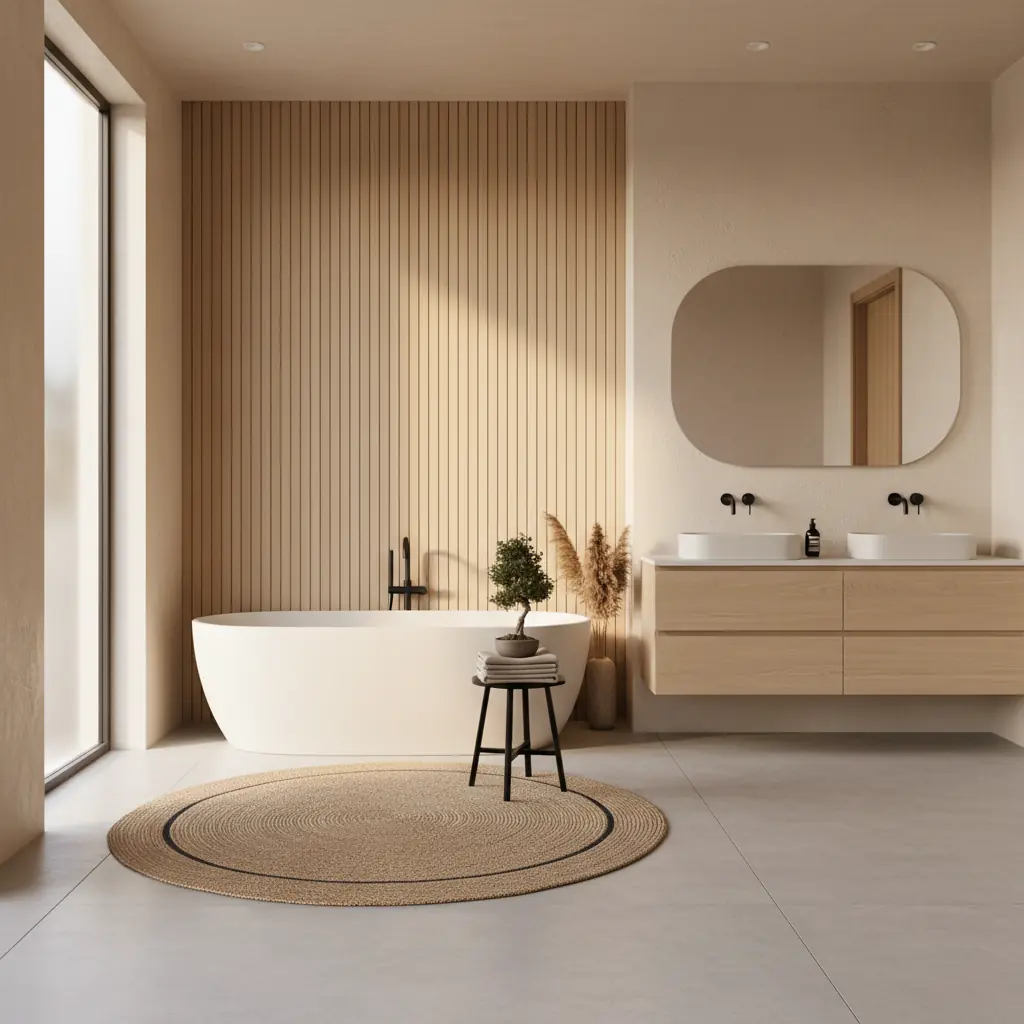
Quais são os princípios fundamentais do design Japandi em um banheiro?
Japandi em um banheiro não é sobre decoração — é sobre redução. A filosofia simplifica o banheiro aos seus elementos funcionais essenciais e eleva cada elemento através da qualidade do material e do posicionamento cuidadoso. Cada objeto conquista seu lugar, contribuindo para uma sensação de calma e intencionalidade. Uma única saboneteira de cerâmica artesanal em uma prateleira de teca comunica mais intenção de design do que uma bancada cheia de acessórios combinando.
O conceito japonês de _ma_ — o espaço negativo como um elemento de design deliberado — é especialmente poderoso em banheiros, onde a maioria das pessoas instintivamente preenche cada superfície. Um banheiro Japandi transmite calma porque resiste a esse impulso, criando um respiro visual. Esse vazio deliberado permite que os elementos escolhidos realmente se destaquem. O lado Scandinavian contribui com o aconchego essencial, garantindo que o espaço nunca caia em uma austeridade fria. O resultado é um banheiro que funciona como um "reset" diário, não apenas um cômodo utilitário por onde você passa correndo. Uma pesquisa de 2023 da National Kitchen & Bath Association (NKBA) descobriu que 68% dos proprietários priorizam materiais naturais e sustentáveis em suas reformas, alinhando-se perfeitamente com o ethos Japandi de simplicidade natural e durabilidade. Você pode explorar princípios semelhantes no [design biofílico](/blog/biophilic-design-guide).
Espaços molhados apresentam desafios únicos para este estilo porque muitos dos materiais naturais centrais para o Japandi — madeira não tratada, pedra bruta, cerâmica artesanal — exigem seleção cuidadosa para resistir à umidade. A chave é escolher as espécies, acabamentos e selantes corretos, em vez de abandonar os materiais naturais por alternativas sintéticas.
Quais materiais funcionam melhor para um banheiro Japandi?
A paleta de materiais para um banheiro Japandi enfatiza a natureza, a textura e a durabilidade.
A **Teca** é a madeira fundamental para banheiros Japandi porque resiste naturalmente à água, mofo e empenamento devido ao seu alto teor de óleo. Use-a para prateleiras flutuantes, tapetes de banho ripados, bancos de chuveiro e detalhes na bancada da pia. A teca de Grau A custa entre US$ 15-25 por pé quadrado, mas mesmo uma única prateleira de teca (US$ 40-80) introduz o aconchego que o estilo exige. Evite madeiras mais macias como carvalho ou pinho em áreas molhadas — elas incharão e mancharão sem vedação agressiva e manutenção contínua. Para peças maiores como bancadas, um freixo ou bétula de cor clara e origem sustentável também pode fornecer um aconchego discreto semelhante, se tratado adequadamente.
**Pedra natural** — especificamente calcário polido, travertino ou ladrilho de seixos de rio — traz a textura orgânica e imperfeita que separa o Japandi do minimalismo genérico. Acabamentos polidos (foscos, não brilhantes) são cruciais; mármore brilhante remete a hotel de luxo, não a Japandi. Espere pagar de US$ 8 a 15 por pé quadrado por ladrilhos de calcário polido. Essas pedras introduzem uma sensação terrosa e de aterramento. Combine-as com ladrilhos cerâmicos foscos de grande formato em tons de branco suave ou cinzas claros para paredes e pisos onde o orçamento ou as preocupações com manutenção descartam a pedra. A cerâmica fosca oferece um apelo visual semelhante com praticidade adicional.
O **Concreto** é o material de transição, oferecendo uma versatilidade incrível. Uma bancada de pia com aparência de concreto (US$ 200-400 para um vazamento personalizado, ou US$ 80-150 para um laminado com acabamento de concreto) ancora o espaço com peso industrial, permanecendo completamente resistente à água. Acabamentos de parede de microcimento (US$ 12-20 por pé quadrado instalado) criam uma superfície contínua e sem rejunte que reforça a sensação Japandi de desordem. Saiba mais sobre suas aplicações em [concreto no design de interiores](/blog/concrete-in-interior-design). Embora o investimento inicial em teca e pedra de qualidade possa ser maior, com uma reforma típica de banheiro gerando um ROI médio de 70-80% na revenda, materiais duráveis e atemporais como estes contribuem significativamente para o valor e a longevidade estética a longo prazo.
Escolhendo as cores e louças certas para o seu banheiro Japandi
A paleta de cores para o banheiro Japandi permanece em neutros quentes, criando uma sensação suave e expansiva. Pense em branco quente (como Benjamin Moore White Dove ou Farrow & Ball Pointing), greige, massa suave e cinza concreto quente. Esses tons suaves e discretos realçam a luz natural e criam um cenário tranquilo. O carvão entra como um toque de destaque que "ancora" — um nicho de pedra escura dentro do chuveiro, um espelho com moldura preta ou rejunte de carvão contra ladrilhos branco-sujo podem fornecer um contraste sutil. O verde sálvia suave funciona como um segundo toque de destaque, especialmente em toalhas, uma única planta em vaso ou uma peça de arte discreta, conectando o espaço à natureza sem introduzir cores concorrentes. Para ajudar a visualizar essas mudanças sutis, o [gerador de paleta de cores AI](/blog/ai-color-palette-generator) da Habitas pode ser uma ferramenta inestimável, permitindo que você experimente vários neutros quentes e toques de carvão em seu espaço existente.
**Louças e ferragens** comprometem-se totalmente com acabamentos foscos. Torneiras e chuveiros pretos foscos (US$ 150-400 para marcas de qualidade como Brizo ou Grohe) são a escolha dominante, oferecendo um contraste sofisticado com a paleta clara. Alternativamente, níquel escovado e latão escovado oferecem alternativas mais suaves e quentes que ainda mantêm uma qualidade não reflexiva. O cromado é especificamente excluído — seu brilho reflexivo contradiz a qualidade discreta e tátil que o Japandi exige. A consistência é fundamental: barras de toalha, ganchos para roupões e suportes de papel higiênico devem combinar exatamente com o acabamento da torneira. Metais mistos podem funcionar em outros estilos, mas o Japandi recompensa uma estética coesa e discreta.
Para o chuveiro, uma **ducha de teto ampla** embutida (US$ 200-500) incorpora a filosofia do ritual de banho japonês — a água como uma experiência, não apenas uma função. Isso cria uma atmosfera de spa. **Torneiras de parede** na pia (US$ 250-600) liberam espaço na bancada e reforçam a estética de linhas limpas, fazendo com que a pia pareça mais leve e aberta.
Iluminando seu banheiro Japandi
A iluminação em um banheiro Japandi visa criar ambiente e aprimorar a funcionalidade sem ser ostentosa. Concentre-se em fontes de luz suaves e difusas que imitam a luz natural.
- **Iluminação embutida:** Fornece iluminação geral sem poluição visual. Opte por LEDs dimerizáveis com uma temperatura de cor quente (2700K-3000K) para realçar a sensação aconchegante. - **Arandelas ou pendentes:** Flanqueando o espelho, arandelas de parede com vidro fosco ou cúpulas de linho natural oferecem iluminação de tarefa suave e sem sombras para o cuidado pessoal. Um único pendente minimalista feito de papel de arroz, cerâmica ou um simples metal fosco pode adicionar um elemento escultural sem dominar o espaço. - **Luz natural:** Maximize qualquer janela existente com películas de privacidade ou cortinas de linho transparentes que permitam a entrada de luz mantendo a privacidade. A conexão com o mundo exterior, mesmo que apenas um vislumbre do céu, é vital. - **Acentos estratégicos:** Considere a iluminação sutil de fita LED sob bancadas ou prateleiras flutuantes para um brilho indireto sofisticado que destaca características arquitetônicas e adiciona profundidade.
Como abordar o armazenamento em um banheiro Japandi
A regra que define o armazenamento em um banheiro Japandi é radical: se não for bonito o suficiente para exibir, ele desaparece. Isso significa uma edição implacável do que você guarda e como é organizado.
- **Armazenamento embutido:** Priorize armários de remédios embutidos (não de superfície, que podem parecer volumosos) e nichos de chuveiro construídos na parede, em vez de cestos suspensos. Essas soluções integradas mantêm as paredes sem interrupções. - **Gabinetes fechados:** Gabinetes com gavetas de fechamento suave, profundas o suficiente para garrafas em pé, são ideais. O objetivo é esconder todas as necessidades diárias atrás de portas fechadas, deixando as superfícies desorganizadas. - **Itens mínimos na bancada:** A bancada comporta no máximo dois itens — um elegante dispensador de sabonete e uma pequena planta ou um único objeto decorativo cuidadosamente escolhido, como uma pedra de rio lisa ou um pequeno vaso de cerâmica. - **Organização interna:** Invista em organizadores de gaveta (divisórias de bambu, US$ 15-30) para manter o interior do armazenamento fechado tão intencional quanto as superfícies visíveis. A filosofia de organização japonesa trata os espaços escondidos com o mesmo cuidado que os exibidos. Decante produtos de uso diário (xampu, condicionador, loção) em dispensadores de cerâmica ou vidro âmbar que combinem (US$ 10-20 cada) para que os poucos itens visíveis contribuam para a estética em vez de perturbá-la. - **Toalhas como exibição:** As toalhas se tornam um elemento de exibição. Enrole-as e empilhe-as ordenadamente em um nicho aberto, ou dobre duas toalhas brancas impecáveis em uma prateleira de parede flutuante de teca. A tradição japonesa de onsen trata as toalhas como parte do ritual de banho, não como algo esquecido em um suporte. Se você usar Habitas para visualizar seu banheiro Japandi, notará que a IA remove consistentemente a desordem da bancada — essa restrição é o maior fator para alcançar o visual.
Manutenção de materiais naturais em um banheiro Japandi: Considerações práticas
Materiais naturais trazem beleza incomparável, mas exigem um contrato de manutenção consigo mesmo.
A **Teca** precisa ser re-oleada a cada 6-12 meses com óleo de teca (US$ 12-18 por garrafa) para manter seu tom dourado; se deixada sem tratamento, ela se torna cinza como madeira à deriva, o que algumas pessoas preferem. Este processo protege a madeira e realça sua resistência natural à água.
**Pedra polida** (calcário, travertino) deve ser selada na instalação e selada novamente anualmente. Selantes penetrantes (US$ 20-35) absorvem a pedra sem alterar sua aparência, protegendo-a da umidade e manchas. A limpeza regular com limpador de pedra com pH neutro também é essencial para evitar corrosão ou descoloração.
O **Rejunte** é frequentemente o fardo oculto da manutenção. Opte por rejunte epóxi (US$ 30-40 por unidade versus US$ 8-12 para rejunte de cimento) em chuveiros e áreas de piso. É à prova d'água, à prova de manchas e nunca precisa de selagem, tornando-o incrivelmente durável e higiênico. O custo inicial se paga em um ano sem ter que esfregar as linhas de rejunte. Para um visual ainda mais limpo, use ladrilhos de grande formato (24x48 polegadas ou maiores) para minimizar as linhas de rejunte por completo.
A **Ventilação** é inegociável. Banheiros Japandi com madeira e pedra natural precisam de um exaustor de qualidade funcionando durante e 20 minutos após cada banho. Um ventilador com sensor de umidade (US$ 80-150, Panasonic WhisperGreen é um padrão ouro) automatiza isso completamente, garantindo ótima circulação de ar. Sem ventilação adequada, mesmo a melhor teca e pedra seladas desenvolverão mofo nas juntas e frestas em meses, comprometendo tanto a estética quanto a qualidade do ar. A integração da IA no processo de design, como com Habitas, pode reduzir drasticamente o tempo de visualização do conceito inicial. Enquanto os mood boards tradicionais e renderizações 3D podem levar de 2 a 4 semanas, ferramentas alimentadas por IA podem gerar designs fotorrealistas em meros minutos, economizando até 90% do tempo inicial de exploração de design e ajudando a identificar potenciais conflitos de materiais precocemente. Se você está planejando uma reforma completa, entender as despesas abrangentes é crucial, o que você pode aprofundar em nosso guia sobre [custo de reforma de banheiro](/blog/bathroom-renovation-cost-2026).
Projetando seu banheiro Japandi: Um plano completo
Reunir esses elementos cria um banheiro Japandi coeso e tranquilo.
Comece com o piso e as paredes – utilize porcelanato fosco de grande formato em cinza quente ou branco-sujo, com calcário polido ou seixos de rio como destaque no piso do chuveiro ou como uma parede de destaque sutil. Construa um nicho de chuveiro embutido para produtos de higiene pessoal para manter as linhas limpas. Instale uma bancada suspensa em teca natural ou madeira de tom claro e quente com uma bancada com aparência de concreto e uma pia embutida.
Instale louças e metais pretos foscos: uma torneira de parede, uma ducha de teto tipo "chuva" e um toalheiro minimalista. Adicione uma única prateleira flutuante de teca acima do vaso sanitário para exibir toalhas enroladas e uma pequena samambaia em vaso ou um delicado bonsai. Escolha um espelho redondo com uma moldura preta fina ou sem moldura, permitindo que ele se integre perfeitamente ao espaço. Certifique-se de que a bancada contenha apenas um dispensador de sabonete de cerâmica e talvez um único difusor de varetas para um aroma sutil.
A faixa de orçamento para uma reforma completa de um banheiro Japandi varia de US$ 8.000 a US$ 15.000 para um banheiro de tamanho padrão, com ladrilhos, trabalho de bancada personalizado e mão de obra como os maiores itens de custo. Uma atualização cosmética – novos acessórios, itens decorativos, pintura e uma prateleira de teca – pode alcançar 70% do visual por US$ 500-1.200, tornando o estilo acessível mesmo com um orçamento mais apertado. Habitas pode gerar pré-visualizações fotorrealistas de ambas as abordagens para que você possa decidir qual nível de investimento corresponde ao seu espaço e orçamento antes de se comprometer, transformando suas ideias em visuais tangíveis em segundos.
Perguntas Frequentes
### Qual é a diferença entre o design Japandi e o minimalista?
Embora tanto o design Japandi quanto o minimalista enfatizem linhas limpas e a falta de desordem, o Japandi se distingue por integrar um senso mais forte de calor e textura natural. O minimalismo às vezes pode parecer austero ou frio, dependendo muito de paletas monocromáticas e materiais sintéticos. O Japandi, por outro lado, mescla o _wabi-sabi_ japonês (encontrar beleza na imperfeição) e o _hygge_ Scandinavian (aconchego, conforto), usando madeiras naturais, cerâmicas artesanais e têxteis macios para criar espaços convidativos e serenos, ricos em apelo tátil, mesmo com elementos mínimos.
### O estilo Japandi pode funcionar em um banheiro pequeno?
Absolutamente. Os princípios centrais do Japandi de minimalismo, espaço livre (_ma_) e design funcional são excepcionalmente adequados para banheiros pequenos. Ao remover o não essencial, focar em armazenamento embutido ou embutido e usar paletas de cores claras e neutras, um espaço pequeno pode parecer muito maior e mais sereno. Azulejos de grande formato também ajudam a reduzir a desordem visual das linhas de rejunte, criando uma sensação mais expansiva. A chave é a aderência estrita à filosofia de armazenamento "tudo escondido" e fazer com que cada item visível conte.
### Quais são as melhores plantas para um banheiro Japandi?
Plantas com formas simples e elegantes e preferência por umidade são perfeitas para um banheiro Japandi. Pense em pequenas samambaias (como a samambaia de Boston ou a avenca), jiboias (Sansevieria) ou um delicado bonsai para um verdadeiro toque japonês. Variedades de orquídeas com suas linhas limpas também podem funcionar lindamente. Coloque-as em vasos de cerâmica simples e sem esmalte ou em vasos pretos minimalistas. O objetivo é adicionar um toque de natureza viva sem criar um efeito de "floresta".
### Como posso conseguir um visual Japandi com um orçamento limitado?
Conseguir um visual Japandi com um orçamento limitado é totalmente possível focando em elementos-chave. Priorize uma paleta de cores neutras (brancos quentes, tons de cinza e bege), adicione uma única prateleira flutuante de teca ou um pequeno tapete de banho de teca para aquecer o ambiente. Substitua luminárias antigas por alternativas em preto fosco ou níquel escovado. Invista em dispensadores de sabonete de cerâmica ou vidro âmbar de boa qualidade e que combinem. Desorganize implacavelmente, removendo todos os itens não essenciais das bancadas. Para um impacto maior, considere pintar um gabinete antigo com um kit de pintura com efeito de concreto. Essas pequenas mudanças podem transformar significativamente a sensação do seu banheiro sem uma reforma completa.
### Japandi é uma tendência passageira ou um estilo atemporal?
Japandi, embora atualmente seja uma tendência, possui fortes qualidades atemporais. Sua ênfase em materiais naturais, artesanato, funcionalidade e um ambiente sem desordem alinha-se a princípios de design duradouros e a um desejo crescente por uma vida sustentável e consciente. Ao contrário de modas estilísticas passageiras, as raízes do Japandi na filosofia estética japonesa centenária e no design clássico Scandinavian garantem sua longevidade. É mais uma filosofia de design que promove a calma e o bem-estar, que são sempre qualidades desejáveis em um lar.