Dominando Terracota e Tons Terrosos: Paletas Quentes para o Seu Lar
Descubra como usar terracota, argila, siena, ocre e tons de ferrugem em sua casa. Crie paletas de cores sofisticadas e quentes com combinações de materiais e estratégias de design.
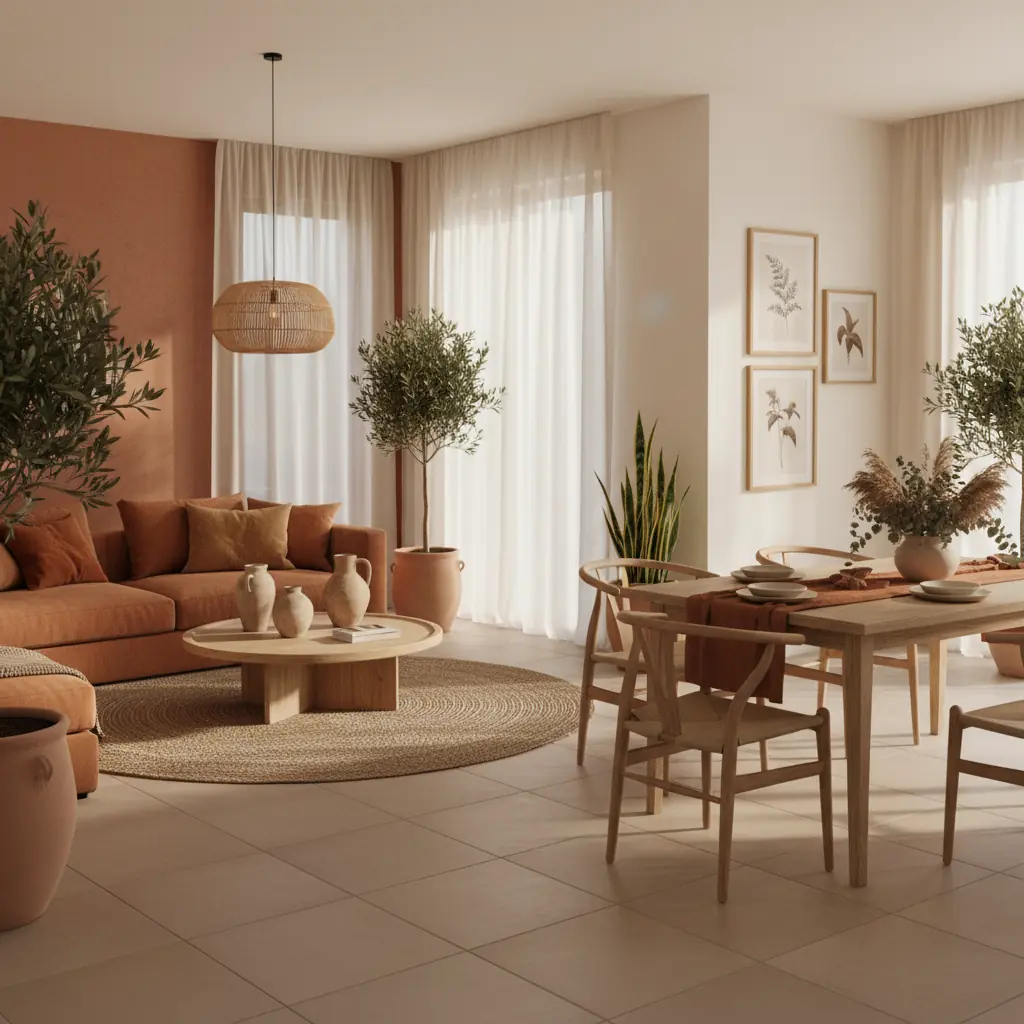
Qual é o verdadeiro espectro dos tons terrosos? Mais do que apenas marrom
Os tons terrosos são frequentemente descartados como "apenas marrom", mas o espectro real é notavelmente diverso e profundamente enraizado em nosso mundo natural. Ele se estende desde areia pálida e creme quente, passando por ocre dourado e siena natural, até terracota e argila, e finalmente em ferrugem profundo, umber e espresso. Cada tonalidade carrega uma energia distinta e evoca diferentes paisagens: a areia parece costeira e arejada, a terracota parece mediterrânea e ensolarada, a ferrugem parece outonal e rica, e o umber parece enraizado e sério.
A chave para usar bem os tons terrosos é entender que eles não são uma única cor — eles são uma família coesa. Um cômodo projetado em tons terrosos deve usar pelo menos três a quatro tons diferentes de todo o espectro, não apenas uma tinta marrom e móveis marrons. Pense em uma paisagem desértica: ela contém dunas de areia pálida, formações rochosas vibrantes de terracota, artemísia prateada, luz dourada filtrando pelo ar e sombras profundas ao entardecer. Essa variação natural é o que faz os tons terrosos parecerem vivos, dinâmicos e tudo menos monótonos. Ignorar esse princípio frequentemente leva a espaços planos e sem inspiração.
Em termos de tintas, os tons terrosos mais populares para 2026 incluem Benjamin Moore Cinnamon Slate (2113-40), Sherwin-Williams Cavern Clay (SW 7701), Farrow & Ball Jitney (No.293) e Benjamin Moore Alexandria Beige (HC-77). Cada um se encaixa em um ponto diferente do espectro de tons terrosos, e usar dois ou três deles em cômodos adjacentes cria um lar coeso e acolhedor que flui naturalmente. Para aqueles que buscam experimentar tons mais sutis, um [gerador de paletas de cores com IA](/blog/ai-color-palette-generator) pode sugerir matizes complementares que talvez não venham imediatamente à mente.
Por que os tons terrosos permanecem uma escolha atemporal?
Os tons terrosos são usados em interiores há literalmente milhares de anos — desde afrescos pompeianos a riads marroquinos e casas de adobe do sudoeste. Eles perduram porque são extraídos dos próprios materiais da terra: argila, pedra, areia, solo, casca. Nosso sistema visual reconhece essas cores como fundamentais e inerentemente seguras, razão pela qual um cômodo em tons terrosos parece instintivamente confortável e profundamente calmante de uma forma que um cômodo pintado em tons artificiais e altamente saturados às vezes não consegue. Essa conexão inerente com a natureza também se alinha perfeitamente com a crescente tendência do design biofílico.
Do ponto de vista prático, os tons terrosos disfarçam lindamente o desgaste. Uma parede em tom de terracota não mostrará arranhões e marcas como uma parede branca imaculada frequentemente faz. Estofados, tapetes e almofadas em tons terrosos envelhecem com graça — um linho de terracota desbotado pelo sol desenvolve caráter e uma pátina cobiçada em vez de parecer danificado. Essa qualidade de envelhecimento é o motivo pelo qual os tons terrosos dominam em espaços comerciais de alto tráfego, como restaurantes e hotéis, onde durabilidade e baixa manutenção são primordiais. Estudos mostram que paletas de cores naturais também podem reduzir significativamente os níveis de estresse, tornando-as ideais para casas que buscam uma atmosfera de santuário.
A tendência de 2026 em direção aos tons terrosos é, em parte, uma reação aos interiores cinzentos frios e brancos estéreis que dominaram a década anterior. As pessoas anseiam por calor, literal e figurativamente, em seus espaços pessoais. Os tons terrosos entregam esse calor sem o compromisso de uma cor ousada — um cômodo pintado em um rico tom de argila parece mais quente e convidativo do que um cômodo cinza, mas não é tão polarizador quanto um cômodo pintado em verde escuro ou azul brilhante. Dados de pesquisas recentes de design indicam que mais de 65% dos proprietários de casas agora priorizam conforto e calor em detrimento do minimalismo austero em suas escolhas de decoração. Essa mudança ressalta o apelo duradouro dos tons terrosos na criação de lares acolhedores.
Como combinar tons terrosos de forma eficaz: quente com quente, ou quente com frio?
A abordagem mais fácil é quente com quente: combine diferentes tons terrosos que compartilham a mesma família de temperatura quente. Imagine paredes cor de areia com almofadas de terracota, um tapete de lã em tom de ferrugem e móveis de nogueira quentes. Essa abordagem é praticamente à prova de falhas porque cada elemento compartilha a mesma base de calor, criando um ambiente harmonioso e envolvente. O risco, no entanto, é que o cômodo possa parecer monótono — como uma sopa quente sem ingredientes contrastantes para criar interesse visual ou profundidade. Para evitar isso, concentre-se em camadas de texturas e variações de brilho.
A abordagem mais sofisticada, preferida por muitos designers profissionais, é o contraste quente com frio. Esse método combina paredes em tons terrosos dominantes ou grandes peças de mobiliário com elementos que proporcionam um contraste deliberado de temperatura: um vaso de cerâmica azul-verde profundo, cortinas de linho sálvia, uma bancada de concreto cinza fria ou luminárias de ferro preto fosco. Os elementos frios fazem os tons quentes se destacarem, evitando que o ambiente pareça excessivamente doce ou unidimensional e adicionando uma camada crucial de complexidade. A proporção ideal deve ser de aproximadamente 70% quente para 30% frio — os tons terrosos ainda dominam, mas os detalhes frios criam ritmo, sofisticação e uma sensação de design intencional.
Ambas as abordagens funcionam, mas o método quente com frio tende a produzir cômodos que parecem mais projetados, equilibrados e visualmente dinâmicos. Se você observar fotografias profissionais de interiores de cômodos em tons terrosos, quase sempre encontrará um elemento frio sutil em algum lugar: um espelho com moldura de aço, uma peça vibrante de cerâmica azul ou o verde refrescante de uma planta viva. Esses contrapontos não são acidentais — eles são o que fazem os tons quentes cantarem e mantêm a paleta fresca e convidativa. Para uma mistura verdadeiramente única e harmoniosa, explorar os princípios do [design biofílico](/blog/biophilic-design-guide) pode ajudar a integrar elementos naturais que inerentemente equilibram tons quentes e frios.
Quais materiais melhor realçam uma paleta de tons terrosos?
Os tons terrosos são mais fortes quando não são apenas cores de tinta, mas são expressos através de materiais terrestres reais e táteis. Madeiras naturais em tons quentes — nogueira, carvalho, teca, cerejeira ou até madeira de demolição — formam a camada fundamental, adicionando textura e calor orgânico. Superfícies de pedra em travertino, calcário ou mármore em tons quentes reforçam a paleta em cozinhas e banheiros, oferecendo durabilidade e uma sensação luxuosa e fundamentada. Azulejos de terracota autênticos (não meras imitações de porcelana) em pisos ou como backsplashes trazem um calor e uma textura inigualáveis que nenhuma tinta pode replicar totalmente. A mudança para materiais naturais é significativa, com pesquisas de mercado indicando um crescimento consistente de 15-20% na demanda por acabamentos de pedra natural e madeira em projetos residenciais nos últimos cinco anos.
Os têxteis são igualmente importantes para adicionar camadas de profundidade e conforto. O linho em tons naturais e não tingidos é o tecido característico dos tons terrosos — sua textura irregular, variação sutil de cor e qualidade respirável conferem-lhe um apelo artesanal que apoia perfeitamente uma paleta orgânica. A lã em marrons quentes, ferrugem e cremes adiciona peso e aconchego, especialmente em tapetes e cobertores felpudos. Tapetes de juta e sisal ancoram os cômodos em tons terrosos, literal e visualmente, introduzindo uma textura natural e áspera. Lona de algodão, seda crua, bouclé e cânhamo completam a paleta têxtil, cada um contribuindo com uma dimensão tátil única.
Os materiais que você escolhe evitar são tão importantes quanto os que você abraça. Superfícies laqueadas de alto brilho, ferragens cromadas brilhantes e tecidos sintéticos em cores vivas e artificiais irão contrastar com uma paleta de tons terrosos. Em vez disso, opte por acabamentos foscos e escovados, ferragens de aço escurecido ou latão e fibras naturais sempre que possível. O objetivo é um ambiente onde cada superfície pareça que poderia existir harmoniosamente na natureza, criando um ambiente coeso e relaxante.
Como usar tons terrosos em diferentes cômodos e evitar a armadilha do 'marrom demais'?
### Salas de Estar: Um Espaço Convidativo para Confraternizar
As salas de estar são o lar natural para os tons terrosos. O calor inerente cria um espaço incrivelmente convidativo para confraternizar, e a qualidade neutra, mas rica, significa que a arte e os objetos pessoais se destacam lindamente contra paredes em tons terrosos. Comece com uma cor de parede em argila quente ou areia, adicione um sofá em um tom terroso complementar (um tecido aconchegante em taupe quente ou couro rico cor de caramelo) e adicione camadas de textura através de almofadas, mantas e um tapete de fibra natural. Considere uma mesa de centro de madeira rústica e grande para ancorar o espaço. Esses elementos se combinam para criar um ambiente profundamente confortável e propício à conversa.
### Cozinhas e Banheiros: Frescos e Aterrados
Cozinhas e banheiros exigem uma consideração mais cuidadosa. Tons terrosos em ambientes úmidos podem, às vezes, parecer datados ou sujos se não forem executados com precisão. A chave é combinar elementos em tons terrosos com superfícies limpas e brilhantes para garantir frescor. Um backsplash de azulejos de terracota, por exemplo, funciona lindamente contra bancadas brancas impecáveis e armários em madeira clara ou branco quente. Uma bancada de banheiro em tom de argila quente e profundo se destaca contra azulejos de metrô brancos limpos ou um piso de calcário claro e polido. O uso estratégico de brancos ou neutros claros cria o contraste necessário, mantendo os tons terrosos frescos e prevenindo o temido efeito "banheiro marrom" dos anos 90. Investir em um design cuidadoso para essas áreas de alto tráfego pode impactar significativamente o apelo de sua casa; uma reforma de banheiro de médio porte, por exemplo, muitas vezes custa entre $20.000 e $40.000, tornando boas escolhas de cores cruciais para o ROI. Para inspiração, explore [ideias de reforma de banheiro](/blog/bathroom-remodel-ideas) que mesclam estética moderna com conforto atemporal.
### Quartos: Um Santuário de Calma
Para quartos, os tons terrosos criam uma sensação incomparável de calma e refúgio. Tons terrosos mais claros e suaves, como cremes quentes, rosa empoeirado ou sálvia pálida, podem ser usados nas paredes para promover o relaxamento. Cubra a cama com linho em tons complementares de terracota, areia e talvez uma manta sutil em ferrugem profundo. Introduza mesinhas de cabeceira ou uma cômoda de madeira escura para ancorar, e talvez um tapete macio de lã sob os pés. O objetivo é criar um ambiente tipo casulo que estimule o descanso e a revitalização. As qualidades suaves e naturais dessas cores são ideais para promover um espaço de sono tranquilo.
### Evitando a Armadilha do "Marrom Demais"
A armadilha do "marrom demais" é o maior risco com os tons terrosos. Acontece quando cada elemento no cômodo se encontra na mesma faixa estreita de marrom médio — paredes marrons, sofá marrom, tapete marrom, madeira marrom — criando um espaço lamacento e indefinido, sem profundidade e interesse visual. A solução é crucial: **amplitude e contraste**. Vá mais claro (creme, areia, ocre pálido) em grandes superfícies como paredes e tetos para abrir o espaço. Use tons médios (argila, terracota, siena) para móveis, têxteis maiores e objetos decorativos. Reserve tons mais escuros e profundos (espresso, umber, chocolate escuro) apenas para detalhes, peças de mobiliário menores ou detalhes arquitetônicos específicos.
Lembre-se de que a textura também desempenha um papel vital na prevenção da monotonia. Mesmo dentro de uma paleta marrom monocromática, a variação de texturas, de cerâmicas lisas a linho áspero e lã macia, criará interesse visual. Utilizar uma ferramenta como a Habitas pode ajudá-lo a testar diferentes combinações de tons terrosos nas fotos reais do seu cômodo, fornecendo [designs de cômodos gerados por IA realistas](/blog/ai-generated-room-designs-realistic) para encontrar o equilíbrio certo antes de se comprometer com a compra de tinta ou móveis. Essa etapa de visualização pode economizar tempo e dinheiro significativos, ajudando você a alcançar um interior em tons terrosos sofisticado e harmonioso.
Perguntas Frequentes
### Quais são os melhores tons terrosos para um cômodo pequeno?
Para cômodos pequenos, concentre-se em tons terrosos mais claros para criar uma sensação de abertura e leveza. Areia pálida, creme quente, linho suave ou ocre dourado claro nas paredes podem expandir o espaço. Incorpore tons mais profundos de terracota ou ferrugem através de pequenos detalhes como almofadas, mantas ou peças decorativas de cerâmica. Evite usar tons terrosos escuros e pesados em grandes superfícies, pois eles podem fazer um cômodo pequeno parecer fechado e pesado. Manter a cor principal clara permite detalhes mais quentes e ricos sem sobrecarregar o espaço.
### Como evitar que meu cômodo em tons terrosos pareça sem graça ou monótono?
Para evitar que um cômodo em tons terrosos pareça sem graça, concentre-se em três estratégias principais: camadas de texturas, variação de tons e introdução de contraste estratégico. Use uma mistura de materiais como cerâmicas lisas, linho áspero, lã macia e madeira polida. Incorpore pelo menos três a quatro tons diferentes em todo o espectro de tons terrosos, do claro ao escuro. Mais importante ainda, introduza detalhes em tons frios (como verde sálvia, azul acinzentado ou cinza carvão) ou elementos metálicos (latão, preto fosco) em pequenas doses. Esses elementos contrastantes criam quebras visuais e fazem os tons quentes se destacarem, adicionando profundidade e sofisticação.
### Tons terrosos podem funcionar no design minimalista moderno?
Com certeza. Os tons terrosos são cada vez mais populares no design minimalista moderno, oferecendo uma alternativa mais suave e acolhedora aos brancos e cinzas austeros. Para um visual minimalista, escolha tons terrosos suaves e dessaturados como greige quente, argila empoeirada ou terracota suave. Combine-os com linhas limpas, espaços despojados e materiais naturais como madeira clara, concreto e pedra não polida. A chave é a simplicidade na forma e a riqueza na textura. Uma única parede de destaque em terracota, combinada com móveis claros e decoração mínima, pode criar uma declaração minimalista poderosa, mas serena.
### Quais cores de destaque combinam bem com terracota?
A terracota, com seu tom avermelhado-alaranjado, combina lindamente com uma variedade de cores de destaque. Para uma sensação mediterrânea clássica, combine-a com azuis profundos ou verde-azulado. Para um visual mais sofisticado e ancorado, verde sálvia ou verde-oliva criam um contraste natural e complementar. Metais quentes como latão escovado ou cobre realçam seu calor inerente, enquanto detalhes em preto fosco proporcionam um toque moderno. Para esquemas mais suaves, creme, areia ou off-white podem iluminar e equilibrar a terracota. Até toques de rosa blush ou amarelo mostarda suave podem criar uma paleta vibrante e harmoniosa.
### Os tons terrosos estão saindo de moda?
Não, os tons terrosos são uma paleta atemporal e fundamental que evolui continuamente em vez de sair de moda. Embora tons ou combinações específicas possam estar em tendência, o apelo subjacente das cores derivadas da natureza é perene. Na verdade, as tendências atuais mostram um forte ressurgimento dos tons terrosos, pois as pessoas buscam calor, conforto e uma conexão com a natureza em suas casas. Eles oferecem uma alternativa versátil e enraizada a tendências mais ousadas, garantindo que permanecerão um pilar no design de interiores por muitos anos.